

Qatar is set to launch its first EV manufacturing plant through a long-term strategic partnership between JTA International Investment Holding and UK-based WATT Electric Vehicle Company. The deal, announced in Doha this week, will see vehicles engineered in Britain and built in a new state-of-the-art facility in Qatar under a “Made in Qatar” brand.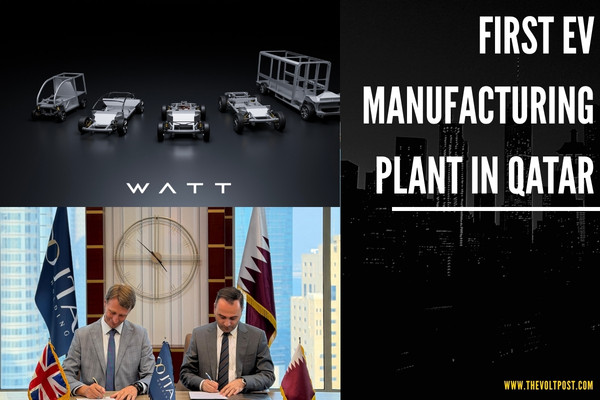
The EV manufacturing plant project is designed to go beyond assembling cars. It aims to create an advanced industrial capability that accelerates technology transfer, strengthens local manufacturing, and supports Qatar National Vision 2030 by diversifying the economy away from oil and gas.
Gulf-tailored EVs on WATT’s award-winning platform
The vehicles will be specifically developed for the Gulf region’s demanding conditions, with engineering focused on advanced thermal management, battery performance in extreme heat, and local usage patterns.
At the heart of the programme is WATT’s patented PACES (Passenger and Commercial EV Skateboard) platform, which uses lightweight aluminium architecture to enable rapid development of customised vehicles with shorter development cycles and greater manufacturing flexibility.
WATT’s engineering credentials were underscored in June 2026 when PACES won the Innovation Award at the Autocar Awards 2026, judged in partnership with Siemens. During the ceremony, WATT founder and CEO Neil Yates appeared alongside industry leaders including Lamborghini CEO Stephan Winkelmann, BYD UK head Bono Ge, and Ford Racing global director Mark Rushbrook.
“Made in Qatar” ambition with regional export plans
The new production facility will initially serve Qatar’s domestic market before expanding exports across the GCC and selected international markets.
The partnership covers every stage of vehicle development from proprietary platform technology, complete vehicle engineering, product development, production planning, to the establishment of advanced manufacturing capabilities in Qatar.
JTA will bring investment capability, strategic industrial vision, international partnerships, and regional market expertise to accelerate implementation.
Beyond vehicle production, the programme is expected to strengthen regional supply chains, encourage R&D, support localisation of advanced manufacturing technologies, and help develop the skilled workforce required for Qatar’s future industrial economy.
Next steps
Following completion of detailed implementation planning, the partners expect to commence factory development and joint vehicle programmes, laying the foundations for a globally competitive electric vehicle manufacturing industry in Qatar.
The GCC electric car market, valued at $11.64 billion, is projected to nearly triple to $31.66 billion by 2031, underscoring the strategic timing of the venture.