


NITI Aayog Unveils India Semiconductor Vision 2035- A $150 Billion Roadmap for Chip Self-Reliance.
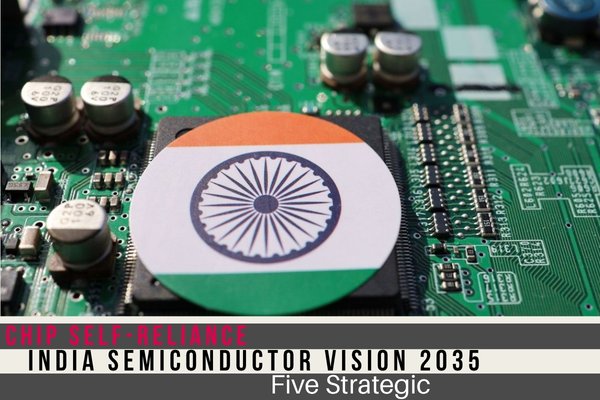
Finance Minister Nirmala Sitharaman and Electronics & IT Minister Ashwini Vaishnaw unveiled the roadmap on May 29, 2026, in the presence of NITI Aayog Vice Chairman Ashok Lahiri. The document positions semiconductors not just as an industrial priority, but as a national-security imperative tied to technological autonomy and economic resilience.
Tne Timing
India currently imports 90–95% of its semiconductor requirements, exposing the economy to supply-chain disruptions, forex outflows, and geopolitical vulnerabilities. Between FY17 and FY25, the country’s semiconductor import bill totaled nearly USD 150 billion – a figure projected to climb to USD 240 billion annually by 2035 if trends continue.
Meanwhile, domestic demand$150 Billion Roadmap for Chip Self-Reliance is surging. Driven by EVs, AI infrastructure, data centers, and electronics manufacturing, India’s internal chip market is expected to reach USD 200 billion by 2035.
The roadmap frames semiconductor manufacturing as foundational infrastructure for AI systems, defense electronics, 5G/6G telecommunications, electric mobility, and digital sovereignty.
India Semiconductor Vision 2035: Five Strategic Pillars
The blueprint organizes intervention through a 5P framework designed to transition India from ecosystem creation to ecosystem deepening:
Key Targets for 2035
The roadmap outlines concrete milestones for India’s semiconductor trajectory:
-
USD 120–150 billion semiconductor value chain by 2035
-
10–13% of global semiconductor market share (up from current ~1%)
-
15–25% chip self-sufficiency by 2030, scaling to 35–50% by 2035
-
55–70% value self-sufficiency for every chip consumed domestically by 2035
-
Top-3 global destination for advanced packaging and OSAT (Outsourced Semiconductor Assembly and Test)
A Pragmatic, Phased Strategy
Rather than pursuing costly sub-7nm leading-edge fabs immediately, the roadmap advocates a commercially scalable entry strategy focused on:
- Mature-node semiconductor fabs (28–65 nm)
- Advanced packaging and OSAT facilities
- Chiplet architectures and 3D stacking
- Wide-bandgap compound semiconductors — particularly Silicon Carbide (SiC) and Gallium Nitride (GaN)
This “More-than-Moore” approach leverages India’s existing engineering strengths while avoiding the unsustainable capital pitfalls of chasing cutting-edge wafer fabrication from behind.
Wide-bandgap semiconductors like SiC and GaN are critical for EVs, renewable energy systems, 5G/6G infrastructure, and defense electronics due to their superior performance under high voltage, temperature, and frequency conditions.
Design Infrastructure and Talent Development
Two foundational initiatives underpin the strategy:
National Design Hub: A shared infrastructure providing startups and universities with access to Electronic Design Automation (EDA) tools and reusable IP cores, lowering entry barriers for domestic chip design firms.
National Fab Academy: An apex training academy, in partnership with AICTE and technical institutions, to standardize workforce development — from cleanroom technicians to system-level solution architects.
India already houses 20% of the global semiconductor design workforce, providing a powerful foundation to pivot from backend chip-servicing to creating native, exportable intellectual property.
Demand Creation Through Government Procurement
The roadmap advocates using government procurement as industrial policy, mandating phased domestic chip adoption across:
- Defense electronics
- Railways and public telecom infrastructure
- Smart meters and municipal energy grids
- Electric vehicles
This approach creates predictable domestic markets capable of sustaining early manufacturing investments while reducing reliance on imports.
Global Partnerships and Supply Chain Security
The strategy emphasizes outcome-driven alliances with trusted nations particularly the US, Japan, and EU to:
-
Secure critical mineral supply chains
-
Integrate into global R&D networks
-
Accelerate technology transfer
-
Position India as a trusted alternative in China-plus-one supply chain realignment
Significant Hurdles
The roadmap candidly acknowlsignals a strategic shift from basic capacity creationedges significant hurdles:
- Prohibitive capex: Modern analog fabs cost over USD 5 billion; 3nm facilities exceed USD 15 billion
- Long gestation periods: 4–5 years to commence production, followed by yield validation
- Specialized skills gap: Critical deficit in cleanroom fabrication and hardware R&D talent
- Resource-intensive operations: Fabs require thousands of gallons of ultra-pure water and energy-intensive electricity
- Entrenched global monopolies: Equipment manufacturers maintain trust networks with existing East Asian foundries
The Road Ahead
The Vision 2035 blueprint proposes staged implementation:
Immediate priorities (2026–2030):
-
National access to EDA software and prototyping infrastructure
-
Domestic procurement mandates for strategic sectors
-
Semiconductor-oriented university curriculum upgrades
-
15–25% chip self-sufficiency target
Longer-term actions (2030–2035):
-
Securing critical mineral partnerships
-
Scaling SiC and GaN research
-
Building export-grade advanced packaging ecosystems
-
Expanding India’s role within global semiconductor supply chains
 Signals a strategic shift from basic capacity creation
NITI Aayog’s roadmap signals a strategic shift from basic capacity creation to deep capability building across India’s electronics ecosystem. By focusing on advanced packaging, mature logic nodes, compound semiconductors, and robust talent development, the strategy plays to India’s unique engineering strengths while avoiding unsustainable capital traps.
The full roadmap is available on the NITI Aayog Frontier Tech Hub website.
References:
World Trades Scanner — NITI Aayog releases Future of India Semiconductor Industry Roadmap
Policy Edge — NITI Aayog Roadmap Targets Semiconductor Self-Reliance
Vision IAS — NITI Aayog releases “Future of India’s Semiconductor Industry” Roadmap
LinkedIn — Vishal Sahrawat’s Post on NITI Aayog Frontier Tech Hub
Insights on India — India Semiconductor Industry Roadmap 2035