


Intel has secured a groundbreaking MicroLED patent that integrates MicroLEDs directly into semiconductor packaging. The innovation leverages glass substrates and Through Glass Vias to deliver power and signals seamlessly. This design enables the chips to emit red, green, and blue light directly from the package surface.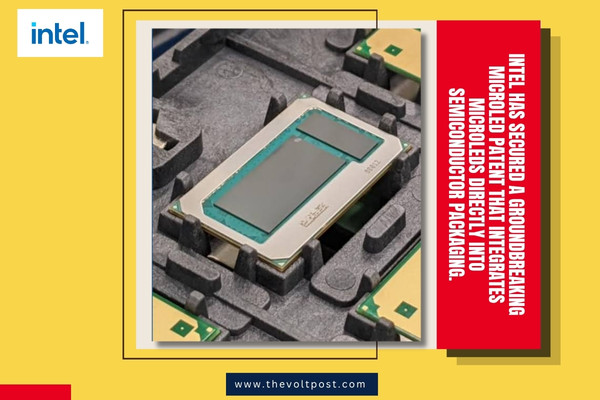
While immediate applications point toward diagnostic testing and customized aesthetics, industry experts suggest a much larger ambition in the realm of optical data transmission.
The technical foundation of the MicroLED patent details a meticulous manufacturing process. Intel engineers describe using laser treatments and etching techniques to hollow out cavities and pathways within a glass base.
Copper electroplating then forms the Through Glass Vias. These pathways connect the embedded MicroLED dies to polymer substrates using silicon nitride layers. The result is an efficient flow of power and data across the entire architecture.
On the surface level, this technology opens new doors for hardware diagnostics and personalization. Embedded MicroLEDs could serve as direct visual indicators during the testing phase of chip manufacturing.
Engineers could see immediate light feedback for completed tests or structural failures without relying on external motherboard LEDs. For consumer electronics, this means illuminated branding or custom designs directly on the silicon.
Heat management remains a hurdle though. Processors demanding high performance require robust cooling solutions that would likely cover these aesthetic lights. This suggests the feature might cater primarily to hardware with low power requirements or demand specialized heatsink designs to keep the LEDs visible.
Beyond glowing logos, the patent holds massive potential for moving data. The technology closely mirrors advancements by Taiwanese optoelectronics manufacturer AU Optronics. AUO recently demonstrated MicroLED optical communication systems designed for artificial intelligence data centers.
Their system targets interconnect ranges up to ten meters. Rumors of collaboration between Intel and AUO have circulated recently. This hints that Intel might use this embedded LED approach to develop integrated optical communication modules.
Transmitting data via light rather than electrical signals drastically improves bandwidth and energy efficiency.
While the current patent focuses strictly on the packaging method rather than a complete communication system, it establishes the necessary physical infrastructure. To achieve full optical signaling, Intel would still need to integrate microscopic receivers and optical fiber solutions alongside the emitters.
Intel has invested heavily in glass substrate technology for over a decade. Showcases earlier this year displayed engineering samples of glass core packages integrated with advanced circuit modules.
Moving away from traditional organic substrates allows for finer routing and better mechanical stability. By adding capabilities to emit light into the mix, the company is positioning its manufacturing division to lead the next generation of computing architecture.
This development signals a clear shift in how processors might be built and tested in the near future. The Volt Post will continue tracking Intel and its substrate roadmap as these patented concepts move closer to mass production.