



The AI-RAN technology developed by NTT DOCOMO and Samsung operates at the individual-user level rather than applying the same settings to everyone connected to a cell. It analyzes real-time radio conditions, the services being used and each user’s movement and usage patterns to determine the most suitable network configuration.
NTT DOCOMO and Samsung Electronics have successfully validated an AI-RAN optimization technology that adjusts network settings for individual users based on their real-time conditions and service requirements.
The companies said the development marks an important step toward predictive network operations and the realization of AI-centric 6G networks, in which networks can learn, anticipate potential service issues and optimize their performance autonomously.
Moving beyond one-size-fits-all network settings
Traditionally, all smartphones connected to the same cell or base station have been managed using identical network configurations. While this approach simplifies operations, it can also lead to service degradation, including dropped connections and slower speeds in areas with weak signals.
The need for more reliable connectivity has grown as users increasingly rely on high-quality video streaming, online gaming and video conferencing. These services require stable, uninterrupted connections, even as users move between locations or wireless conditions change.
The AI-RAN technology developed by NTT DOCOMO and Samsung operates at the individual-user level rather than applying the same settings to everyone connected to a cell. It analyzes real-time radio conditions, the services being used and each user’s movement and usage patterns to determine the most suitable network configuration.
The system can also predict potential service degradation before it occurs. For example, if it anticipates that a user’s transmission speed will fall below the level required for uninterrupted video playback, it can automatically switch to a more suitable configuration, such as a different frequency band. This helps prevent issues such as buffering and reduced video quality.
Communication-speed degradation reduced
The developed technology by NTT DOCOMO and Samsung was validated in Japan in January 2026 using simulations based on data collected from DOCOMO’s commercial network and a local 5G trial field.
During the validation, the frequency of communication-speed degradation fell from 13.1% to 7.2%, representing an improvement of 5.9 percentage points compared with network operation without the AI-based optimization technology.
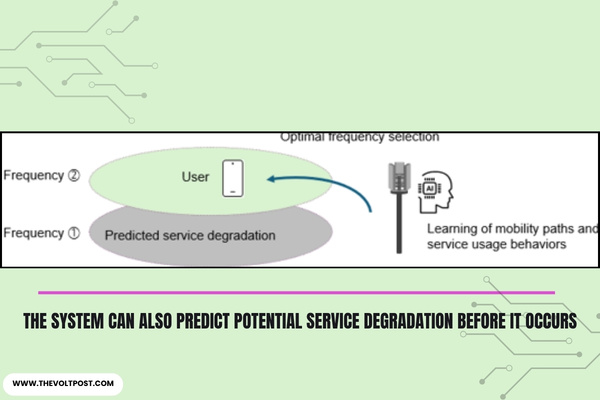
Using aggregated data collected from user devices through MDT*1, the system analyzes individual user contexts and movement trends. This allows it to identify early signs of throughput*2 degradation and take corrective action before the user’s service experience is affected.
Rather than focusing solely on predicting radio link failures, DOCOMO and Samsung adopted a customer-experience-driven approach. The objective is to maintain the quality of services such as video streaming by predicting and preventing service disruptions before they become noticeable to users.
Reducing the burden of data collection
The two companies also developed a more efficient process for collecting data during wireless network optimization.
Traditional methods typically involve the bulk collection and processing of wireless environment data, which can place additional strain on the network. The new process selectively gathers only the information needed to investigate specific user issues. This reduces the network burden while still providing the data required for AI-based throughput-degradation prediction and optimization.
In February, NTT DOCOMO and Samsung jointly contributed to discussions within 3GPP on data collection methods. The companies said the work will support ongoing efforts to advance 6G technology standardization.
NTT DOCOMO and Samsung plan to continue developing the technology and exploring additional 6G use cases. They also intend to contribute the AI-based throughput-degradation prediction and efficient data-collection technologies developed through the project to future 3GPP discussions.
The companies said these efforts will support the development of AI-centric networks capable of autonomously learning, predicting and optimizing their behavior.
-
Minimization of Drive Test is an automated process that anonymously collects communication quality information from user devices, such as smartphones, and applies insights to improve area coverage quality.
-
The data transmission speed in communication, measured as the amount of data transferred per unit time, closely reflecting the actual communication speed experienced by users.
To Know More: CLICK HERE