


In order meet the demanding temperature monitoring needs of industrial, automotive, and research applications, Metis Engineering announced the release of its new 8-Channel Isolated Thermocouple to CAN module.
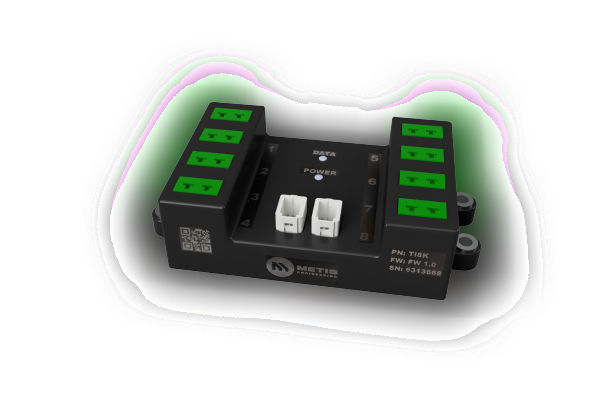
Touted as a major breakthrough in thermocouple technology, the new device isolates each channel to 1000VDC.
With an accuracy of ±0.5°C from 0 to 85°C and ±1°C from -40 to 125°C, the module offers unmatched precision and dependable performance even in the most demanding conditions.
Key Features and Capabilities
- The 8-Channel Isolated Thermocouple module measures temperatures across an exceptional range from -200°C to +1,800°C at sampling rates of up to 40Hz per channel.
- This capability makes it ideal for applications ranging from cryogenic research to high-temperature industrial processes.
- Each channel features galvanic isolation exceeding 1000VDC, enabling safe and accurate temperature measurement in high-voltage systems such as battery packs, power electronics, and electric vehicle components.
- This isolation eliminates current paths through thermocouple leads, ensuring reliable measurement accuracy by preventing ground loops and electrical interference that can compromise temperature readings.
When thermocouple wires break, disconnect, or short to power or ground, the device’s extensive fault detection features—which include open-circuit and short-circuit detection—warn users. This integrated diagnostic feature lowers maintenance costs and guarantees reliability of the system.
Industrial-Grade Design and Integration
The module with potted electronics is designed to withstand extreme industrial conditions. It has DIN rail mounting and IP67-rated JWPF connectors that allow it to be daisy-chained with other modules for greater measuring capabilities.
The sturdy construction is compatible with a variety of industrial power systems and can handle input supply voltages ranging from 9 to 32V.
The device supports a variety of thermocouple types, including K, J, T, N, S, E, B, and R configurations, and comes with K-type micro thermocouple connectors as standard. Because of this flexibility, users can choose the best kind of thermocouple for the needs of their particular applications.
Seamless CAN Bus integration
The provided DBC file and the module’s adjustable CAN bus address and speed allow for simple integration into pre-existing CAN networks. For industrial automation systems and automotive applications where CAN bus connectivity is commonplace, this functionality is especially helpful.
 Leadership Comments
“This new thermocouple module addresses the critical need for high-precision, multi-channel temperature monitoring in demanding industrial environments,” said Joe Holdsworth, founder and CEO at Metis Engineering. “The combination of isolation, accuracy, and CAN bus integration makes it an ideal solution for applications where temperature monitoring is mission-critical.”
“The CAN bus integration reflects our commitment to providing sensors that integrate seamlessly into modern industrial and automotive systems,” added Holdsworth. “Engineers can quickly deploy multiple channels of high-precision temperature monitoring without complex integration challenges.”
To Know More About 8-Channel Isolated Thermocouple to CAN Module, CLICK HERE