



R&M wants to contribute to digital transformation in healthcare. Solutions developed for smart hospitals. Integration of many services necessary.
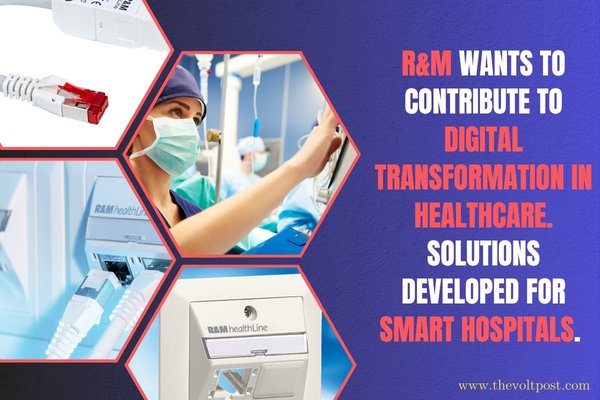
R&M is driving digital transformation in healthcare by bridging the gap between medical expertise and cutting-edge IT.
The real hurdle is creating a robust network infrastructure that’s baked into a comprehensive digital strategy from day one. That’s where R&M’s smart hospital solutions and cost-effective packages for high-stakes environments come in, they’re designed to handle it all.
Hospitals are drowning in data, and it’s only accelerating. Daily innovations in diagnostics, patient management, telemedicine, and information systems are revolutionizing care.
The explosion of networked medical devices like portable blood pressure monitors and beyond has given rise to the Internet of Medical Things (IoMT), and it’s reshaping everything.
Networking: The Make-or-Break Challenge
Most hospital networks still can’t deliver 10 Gigabit/s speeds, let alone handle the diverse interfaces and wireless protocols IoMT devices demand. Outlets need to be accessible, but medical tech, admin systems, and public Wi-Fi require ironclad separation. Add stricter regulations, compliance rules, and cyber threats, and the pressure on networks is immense.
R&M’s advice is to prioritize seamless integration. Hospitals must unify legacy systems with modern digital tools from multimedia terminals and patient monitoring to office IT, access control, video surveillance, building automation, and doctor comms. Don’t overlook diagnostic imaging systems; their massive files can choke local networks if you’re not ready.
Then there’s the IoMT device surge. To unlock real-time data for monitoring, diagnostics, and emergencies, you need dense, high-speed wireless and LAN coverage. IoMT lets hospitals optimize resources, cut errors, and boost efficiency.
Video surveillance is evolving too, where, staff can now monitor care points centrally, track patient status, workflows, and hygiene compliance from one dashboard. Looking ahead, 5G and Wi-Fi 6/7 will demand even more bandwidth for zero-roaming connectivity, letting smartphones track vitals, diagnoses, visits, and workflows in real time. This spans clinics, patient rooms, and sterile zones like operating theaters.
Building the Smart Hospital Foundation
At the core is structured cabling, a universal backbone that handles escalating bandwidth and every data stream. Ethernet/IP is the universal language; RJ45 is the plug-and-play standard.
Roll it out progressively during renovations, but only with expert planning. The ideal setup blends optical fiber, shielded copper, and scalable distributors.
Cat. 6A sets the copper benchmark. Add ceiling-mounted “digital ceilings” across floors, plus PoE and Single Pair Ethernet (SPE) prep for plug-and-play sensors, cameras, Wi-Fi antennas, displays, and more.
R&Mfreenet is purpose-built for this. It powers connectivity from patient beds and staff stations to medical gear, data centers, and internet gateways.
It integrates building systems like HVAC and energy management, turning smart hospitals into smart buildings.
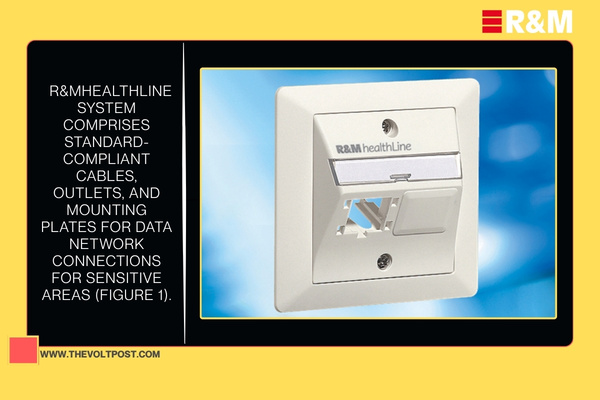
Hygiene can’t be an afterthought multi-resistant germs lurk on patch cords and outlets. R&MhealthLine tackles this with cables, outlets, and plates infused with silver-ion antimicrobial plastic (see Figure 1).
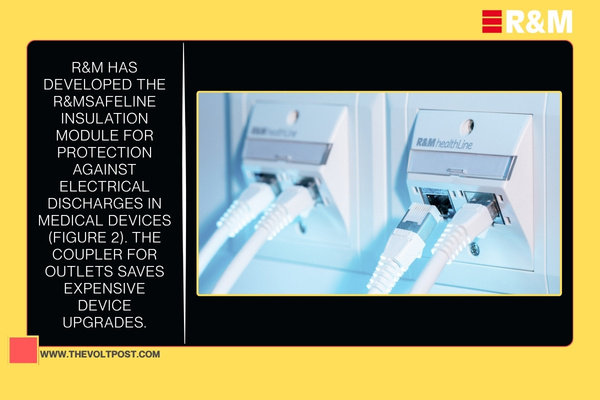
For electrical safety, R&MsafeLine’s insulation modules protect devices without costly replacements (Figure 2).
Minimizing Risks, Maximizing ROI
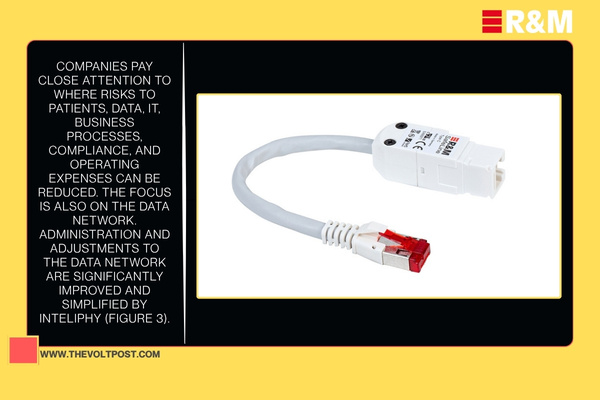
Healthcare leaders are laser-focused on slashing risks to patients, data, IT, compliance, and costs. Networks are ground zero. R&M’s inteliPhy simplifies administration and updates (Figure 3), making changes painless.
Go for durable cabling that outlasts device generations and future-proofs bandwidth. It boosts ROI and aligns with hospitals’ long lifecycles.
In short, Ethernet/IP networks are the linchpin of healthcare’s digital leap. They don’t just connect they deliver actionable insights for risk management, finance, admin, and process automation. That’s real value.
*Antimicrobial products do not replace standard cleaning procedures.
To Know More About The Company’s Solutions For Data Networks In The Healthcare Sector, CLICK HERE