



Infineon Technologies has introduced the RIC70115, a rad-hard GaN HEMT driver built for satellites and other high-reliability space systems where power conversion performance and long-term stability matter most.
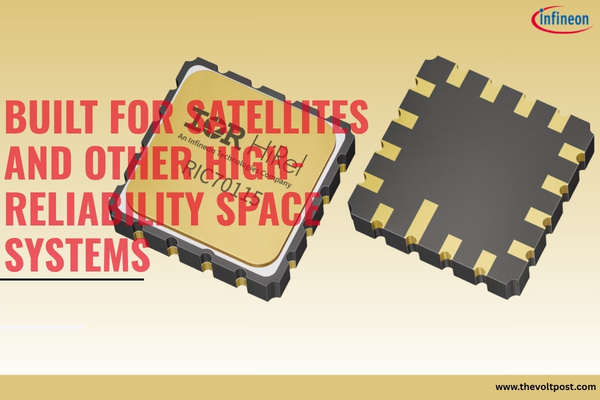
The new radiation-hardened GaN HEMT driver is designed to support both silicon and GaN MOSFET designs in low-side and high-side configurations, giving power system designers more flexibility as they move toward GaN-based power architectures for space platforms.
That flexibility is becoming increasingly important as the New Space economy expands and satellite constellations grow larger and more complex.
Infineon says the RIC70115 is built to improve efficiency and simplify system design.
It includes an independent Miller Clamp to prevent unwanted turn-on while maintaining switching speed, helping reduce switching losses. It also features a Truly Differential Input logic stage for stronger noise immunity, which is especially useful in satellites exposed to electromagnetic and radio frequency interference.
The device also integrates:
- A low dropout regulator that generates a regulated 4.8 V drive voltage from a 5 V or 12 V source.
- With an input range of 4.75 V to 15 V, the part reduces the need for external regulation components and helps improve overall reliability while lowering component count.
- The RIC70115 is qualified to MIL-PRF-38535 and operates across a temperature range of -55°C to 125°C.
It is radiation hardened to a Total Ionizing Dose rating of up to 100 krad (Si) and has been characterized for Single Event Effects up to a Linear Energy Transfer of 81.9 MeV·cm²/mg, making it suitable for low-Earth orbit and beyond.
 Leadership Comment
“GaN power solutions are becoming an integral part of the design ecosystem for New Space applications, and the pace of adoption is accelerating,” said Mike Mills, Senior Vice President and General Manager HiRel at Infineon. “The RIC70115 reflects Infineon’s commitment to delivering the integration, performance, and radiation hardness that space power designers need to move to GaN-based systems with confidence. We are giving designers a proven, qualified path to higher efficiency and greater design flexibility in one of the most demanding environments in the industry.”
To Know More: CLICK HERE