



HIKMICRO is highlighting the growing importance of acoustic imaging technology in automotive manufacturing, where hidden inefficiencies in compressed air systems can quietly impact production performance, energy use, and overall process consistency.
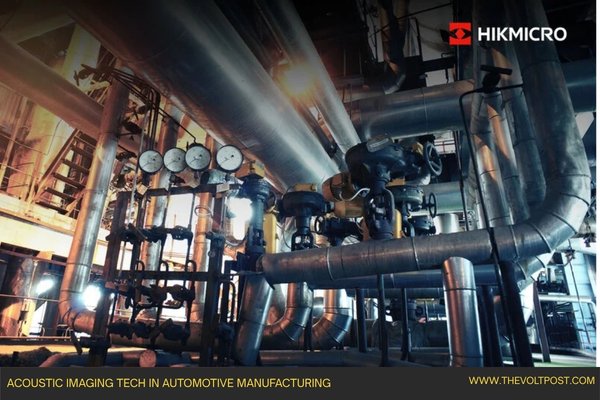
Modern automotive production runs on tightly coordinated operations. From robotic welding and automated paint lines to CNC machining and final assembly, every stage depends on a stable and efficient compressed air supply.
The challenge is that, unlike electrical or mechanical failures, compressed air losses are rarely visible and often go unnoticed.
The Hidden Cost of Air Leaks
In many manufacturing facilities, an estimated 20% to 30% of compressed air is lost due to leaks. In large automotive plants with complex pneumatic networks, even small leaks can lead to significant energy waste, reduced equipment efficiency, and rising operational costs.
Pressure instability adds another layer of risk. It can affect welding precision, paint quality, torque consistency, vacuum handling, and overall equipment reliability. Because these issues tend to develop gradually, maintenance teams are often forced into reactive troubleshooting instead of proactive, cost-effective maintenance.
This is where acoustic imaging makes a difference. By converting high-frequency sound into visual data, it allows maintenance teams to quickly identify leaks and abnormal noise sources even in noisy production environments.
Unlike traditional tools such as ultrasonic leak detectors, which rely heavily on operator experience and single-point measurements, the HIKMICRO AI Series uses up to 136 low-noise MEMS microphones and adjustable bandwidth from 2 to 96 kHz. The result is faster, more precise detection of compressed air leaks during live operations.
Designed for industrial use, the system can detect leaks as small as 0.0047 l/min at 6 bar from a distance of 0.5 meters.
A built-in 4.3-inch touchscreen provides real-time visualization, while integrated analytics estimate leak rate, energy loss, and associated costs. Features like voice notes, text input, QR codes, and image tagging help streamline inspections and improve traceability.
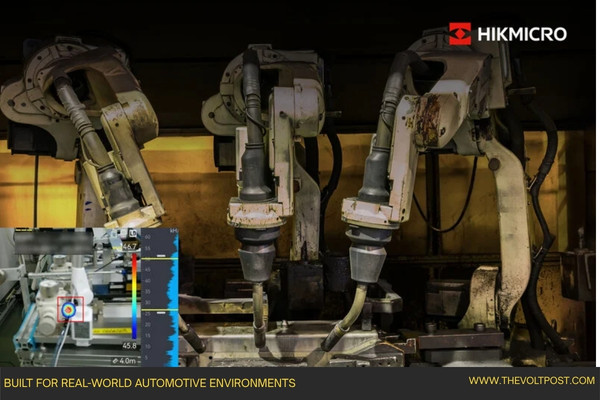 Built for Real-World Automotive Environments
Automotive plants present unique maintenance challenges. In robotic welding areas, for example, fast-moving equipment and hard-to-reach pneumatic lines make leak detection difficult during operation.
Acoustic imaging allows teams to identify issues without interrupting production helping maintain throughput and avoid costly downtime.
In paint shops, where air pressure stability directly affects coating quality and efficiency, acoustic imaging supports structured air audits by identifying leaks in real time. Final assembly lines also benefit, enabling quick checks of pneumatic tools and vacuum systems to prevent gradual performance degradation.
Beyond individual applications, the HIKMICRO AI Series supports plant-wide maintenance strategies. From compressor stations and utility systems to machining and molding operations, it enables faster diagnostics and early detection of issues before they escalate into major failures.
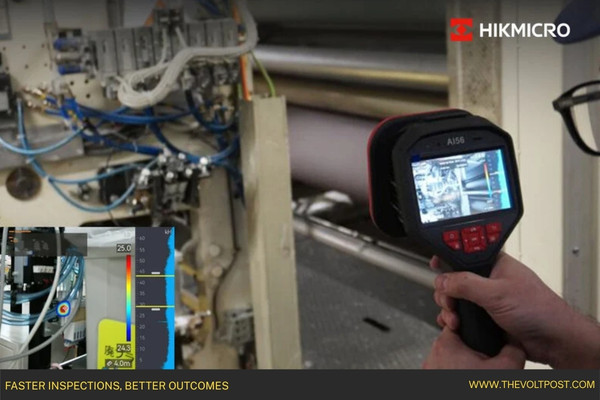 Faster Inspections, Better Outcomes
Compared to traditional methods, acoustic imaging can reduce inspection times by up to 90%.
Its ability to detect issues from distances of up to 150 meters also improves safety, especially in hazardous or hard-to-access areas.
As automotive manufacturers continue to focus on energy efficiency, uptime, and predictive maintenance, acoustic imaging is becoming an essential tool bringing much-needed visibility to one of the most overlooked areas of industrial operations.
Leadership Comment
“Automotive manufacturing is fundamentally built on repeatable and efficient processes,” says Stefan Li, Overseas Market Director at HIKMICRO. “Acoustic imaging gives maintenance teams visibility into problems that traditionally remain hidden until they disrupt production. By transforming sound into actionable visual information, manufacturers can move from reactive maintenance to predictive and data-driven operational management.”
To Know More: CLICK HERE