Solar Efficiency Frontier: Excess Heat Becomes the Industry’s Hidden Cost
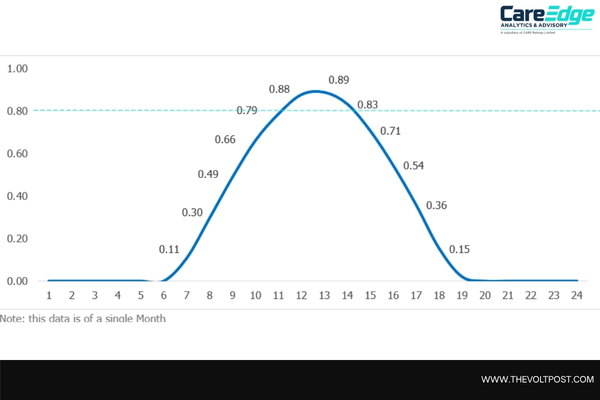
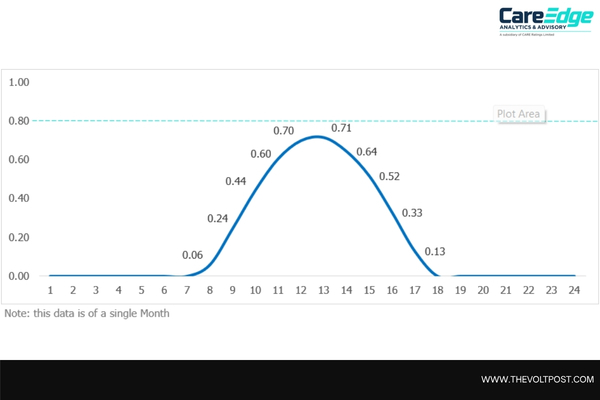
India’s solar energy revolution often associated with blazing summers and its tropical location, chronicles a different story when it comes to month-to-month variability with the average hourly difference in generation between May and December being approximately 0.15?MWh.
This 0.15?MWh variation in generation is primarily attributed to differences in solar irradiance, which peaks in India during May, resulting in a higher gross energy potential compared to December.
More sunlight, it is commonly assumed, should naturally transpire into better performance from photovoltaic systems. Yet the data tells a more nuanced story. While solar plants generate more electricity during the scorching heatwaves of May, they do not necessarily operate more efficiently.
In fact, some of the sector’s most effective performances emerge during the cooler, milder days of December. This contradiction lies at the heart of solar photovoltaic (PV) technology. Solar panels thrive on sunlight, but they do not thrive on heat.
Thus, the higher irradiance levels in May coincide with elevated ambient temperatures, which adversely affect net generation, whereas December experiences relatively moderate temperatures that support more stable system performance.
However, total output alone reveals only part of the picture. Photovoltaic modules convert sunlight into electricity through semiconductor materials, typically silicon.
Photons from sunlight excite electrons within the cells, producing direct current (DC) electricity, which is later converted into alternating current (AC) through inverters before being supplied to the grid. But this conversion process is inherently imperfect. Losses occur at nearly every stage of the system. Some losses arise before generations even begin.
Dust accumulation, shading and environmental soiling reduce the amount of sunlight reaching the modules. Once electricity generation starts, elevated temperatures degrade module efficiency, while inverter conversion introduces further losses. Additional inefficiencies emerge during transmission through resistive heating and voltage drops.
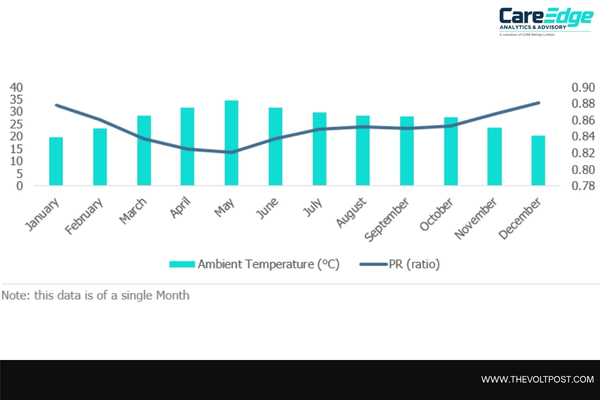
The cumulative effect becomes particularly visible during India’s summer months. In May, ambient temperatures often climb to around 34°C. Under such conditions, solar modules operate significantly hotter than the surrounding air, increasing thermal stress and reducing electrical efficiency.
Although irradiance levels remain highly favourable, a greater share of generated electricity is effectively lost within the system before reaching the grid.
This relationship is clearly reflected in the Performance Ratio (PR), one of the solar industry’s most important efficiency metrics. As temperatures rise, PR declines. During May, PR falls to approximately 0.82, the lowest level recorded during the year.
By December, however, average temperatures fall closer to 20°C, creating more stable operating conditions and sharply reducing thermal losses. The PR correspondingly rises to around 0.88, among the strongest annual readings.
The implication is significant. Summer delivers higher absolute generation, but winter delivers superior efficiency. For grid operators and investors alike, this distinction matters. Evaluating solar assets solely on gross generation risks overstating real system performance.
The proportion of electricity ultimately exported to the grid depends not only on irradiance but also on climatic conditions, operating temperatures and system-level losses.
Regional variation further complicates the equation. India’s diverse climatic zones mean that solar performance differs markedly across states, influenced by local irradiance patterns, humidity, temperature profiles and atmospheric conditions.
A solar plant in Rajasthan behaves differently from one in Tamil Nadu or Maharashtra, even under comparable installed capacities.
Thus, as India accelerates toward ambitious renewable energy targets, the findings underscore a broader truth about the energy transition, which ultimately calls for a timely roadmap to be carved in keeping with the complicated nature of energy optimization.
*All views expressed in this article belongs exclusively to Ms. Nitu Singh and do not reflect the views of The Volt Post. The Volt Post is not responsible for the opinions, figures, or statistics presented here.
The Volt Team is The Volt Post’s internal Editorial and Social Media Team. Primarily the team’s stint is to track the current development of the Tech B2B ecosystem. It is also responsible for checking the pulse of the emerging tech sectors and featuring real-time News, Views and Vantages.





 About the Author