



Mitsubishi Electric’s push to fold its power chip operations into a joint business with ROHM and Toshiba is emerging as one of Japan’s boldest attempts to build a global heavyweight in power semiconductors, with direct implications for EVs and the AI-driven data center build-out. The proposed tie-up, first detailed in reports such as Bloomberg, would place Japan back in contention in a segment that is rapidly becoming strategic infrastructure for electrification and high?performance computing.
Japan’s power chip champions have already moved beyond the idea stage. Mitsubishi Electric, ROHM and Toshiba have signed a memorandum of understanding and started formal talks to combine their power semiconductor operations into a single operating company focused on power devices.
Mitsubishi Electric is aiming to have a framework agreed by around September, according to coverage based on company briefings and regulatory filings, including reports in The Japan Times and others.
ROHM has indicated that a merged power chip business could become the world’s second-largest player by market share, just behind Germany’s Infineon Technologies.
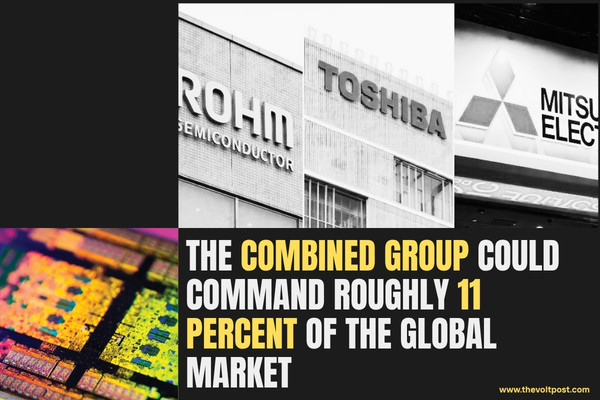
Analyst suggest the combined group could command roughly 11 percent of the global market, instantly turning Japan into a bigger player in automotive power electronics and data center power regulation.
Behind the talks is a clear strategic rationale. Power semiconductors sit at the core of electrification, controlling voltage and current in EVs, industrial drives, renewable energy systems and hyperscale computing infrastructure.
The rapid build?out of AI data centers and the accelerating shift to EV platforms have intensified competition for these devices, pushing Japanese manufacturers to seek scale and tighter integration to keep pace with global leaders.
Recent coverage notes that power-regulation chips are becoming more critical as next-generation AI server platforms demand higher power density and better thermal management, with advanced AI systems cited as examples of these demands.
For Japan’s broader industrial base, a unified champion in power chips integrates with national efforts to rebuild semiconductor competitiveness after years of ceding ground in logic and memory.
Policymakers have encouraged consolidation in key semiconductor segments to achieve both technological depth and manufacturing scale, and this proposed merger aligns squarely with that agenda.
The structure of the new entity is still being hammered out. Public statements from the companies describe an operating company that would integrate their respective power semiconductor divisions, while details such as ownership stakes and capital commitments remain under discussion.
Industry reporting outlines scenarios in which the firms create a joint venture that carves out power-device businesses yet allows each parent to retain its wider semiconductor and electronics portfolio.
Mitsubishi Electric president Kei Uruma has framed the goal as integrating “sales, manufacturing and development to build one single, robust company,” a vision that goes well beyond loose collaboration or simple supply agreements.
ROHM has highlighted expected synergies from consolidating plants, sharing R&D and coordinating product development, particularly in fast?growth areas such as AI server power stages and EV powertrains.
If the integration is completed, the new group would immediately become Japan’s largest power chip supplier and a close challenger to Infineon across key global markets. That kind of scale could start to reshape supply chains for automakers,  industrial OEMs and cloud providers that currently source power devices from a mix of European, US and Asian vendors.
For competitors including STMicroelectronics, onsemi and Chinese power-device makers, a unified Japanese player could increase pricing pressure and accelerate the race into wide-bandgap materials such as SiC and GaN.