


India and the European Union are fostering technology ties, putting semiconductors and artificial intelligence at the heart of a strategic partnership framed by the India EU Trade and Technology Council (TTC).
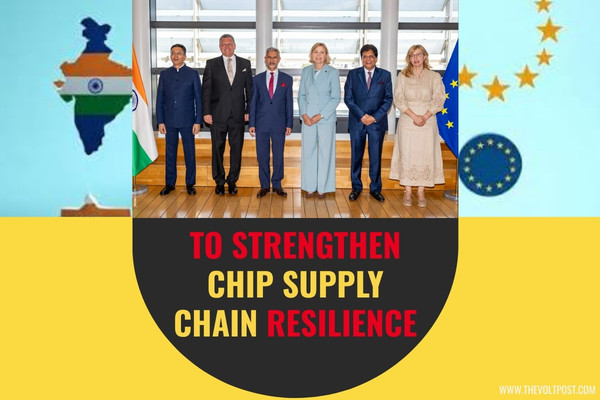
At the latest TTC meeting in Brussels, ministers and senior officials from both sides reiterated that chips and AI are now core pillars of their cooperation, alongside work on critical and emerging technologies, digital governance and economic security.
Discussions focused on deepening collaboration across AI, semiconductors, high performance computing, quantum technologies and 6G, while also advancing trusted digital ecosystems and a joint AI roadmap that supports innovation without compromising safety, ethics or responsible deployment.
Semiconductors have quickly become a flagship strand within the TTC framework. A dedicated Memorandum of Understanding on semiconductor ecosystems, supply chains and innovation was signed between India and the European Commission in late 2023 and later endorsed by the Indian cabinet, setting out how both sides will work together on this strategic sector.
The pact is designed to strengthen chip supply chain resilience by combining complementary strengths in design, manufacturing, research and talent, covering information sharing, joint R&D and innovation projects, and skills and workforce initiatives for the semiconductor industry.
A key objective is to cooperate on transparency around subsidies and maintain a level playing field, while still allowing room for targeted industrial policy on both sides.
For India, the arrangement dovetails with production-linked incentive programmes and efforts to attract front end fabs and advanced packaging; for Europe, it supports the EU Chips Act and its drive to localise more capacity across the semiconductor value chain.
On AI, officials from New Delhi and Brussels have agreed to build a shared roadmap that balances rapid innovation with secure and responsible use of the technology.
Priority areas include joint research, interoperable standards and governance frameworks that encourage trusted AI deployments in industry, public services and cross border trade.
The broader TTC agenda also points to EU India innovation hubs and a startup partnership to create more structured collaboration channels across AI, semiconductors, digital public infrastructure and digital skills.
 For India’s fast-growing AI and semiconductor ecosystem, this opens new pathways into European markets, research networks and investment capital. For the EU, it anchors a closer relationship with a large, rapidly digitising partner that is pushing deeper into advanced electronics and digital infrastructure.
On the AI side, a jointly developed roadmap and shared standards may help startups and platforms build products that can operate more easily across both markets, instead of navigating conflicting regulatory regimes.