


Infineon Technologies is stepping up big time as a key industrial partner in Europe’s race to make quantum computing practical and eventually profitable.
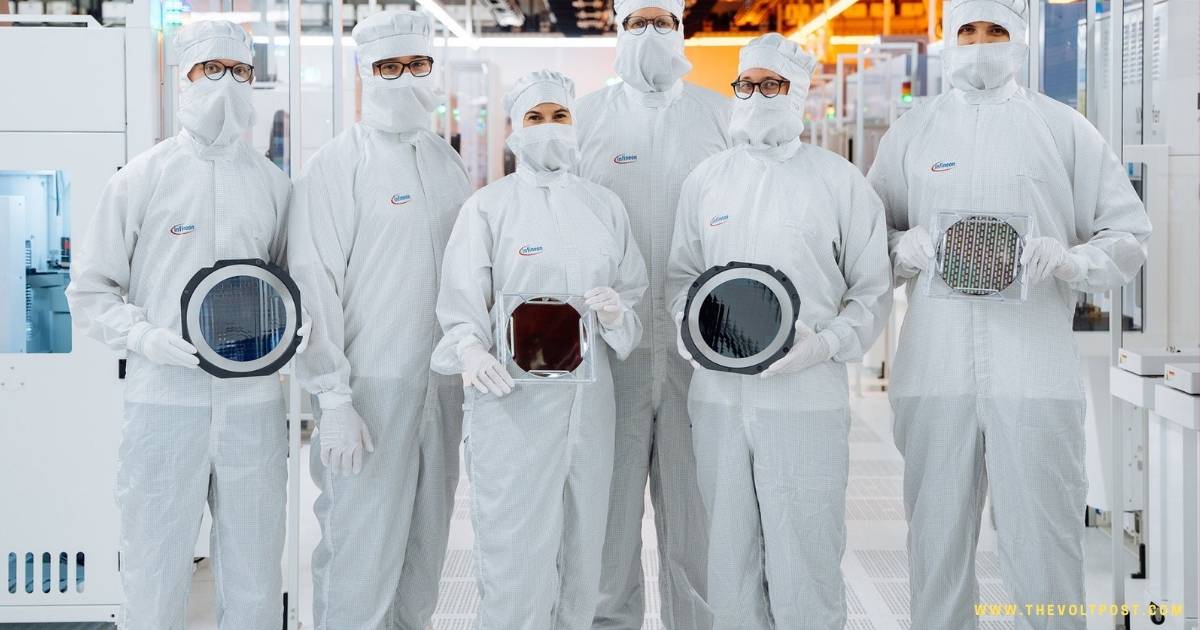
They’re bringing their world-class engineering and manufacturing chops to three major quantum pilot line projects named SUPREME, CHAMP-ION, and SPINS.
These European quantum pilot lines are all about bridging that tricky gap between lab experiments and real-world, industrial-scale production.
They give startups, SMEs, and research groups open access to top-tier facilities to fast-track quantum computing, communication, and sensing tech. In total, six projects across different hardware platforms have been greenlit to push quantum chip technology forward over the next seven years.
From Lab Curiosity to Fab Reality
Infineon’s quantum team is tackling three pilot lines with expertise in ion-traps, superconducting tech, and semiconductor spin systems.
Their dedicated labs sit right next to semiconductor production lines, so development stays tightly linked to manufacturing.
Working with consortium partners, they’ll speed up quantum progress across platforms while scaling production of critical hardware like quantum processing units.
Here’s the breakdown of Infineon’s three quantum pilot line projects:
CHAMP-ION (Championing a European advanced manufacturing of ion-traps)
Led by Silicon Austria Labs (SAL), this one’s launching Europe’s first advanced ion trap quantum chip manufacturing line.
21 partners from six countries are building the full value chain from design and microfabrication to testing.
The goal is to develop fully integrated, mass-producible, miniaturized ion trap systems that pack electronics and photonics onto a single chip for quantum computing apps.
SUPREME (Pilot line for superconducting quantum Chips)
VTT in Finland is steering this consortium of 23 partners from eight countries. They’re industrializing superconducting quantum tech, which delivers efficient, low-loss qubits using proven semiconductor processes for fast, reliable operations.
A big milestone is a 200-qubit, 3D integrated module that boosts stability, yield, and reproducibility.
SPINS (Pilot line for industrial quantum NanoSystems)
Imec’s coordinating this effort with 25 partners from nine countries. It’s focused on silicon or silicon-germanium quantum chips using mostly standard CMOS manufacturing for true scalability.
They’re creating standardized quantum design kits that let customers run multi-project wafers in industrial fabs.
All these projects get EU co-funding through the Chips for Europe Initiative and Chips Joint Undertaking, plus national support from participating countries.
This is Europe betting big on quantum sovereignty and Infineon’s right in the middle, turning sci-fi into silicon reality.
A Defining Future of Quantum Computing
Quantum computing allows calculations to be much faster and is one of the most disruptive technologies, enabling breakthroughs that address complex problems beyond the reach of classical computing and even supercomputers.
Its applications span areas such as drug discovery, advanced materials science, supply chain optimization, and highly efficient energy grid management. Studies project the overall quantum market to reach USD 97 billion by 2035.
Realizing this market and innovation potential depends on the rapid translation of R&D innovation into industrial manufacturing excellence. Quantum systems will only scale if their most critical components work reliably, repeatably and can be manufactured with precision and at scale.
 Leadership Comment
“The goal is very clear: to develop and manufacture quantum computers in Europe. The quantum pilot lines create exactly the kind of close, high?impact collaboration needed across the entire quantum value chain. Together with excellent partners, we are strengthening Europe’s quantum ecosystem and turning research excellence into scalable, industrial solutions. This is how quantum computing will move from the lab to real-world deployment”, says Sabine Herlitschka, Head of Strategic Funding Management at Infineon Technologies. “It significantly contributes to the goals of the European Chips Act and the digital sovereignty within this key technology.”