



Japanese Prime Minister Shigeru Ishiba and Vietnamese Prime Minister Pham Minh Chinh signed four pivotal agreements in Hanoi, marking a significant advancement in Japan-Vietnam relations.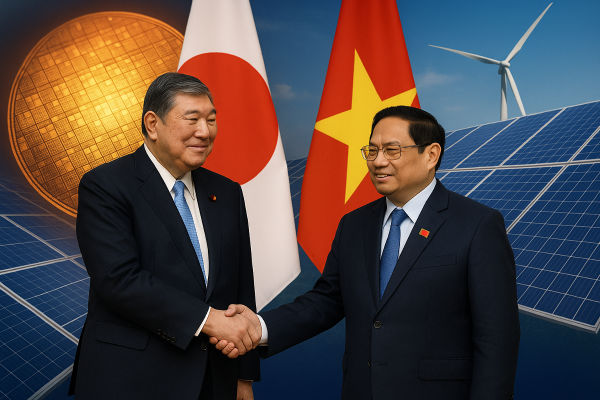
These agreements focus on collaboration in semiconductor research and development, clean energy initiatives, and the training of Vietnamese doctorate students in the semiconductor industry.
Key Agreements and Initiatives
The signed agreements encompass:
- Semiconductor Research and Development: Joint efforts to advance microchip technologies, positioning Vietnam as a key player in the global semiconductor supply chain.
- Clean Energy Collaboration: Initiatives aimed at transitioning to sustainable energy sources, reducing carbon footprints, and promoting environmental conservation.
- Human Resource Development: Japan’s commitment to support the training of approximately 250 Vietnamese doctorate students in the semiconductor field, enhancing Vietnam’s technical expertise and workforce capabilities.
Leaders’ Statements
Prime Minister Ishiba emphasized the importance of this partnership, stating, “We will support Japanese companies to invest and expand their business in Vietnam and develop human resources in the semiconductor field in Vietnam.”
Prime Minister Chinh highlighted Vietnam’s strategic focus on technological advancement, noting, “Vietnam is now eyeing a rapid climb up the global supply chain and has put computer chips at the heart of its development plans.”
Contextualizing the Partnership
Navigating Global Trade Dynamics
This collaboration emerges in the context of shifting global trade dynamics, particularly following U.S. President Donald Trump’s imposition of tariffs affecting both Japan and Vietnam. The partnership aims to mitigate the impact of these tariffs and strengthen economic resilience.
Responding to Regional Developments
Prime Minister Ishiba’s visit to Southeast Asia, including the Philippines, follows Chinese President Xi Jinping’s tour aimed at positioning Beijing as a stable alternative to the United States. Japan’s engagement with Vietnam signifies a strategic move to reinforce alliances in the region.
Economic Growth and Technological Advancement
The agreements are poised to bolster Vietnam’s economic growth, elevate its position in the global semiconductor industry, and promote sustainable energy practices. For Japan, the partnership opens avenues for investment and collaboration in a rapidly developing market.
Regional Stability and Cooperation
Strengthened Japan-Vietnam relations contribute to regional stability and exemplify the potential of bilateral cooperation in addressing global challenges such as technological innovation and climate change.