



NXP Semiconductors is eyeing Mohali, Punjab as a potential new R&D hub in India, as part of its broader bet on the country’s semiconductor and electronics ecosystem.
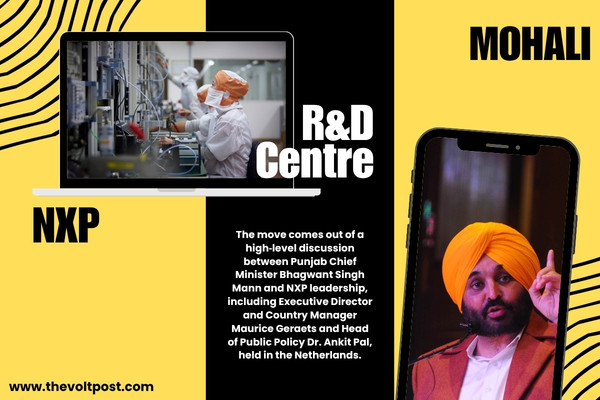
The move comes out of a high-level discussion between Punjab Chief Minister Bhagwant Singh Mann and NXP leadership, including Executive Director and Country Manager Maurice Geraets and Head of Public Policy Dr. Ankit Pal, held in the Netherlands.
During the meeting, the CM invited NXP to consider setting up an R&D hub in Mohali, pitching the city as an emerging electronics and innovation cluster with strong academic and industry linkages.
Mohali is already home to IT parks, knowledge institutions, and a growing network of engineering and design talent factors that make it attractive for a global semiconductor player looking to scale design and systems work in India.
Punjab’s government also outlined plans to develop a “Silicon Valley-like” ecosystem around Kalkat Bhawan, located near the Chandigarh International Airport and IT City, with a focus on semiconductor design, embedded systems, and innovation-driven electronics.
The idea is to pull global players such as NXP into a concentrated ecosystem that can feed off local universities and startups while creating high-value job opportunities.
Discussions covered not only the possibility of a physical R&D centre but also deeper collaboration in areas such as Near Field Communication (NFC), Advanced Driver Assistance Systems (ADAS), and secure connectivity all core to NXP’s automotive and industrial portfolios.
The state also floated the idea of pairing NXP’s Startup Challenge Programme with Startup Punjab to co-develop advanced solutions and mentor local startups working in embedded and automotive electronics.
For NXP, the move would complement its existing R&D footprint in India, where it already runs multiple semiconductor design centres and invests heavily in the country’s embedded-systems and automotive-electronics talent.
The company has previously committed to more than $1 billion in R&D investments across India over the coming years, a strategy aligned with global chipmakers that are expanding their design and system-level engineering bases in India while still weighing advanced manufacturing options elsewhere.
 Establishing an R&D presence in Mohali would not only deepen NXP’s connection to India’s automotive and auto-component ecosystem, but also signal a growing appetite from global semiconductor firms to treat Indian design hubs as core elements of their global innovation pipeline.
For the country’s semiconductor ambitions, that is a clear sign that the focus is shifting from manufacturing?only narratives to a broader vision around system design, talent, and ecosystem depth.