



Bosch eyes robotics as its core auto parts business faces growing pressure.
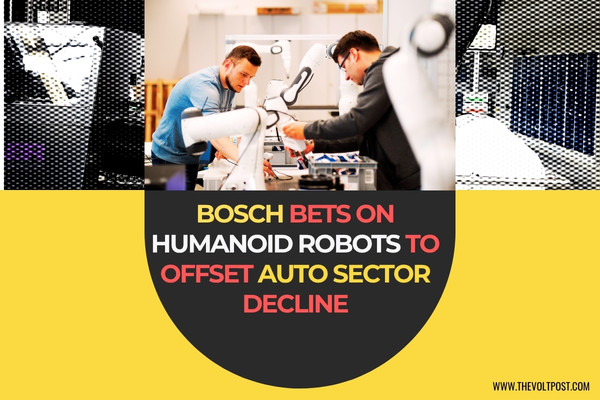
The German industrial giant said it will expand its push into humanoid robotics, a move that reflects both the slowdown in traditional automotive markets and the growing commercial potential of AI powered robots.
Bosch makes a wide range of components, from braking systems to sensors, and believes that demand for its technology will rise as humanoid robots become more capable and more widely adopted.
At the center of Bosch’s strategy are MEMS sensors, which help robots interpret movement and touch.
These tiny components are essential for making robots more precise and responsive, whether they are handling delicate objects or carrying out heavier tasks. Bosch pointed to industry estimates suggesting the MEMS sensor market could grow to more than $19.2 billion by 2030.
The company is also using robotics as a way to improve its own operations. Alongside partner Neura Robotics, Bosch is collecting  factory data to help train robots for industrial environments. Workers at some of Bosch’s facilities will wear sensor suits to generate that training data, supporting future automation efforts inside its factories.
For Bosch, the shift is as much about industrial survival as it is about new business. Weak Auto Sector demand in Europe, stiff foreign competition, and grwoing pressure is reported to forcing suppliers to look beyond cars. Robotics now looks like one of the strongest paths forward.