



In order to optimize die-level test yields for wide-bandgap (WBG) devices—which are crucial for power semiconductors—Advantest Corporation unveiled an integrated test cell. The new HA1100 die prober is combined with the company’s CREA MT series power device testers to create the Advantest Known Good Die (KGD) Test Cell.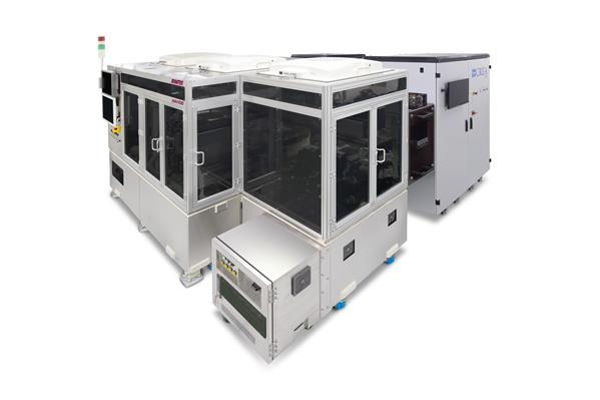
The increasing expansion of electric vehicles (EVs) and power infrastructure is driving up demand for power semiconductors. Power semiconductors can be designed and manufactured more quickly and efficiently than silicon-based devices because to WBG devices, especially silicon carbide (SiC) and gallium nitride (GaN).
It is difficult to screen for WBG device failures, though, because of the high voltage and current at which they function, which can harm the probe card, chuck, and devices.
Essentially serving as a one-stop shop for efficient equipment management, the Advantest KGD test cell solution helps reduce customers’ manufacturing costs. CREA’s proprietary probe card interface (PCI) technology can eliminate damage risk. However, if damage does occur, the company can investigate it using the test cell, allowing customers to minimize downtime.
The HA1100 die prober for the CREA MT series test systems enables the assembly of dies in power modules using only passed (KGD) die, ensuring no failed die find their way into the module. This prevents yield loss at module test, thus reducing the loss of final multi-die assembled power modules.
Key Comments
“Our new KGD test cell is the first solution to combine the CREA MT testers with Advantest’s proven handling technology, enabling dynamic test at the die level,” said Kazuyuki Yamashita, executive vice president, DH Group, Advantest. “The CREA PCI technology regulates power/energy to protect the probe card, the chuck and the devices from damage while testing failing die – a competitive differentiator that lets customers assemble their modules with confidence.”
Availability
Currently under development, the HA1100 die prober will be released to the global market in the second quarter of 2025.