



A few years ago, the process of selecting electronic components had a clearly defined hierarchy. At the top were technical parameters – voltages, tolerances, temperature characteristics, or enclosures. Only at the end, often after the project had been frozen, did the topic of availability of a compoenent arise. This was the operational area of purchasing departments, not engineers.
Today, this model has ceased to function. The experiences of 2020–2025 – from pandemic disruptions to geopolitical tensions and an explosion in demand for electronics – have led to a fundamental change: the availability of a component has become one of the key design parameters.
This is confirmed by data from Octopart/Altium for 2024–2025, which shows that 59% of platform users prioritize availability data during research, and 51% use it to search for substitutes (source: https://resources.altium.com/pl/p/2024-octopart-user-survey-results).
This is not a minor change in perspective, but a clear redefinition of the design process that has affected both manufacturers and distributors.
A turning point: when parameters were no longer enough
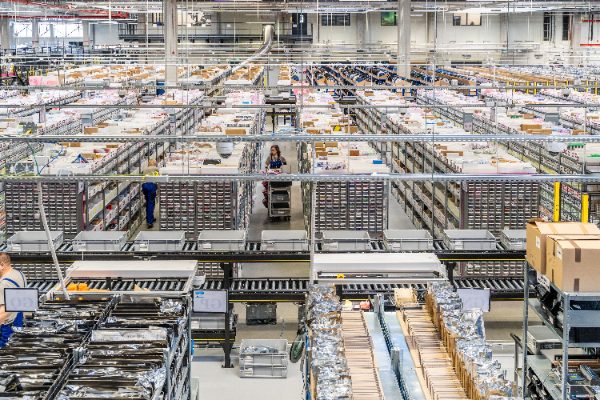
The most significant impulse came from the semiconductor market during the global supply crisis. At its peak, the median inventory of key components fell from about 40 days to less than 5 days (source: https://spectrum.ieee.org/global-chip-shortage-charts), while demand surged dramatically.
It was then that the industry understood something that had previously been marginalized: an unavailable component, no matter how good its parameters, lost its design value. Moreover, the presence of such elements in a project could jeopardize the entire production.
Importantly, the bottlenecks did not only concern the most advanced technologies. Problems arose in areas such as older generation microcontrollers, analog circuits, or optoelectronics – precisely where changing a component often means costly redesign or lengthy validation.
As a result, even relatively simple projects could be halted by a single, seemingly “non-critical” element.
A new reality: a market that has not returned to equilibrium
After 2023, many companies expected a return to stability. The initial causes of the crisis disappeared, but were replaced by other tensions, preventing the market from stabilizing fully. Instead of one global crisis, problems now occur in specific locations.
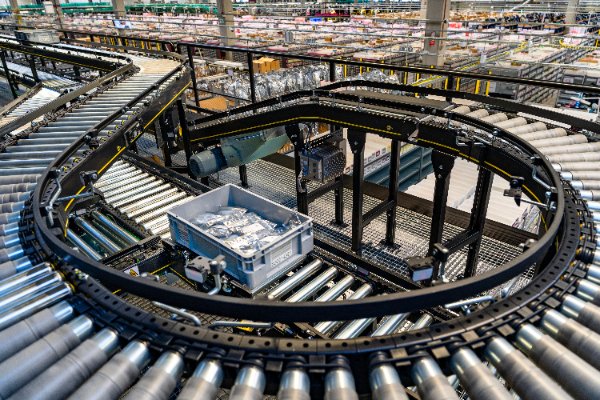 Average delivery times for selected categories of components remain significant: from several to even dozens of weeks, depending on the product class.
At the same time, new sources of demand generate localized overloads in specific market segments. As a result, availability has ceased to be a global and common problem, becoming a more difficult-to-predict and manage local issue.
Additionally, factors that were previously secondary have come into play: logistical disruptions (such as the crisis in the Red Sea), export policies for raw materials, trade wars, or geopolitical tensions. All of this means that the availability of components has become a dynamic variable – rather than a constant, as it was in the past.
A paradigm shift in design
However, the biggest change has occurred in the very approach to design. Designing electronics has ceased to be a linear process, where a schematic is created first, and then “parts are organized.”
Today, design and the supply chain are coupled from the very beginning.
Modern EDA tools and BOM management systems reflect this change: a component is now defined not only by electrical parameters but also by lifecycle status, stock availability, lead time, and the ability to source from alternative suppliers.
This approach is reflected in specific actions: using alternatives, building approved supplier lists, considering substitutes, or designing architectures that allow migration between components. Increasingly, scenarios are even accepted where replacing an unavailable component requires changes not only in hardware but also in firmware, drivers, or parts of the device’s functionality – as long as it enhances safety and supply continuity.
Availability as a component of product value
In this new reality, the definition of component quality is also changing. Technical parameters answer the question of whether a circuit will function as intended. Availability answers the question of whether a product can even be produced, implemented, and maintained over time.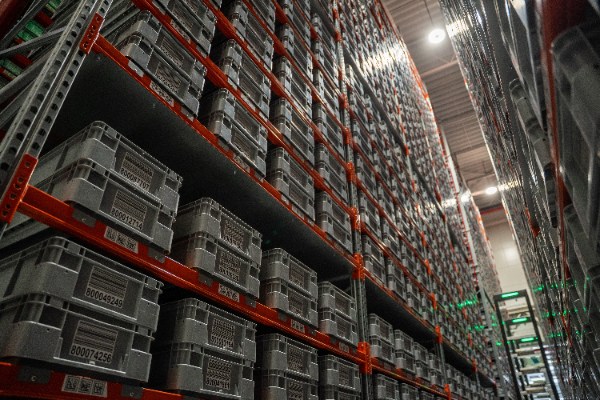
This distinction is fundamentally important for business. Examples from recent years – from the automotive industry’s semiconductor shortages to periodic availability issues with memory and single-board computers like the Raspberry Pi – show that the lack of even a single component can lead to millions in losses and force changes in product strategy.
Therefore, availability has ceased to be merely an operational issue – today it is a strategic element.
Shortages and Turning Points in the Component Market 2020–2025
- 2020: pandemic, surge in demand for electronics, supply chain overload
- 2021: inventories of hard-to-find semiconductors drop from 40 days to below 5 days
- 2021: Renesas Naka fire exacerbates pressure on automotive MCUs
- 2021: GM reports a sales drop of 218,195 cars in Q3 due to chip shortages
- 2021: Raspberry Pi maintains production of about 7 million units despite higher demand
- 2022: Raspberry Pi recommends migrating projects from 3B+ to Pi 4 1GB for better availability
- 2023: broad supply improvement, but incomplete normalization of all component families
- 2024: Red Sea crisis extends transit times and increases logistics costs
- 2024: AI/HPC and geopolitical tensions maintain selective bottlenecks
- 2025: semiconductor market continues to grow, but availability remains asymmetrical
The role of the distributor in the new market model
The changing significance of availability could not fail to impact the role of distributors. In the traditional model, they were primarily a sales channel – an intermediary between the manufacturer and the customer. Today, their role is being redefined.
A modern distributor is not just a store. Increasingly, they serve as a hub for information, logistics, and risk management, providing access to real-time availability data, the ability to compare alternatives, and support in terms of quality and delivery predictability. – points out Grzegorz Kobalczyk, Sales Director at TME.