


India’s rail sector, or let’s say Indian Rail Mobility stands at a transformative juncture in 2025, driven by technological innovation, increased capital investment, and an evolving private-sector participation landscape. Rail mobility remains a critical backbone for economic growth, connecting industries, cities, and rural areas alike.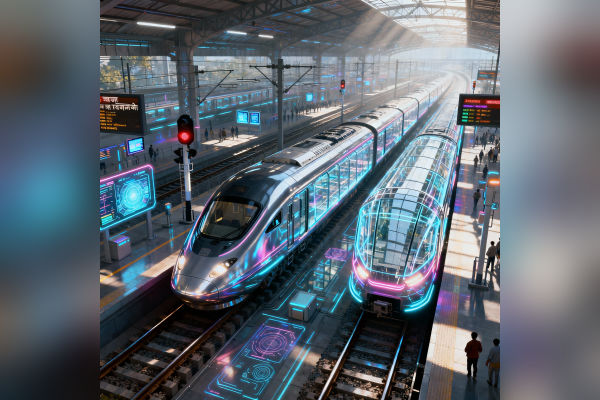
This article explores the current market challenges facing the Indian railways, notable technological developments, major private players reshaping the ecosystem, and emerging innovations that chart the future course of the rail transport network.
Market Challenges in Indian Rail Mobility
Despite decades of operations and progress, Indian Railways grapples with several significant structural and operational challenges. The vast network operates at over 150% of capacity on many routes, causing congestion that curtails maintenance windows and safety inspections.
Safety concerns, including aging infrastructure, human factors, and accident-prone unmanned level crossings, contribute to safety incidents that impact lives and assets.
Network expansion faces hurdles due to slow addition of new routes, as recent capacity growth largely stems from multitracking and gauge conversion rather than fresh route lengthening.
This limits geographical reach, reinforcing dependence on existing corridors. Road transport competition with superior first-mile and last-mile connectivity also chips into the railways’ market share.
Financially, the sector is challenged by populist fare policies that restrict revenue and deter private investments—attempts to scale public-private partnerships (PPP) have met limited success amidst high-risk, low-return dynamics.
Land acquisition delays add to project slippages, and imported technology dependence from Japan and Europe slows high-speed rail projects, compounded by global geopolitical uncertainties.
The Indian transportation ecosystem also suffers from inadequate infrastructure bottlenecks such as poor rural connectivity, urban congestion, and insufficient logistics efficiency.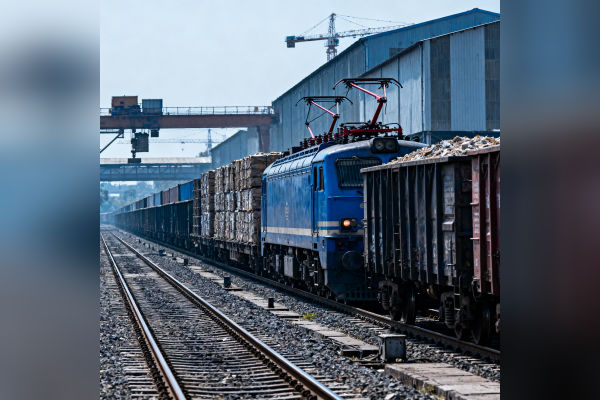
Further, the sector’s heavy fossil fuel reliance strains economic and environmental sustainability, with slow adoption of electric or biofuel alternatives due to high infrastructure costs.
In summary, while Indian Railways is vital, it faces complexities around capacity constraints, financial sustainability, cumbersome project execution, safety, and intense modal competition—all of which require strategic multi-pronged intervention to overcome.
Technical Developments Transforming Rail Mobility
The transformative journey for Indian rail mobility is supported by focused technological upgrades and modernization strategies aiming to increase speed, efficiency, sustainability, and digital sophistication:
- Semi-High-Speed and High-Speed Trains: India’s phased introduction of semi-high-speed trains like the Vande Bharat Express (160-180 km/h, targeting 4,500 trains by 2047) signals a bold shift from legacy Mail and Express trains to faster, premium alternatives. The ambitious Mumbai-Ahmedabad Bullet Train (320 km/h) and subsequent corridors like Chennai-Bengaluru, plus Regional Rapid Transit Systems (RRTS) around Delhi and other metros, target transformational speed and connectivity gains.
- Dedicated Freight Corridors (DFC): Massive investments in freight-specific rail corridors aim to segregate cargo from passenger traffic, alleviating line congestion and enhancing freight reliability and speeds. Newly launched 9,000 HP electric locomotives promise greater hauling power and efficiency, crucial for freight operations.
- Digitalization and Smart Tech: Indian Railways is embracing digital platforms such as IRCTC’s SwaRail app for seamless passenger services and enterprise-grade RailTel communications infrastructure supporting LTE-R telecom and electronic interlocking. The deployment of 5G-based railway communications aims for predictive maintenance, improved safety, and real-time train-ground connectivity.
- Safety Innovations: The indigenously developed KAVACH Automatic Train Protection system is expanding across the network, significantly reducing collision and signal-passing risks. Drones are deployed for infrastructure inspection and station maintenance, enhancing efficiency and worker safety.
- Green and Energy-Efficient Initiatives: Efforts in electrification, renewable energy integration at stations, and adoption of energy-efficient rolling stock underpin Indian Railways’ sustainability roadmap.
Major Private Companies Driving Rail Tech and Infrastructure
While Indian Railways remains state-managed, private companies and public sector undertakings (PSUs) have emerged as critical enablers in manufacturing, engineering, and services:
- Indian Railway Finance Corporation (IRFC): As the railways’ dedicated financing arm, IRFC plays a vital role raising capital for rolling stock and infrastructure projects via bonds and loans, with an asset base exceeding ?4.66 lakh crore in FY24.
- Rail Vikas Nigam Ltd (RVNL): A government enterprise focused on track doubling, electrification, and major infrastructure upgrading projects.
- IRCON International Ltd: A leading EPC contractor for track laying, electrification, and station modernization with projects domestically and abroad.
- BEML Ltd and Jupiter Wagons: Private-sector manufacturers of rolling stock and freight wagons, capitalizing on “Make in India” to meet demand and export orders.
- RailTel Corporation: The tech backbone for digital communications in Indian Railways, spearheading telecom infrastructure and safety systems like KAVACH.
- Siemens India and HBL Engineering: Both companies bring advanced rail electronics, signaling, and specialized systems to support electrification and metro projects, with Siemens increasing its mobility footprint in India.
The ecosystem also sees vibrant startup engagement through innovation sandboxes and collaborative summits with Indian Railways, fostering agile development of new rail technologies and smart mobility solutions.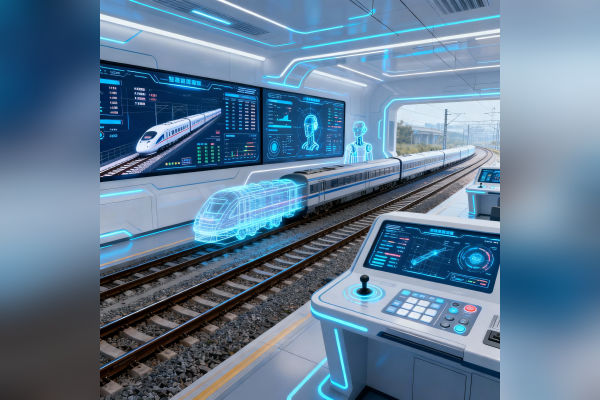
Key Innovations and Future Trends
Ahead, the Indian rail mobility embodies promising innovations to redefine the sector’s operational and strategic paradigms:
- Expanded Semi-High-Speed and Bullet Train Networks: By 2040-2050, high-speed corridors and ultramodern trains will form the backbone of India’s rail mobility, replacing most older trains with Vande Bharat and bullet train services across the Golden Quadrilateral and beyond.
- Hyperloop and Maglev Explorations: Early conceptual studies and pilot projects are underway to assess feasibility for India’s dense and high-traffic corridors, potentially leapfrogging traditional rail technologies.
- AI and Data Analytics: Utilization of Artificial Intelligence for predictive maintenance, optimized scheduling, passenger demand forecasting, and security threat analysis will enhance system reliability and passenger experience.
- Green Mobility and Energy Transition: Acceleration in electrification, solar and wind power use at stations, biofuel trials for locomotives, and energy recovery systems will reduce carbon footprint significantly.
- Multimodal Integration: Seamless first-mile and last-mile connectivity through integrated transport hubs combining metro, bus, rail, and shared mobility services will address critical bottlenecks in urban and rural mobility.
- Digital Twin Technology: Simulation and live digital models of networks and assets will transform maintenance planning, safety management, and capacity utilization.
- Private Sector and International Collaboration: Enhanced PPP models and international partnerships will boost technology transfer, investment flow, and global competitiveness of Indian railways and manufacturers.
Driven by technological advancement, infrastructure investment, and policy reforms aimed at modernizing one of the world’s largest rail networks is a critical perspective. Overcoming challenges in capacity, safety, financing, and project delivery will be crucial.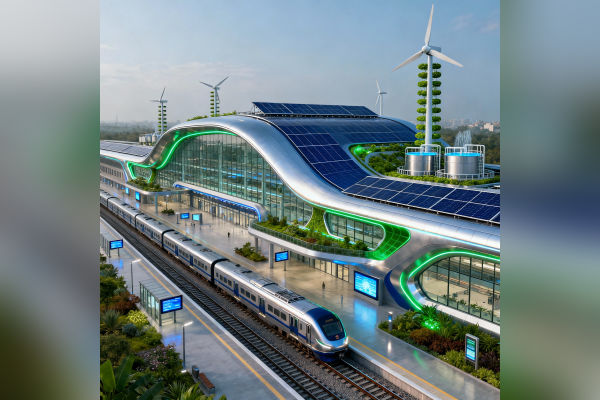
The ongoing development of semi-high-speed and high-speed trains, dedicated freight corridors, digital systems, and green technology initiatives reflect a forward-looking vision.
Coupled with the growing role of private manufacturers and tech firms, Indian Railways is moving toward a future defined by speed, efficiency, sustainability, and smart connectivity. This transformation not only enhances domestic transport but positions India as a global rail technology innovator and exporter, providing compelling opportunities for investors, technology providers, and infrastructure developers within the B2B ecosystem.
The journey of India’s railways from legacy giant to a digitally enabled, high-speed, and green mobility leader has just begun and promises to shape economic growth and societal progress in the decades ahead.