



Rohde & Schwarz, in collaboration with Qualcomm Technologies, has completed an early verification of a 3GPP Release 17 Search Space Set Group Switching (SSSG) conformance test case, marking a step toward broader conformance testing and commercial deployment of the 5G power-saving feature.
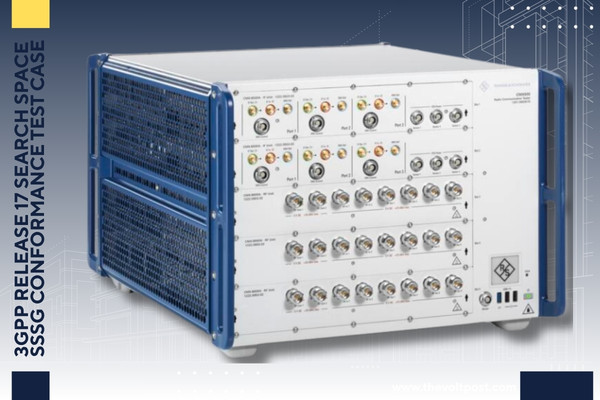
The verification has now been formally submitted for RAN5 verification, connecting early practical testing with the ongoing development of 3GPP conformance specifications.
SSSG was introduced in 3GPP Release 17 to help reduce power consumption in 5G user equipment. The feature optimizes how devices monitor the Physical Downlink Control Channel (PDCCH), allowing them to reduce unnecessary control channel monitoring while continuing to reliably receive scheduling information.
Early verification supports 5G conformance readiness
Rohde & Schwarz and Qualcomm Technologies are the first companies to complete all relevant test aspects for the conformance test case TS 38.523-1 TC 7.1.1.12.5 for SSSG.
The verification was conducted using a mobile test platform incorporating the Qualcomm X105 5G Modem-RF and Rohde & Schwarz’s R&S TS-PCT protocol conformance test platform, based on the CMX500 5G one-box signaling tester.
By completing the test at an early stage, the companies have supported the readiness of SSSG across the wider 5G conformance ecosystem. For device manufacturers, chipset developers and certification organisations, early verification can help establish a clearer path toward testing and certifying devices that implement the power-saving functionality.
Verification feeds findings back into 3GPP
The collaboration also identified areas where the existing conformance specification could be refined during the verification process.
The findings supported the submission of a change request to 3GPP RAN5, the group responsible for 3GPP conformance test specifications. This creates a direct link between practical testing and the continued development of the standards used to evaluate 5G devices.
The work highlights how early execution of conformance tests can do more than establish whether a feature works as specified. It can also uncover issues or ambiguities that may help improve future test specifications.
SSSG targets lower power consumption in 5G devices
Power efficiency remains an important consideration as 5G devices support increasingly complex connectivity and data-intensive applications.
SSSG addresses this by changing the way a device monitors PDCCH activity. Instead of continuously monitoring control information across unnecessary search spaces, the mechanism can reduce monitoring activity according to network requirements.
This can lower the amount of time and processing resources a device spends monitoring control channels, helping improve overall power efficiency while maintaining reliable reception of scheduling information.
The successful early verification by Rohde & Schwarz and Qualcomm Technologies therefore represents another step in moving advanced 5G power-saving capabilities from standardisation into practical conformance testing.
As the feature progresses through the verification ecosystem, the work could help device manufacturers and certification bodies prepare for more reliable testing of Release 17 power-efficiency functions.
To Know More About Protocol Conformance Test Solutions from Rohde & Schwarz: CLICK HERE