


APEM and Alps Alpine Europe have entered into a strategic partnership to develop next generation human machine interface systems(HMI Systems) for industrial OEMs across Europe. The first wave of joint work will zero in on fast growing material handling and logistics applications, where better operator interfaces are quickly becoming a real competitive edge.
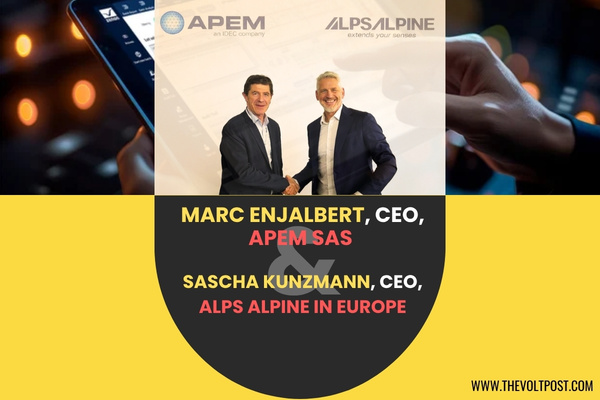
APEM SAS, part of the IDEC Group, brings decades of experience in rugged industrial HMIs – the armrests, dashboards, cockpits, tiller heads and modular panels that already live on equipment in harsh, high duty environments.
Alps Alpine Europe adds its side of the equation with automotive grade electronics, sensing technologies, embedded software and large scale industrialization expertise built through years of work on vehicle modules and high reliability systems.
Together, the two companies want to move OEMs away from stitching together separate components and toward fully integrated HMI systems designed as complete solutions from day one. The idea is to meet growing demands for connectivity, automation and electrification while giving operators more comfortable, intuitive and safer controls on heavy industrial equipment.
Initially, the collaboration will focus on the material handling segment – one of the fastest expanding areas in industrial equipment thanks to e commerce growth, warehouse automation and last mile logistics. That puts forklifts, pallet trucks, autonomous warehouse vehicles and similar platforms at the front of the queue for early projects, where robust, networked and easy to use HMIs can strongly differentiate one machine from another.
Once those first programmes are moving, APEM and Alps Alpine Europe plan to extend their joint HMI work to off highway vehicles, industrial machinery, automated equipment and future mobility platforms. In all of these markets, the mix of good ergonomics, reliable connectivity and long term durability is increasingly central to how OEMs compete and how operators interact with complex systems on the shop floor or in the field.
On the product side, the partners say their combined offering will focus on engineered HMI solutions built as full systems, not just assemblies of switches, joysticks and displays. Typical deliverables will include integrated armrests, cockpits and dashboards with embedded sensing, communication and digital features designed straight into the hardware.
Automotive level engineering standards will be carried over and adapted to industrial robustness requirements, so these HMIs can handle vibration, temperature extremes and heavy duty usage while still meeting functional safety and reliability targets. Alps Alpine’s strength in sensor integration and module design, paired with APEM’s application know how and close OEM relationships, is intended to shorten development cycles and reduce integration risk for equipment makers.
To make the partnership work on the ground, the companies have set up a joint team drawn from both the companies. This group will work directly with OEMs, spot new project opportunities and steer future HMI platforms from concept through industrialization.
 Leadership Comments