

We are spoiled for choice when it comes to displays for DIY projects. However, not all display technologies are equally well-suited for all types of applications, and picking the right one for a project is key. This article explores the evolution of display technology, examining the benefits and drawbacks of common display types.
Glowing Examples of Early Display Technology
Neon indicators were among the first affordable visual output devices in early computers and electronic equipment. Dating back to the 1950s, these tiny bulbs were commonly used as simple binary status indicators.
Nixie tubes represent a more intricate evolution from simple neon bulbs. Instead of a single glow, the tubes contain stacked wire cathodes shaped as numbers or letters. When high voltage is applied, the chosen cathode glows in a warm, orange light, creating a distinctive, inviting retro style that still fascinates many today.
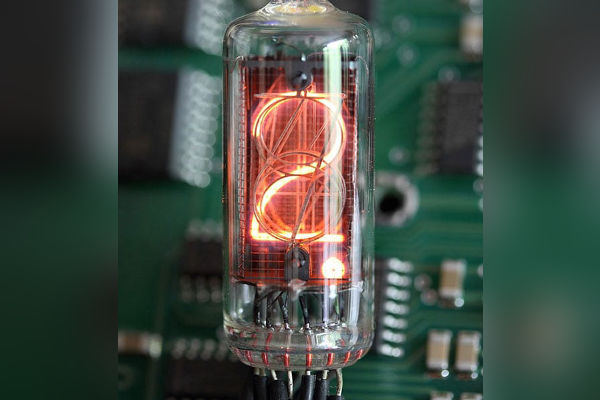
Both of these technologies emit a warm amber glow that modern displays cannot replicate, making neon output devices a popular choice for DIY projects aiming for a vintage aesthetic. They can also be durable with a long lifetime when driven correctly.
On the flip side, neon displays are fragile and require high voltages to operate. They are no longer mass-produced, making them difficult to find and costly.
The Advent of Affordable Consumer Displays
Nixie tubes and neon indicators were common in industrial applications. However, they saw little to no widespread use in consumer-grade electronics, other than as on/off indicators.
Output devices intended for home use often used cathode ray tube (CRT) monitors to display visual information. In the early stages, starting in the 1930s, CRTs were usually monochrome devices, meaning they could display data only in one color, usually a shade of green, white, or amber.
CRTs work by firing a focused electron beam onto a phosphor-coated screen. The beam is steered by internal electromagnets, allowing it to reach every point on the display.
Wherever it strikes, the phosphor glows, and by sweeping the beam across the screen in rows while varying its intensity, the display produces an image.
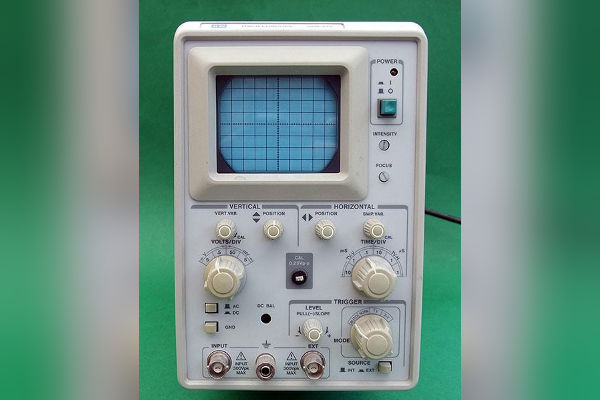
Monochrome CRTs achieve different shades of the same color by controlling how long and how strongly the electron beam excites each spot: the more energy delivered, the brighter the pixel. Color CRTs use three electron guns (red, green, and blue) that target matching phosphor dots on the screen.
A fine metal shadow mask ensures that each gun hits the correct phosphor layer. By blending the brightness of the three primary colors, the screen produces a full-color image.
Despite their retro appeal, CRTs are rare in modern DIY projects. They are too heavy, bulky, and power-hungry for most practical uses, and the high internal voltages make them risky to handle.
Still, they remain valued in niche communities such as retro gaming and computing, where their high-contrast images and characteristic scanlines provide an authenticity that modern displays can’t quite match.
Ultra-Vibrant Classics
Vacuum fluorescent displays (VFDs) sit somewhere between Nixie tubes and CRTs in terms of their operation. Inside a vacuum tube, heated filaments emit electrons that excite phosphor-coated segments, causing them to glow with a bright, greenish-blue light.
The resulting bright glow made VFDs extremely popular in consumer electronics from the 1970s through the early 2000s, at a time when LEDs were more expensive and much less efficient than modern ones.
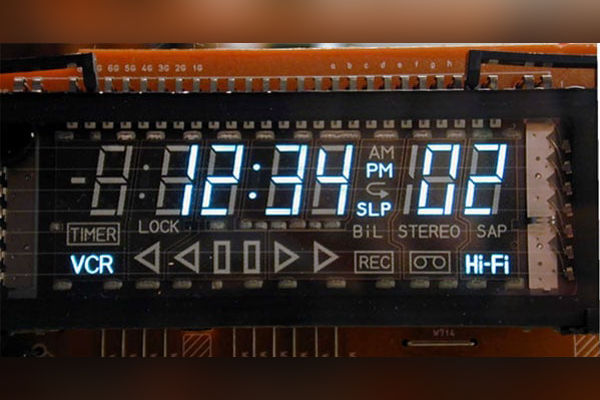
Though VFDs are no longer manufactured at scale, they can still be found as surplus or salvaged from old electronics. Working with these displays
can be tricky because they demand a higher operating voltage, typically around 50V. However, driver ICs can help integrate them into modern DIY projects. They offer a distinctive retro-futuristic look that’s striking in custom clocks, watches, and audio displays.
The Affordable Low-Power Revolution
The first LEDs appeared in the 1960s, but they were experimental, expensive, dim, and available only in red. Over time, LEDs have become brighter, more affordable, and available in multiple colors.
Their main advantages are low cost, drastically reduced operating voltage and power consumption, easy integration into low-power circuits, no warm-up or cool-down time, and greater durability. These reasons led to LEDs slowly replacing VFDs and neon indicators in both industrial and consumer electronics.
Besides simple binary indicators, LEDs can be arranged into 7-segment displays, which are commonly found in maker projects. This kind of display arranges seven individual LED segments in groups, where each segment can be toggled to represent alphanumeric characters:
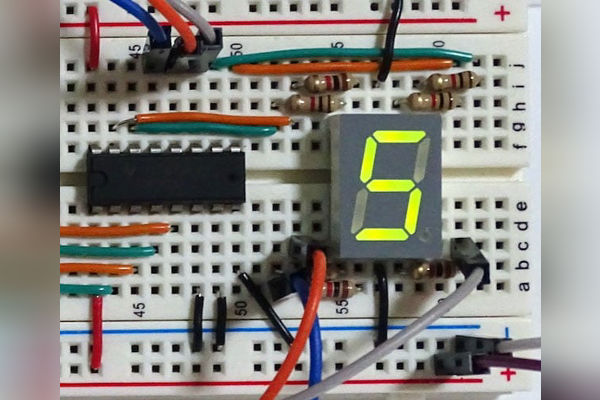
The LEDs can also be arranged in a grid to form an LED matrix, which, when using a sufficiently large number of diodes, can be used to show more complex shapes.
The benefits for makers are the ease of use, low cost, high availability, and low power consumption. Drawbacks include a more sterile or standardized look compared to VFDs or Nixie tubes, limited resolution of simple displays, and the complexity of large LED matrices, which can have hundreds of individual control lines.
Character LCDs: An Alternative To LEDs
Character LCDs can display a fixed number of simple symbols and shapes, such as letters, numbers, and sprites. Small matrices of pixels, each consisting of tiny liquid crystal cells arranged in a grid, form the display’s characters.
Each of these cells acts like an electronic shutter. By altering the voltage, the crystals twist to block or allow light to pass through, allowing the display to make a pixel appear dark or light.
Commonly, a backlight behind the display shines through the open crystals, making the characters visible, while the closed crystals stay dark. Displays without a backlight use a coating to reflect light and reveal the characters.
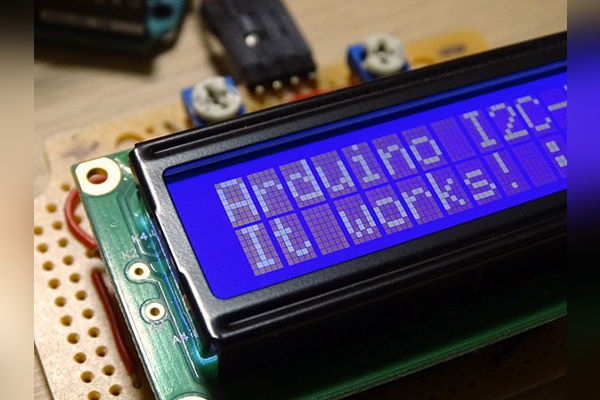
Many projects benefit from using LCDs due to their ease of use, low cost, and widespread availability. They work well in low-power projects, and libraries make them simple to use with MCUs.
Drawbacks include the display’s limited flexibility, which lets users show only predefined characters in a fixed grid. The resulting graphics are simple, and the displays are usually monochrome with basic backlighting.
Modern Display Technology for Everyday Use
TFT LCDs, commonly found in modern displays, are conceptually related to more straightforward character LCDs. However, TFT LCDs have a more complex internal structure. In modern full-color displays, each pixel has three thin-film transistors (TFTs).
These TFTs act as switches that control the individual RGB (red, green, blue) liquid crystals that form the RGB subpixels.
By adjusting this voltage, the crystals twist to let more or less light through, producing different brightness levels. Applied to three subpixels, the display can create full-color images.
Modern TFT LCDs are easy to use, and commonly available libraries make it straightforward to send image data to the screen. These displays offer many advantages, including the ability to show arbitrarily complex graphics, high brightness, rich and accurate colors, fast response times, and support for a wide range of sizes and resolutions, making them suitable for everything from small screens to large TVs and computer monitors.
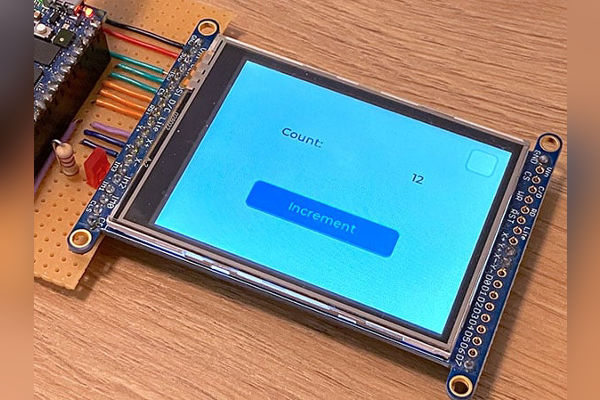
Drawbacks include higher cost and complexity, increased power consumption, limited viewing angles, relatively poor black levels due to the backlight, and typically slower response times than OLED screens offer.
Specialty Displays for Extraordinary Projects
OLEDs, or organic light-emitting diodes, are displays made of thin organic films that emit light when an electric current passes through them. Unlike LCDs, OLEDs do not require a backlight:
Each pixel emits light, enabling extremely thin, light, and sometimes even flexible displays. Further, OLEDs produce extremely deep black tones, high contrast, and vibrant colors.
For users, OLEDs offer several benefits, including high image quality, vivid colors, wide viewing angles, and fast response times.
Additionally, their power consumption can be very low, especially when mostly displaying dark colors. Drawbacks include higher cost compared to LCDs, increased fragility, and potential burn-in when displaying static images for long periods.
Typical applications include small screens for wearable electronics, smart home devices, watches, or bright displays for sensor readouts.

Finally, electronic ink (e-ink) is a display technology that uses tiny microcapsules containing charged particles that can move in response to an electric field to create text or images. Changing the displayed content requires altering the electric field to shift the particles, which takes time and usually involves multiple passes.
Therefore, e-ink refreshes significantly more slowly compared with LCDs or OLEDs, often taking multiple seconds to draw an image.
However, after the particles are in place, the image remains stable even without any power, making it extremely energy-efficient when displaying mostly static content.
Lastly, e-ink displays are reflective, meaning that they do not need a backlight and are easy to read, even in bright sunlight.
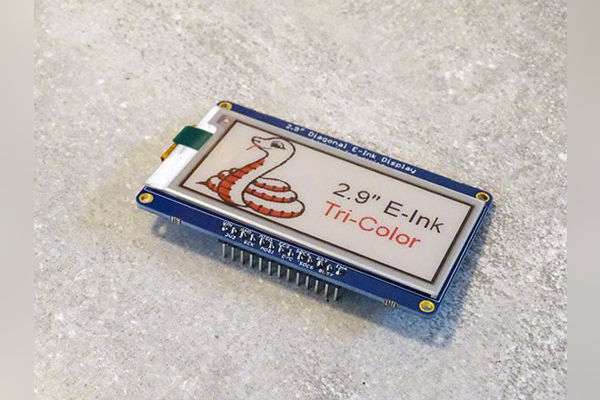
Due to these properties, e-ink screens are ideal for low-power projects, static information displays, and applications where readability in sunlight is important. Drawbacks include slow refresh rates, limited color options, and a technology that is not suited for video or rapidly changing graphics.
Common uses include e-readers, digital signage with static content, and simple low-power displays for sensor readouts or clocks.
Summary
Display technologies have evolved from simple, glowing indicators to complex, full-color screens. Early visual output in electronics relied on neon bulbs and Nixie tubes, which offered warm, electrically durable, but mechanically fragile high-voltage displays for status indicators.
Consumer devices then adopted CRTs, capable of drawing images with electron beams on phosphor screens, eventually progressing from monochrome to full-color displays.
Vacuum fluorescent displays added bright, retro-futuristic visuals, bridging the gap to the LED revolution, which brought low-cost, low-power, and flexible display options.
Character LCDs provide simple grids of symbols, while TFT LCDs allow high-resolution full-color graphics. Modern innovations, such as OLEDs, offer vibrant colors, deep blacks, and thin, flexible designs.
E-ink technology enables energy-efficient, static displays. Over time, displays have become brighter, more versatile, and easier for hobbyists to integrate, reflecting both technological advances and changing project needs.
The article was originally written by Maker.io staff, DigiKey.