

NanoEdge AI Studio v5 from STMicroelectronics is redefining how engineers approach artificial intelligence at the edge, placing unprecedented power into the hands of experts and newcomers alike.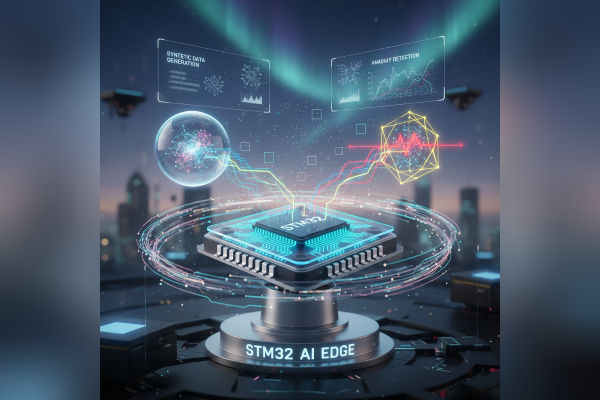
By introducing synthetic data generation, the platform goes beyond the traditional boundaries, resolving some of the thorniest obstacles that have persisted in real-world industrial applications.
Tackling the Core Challenges of Edge AI Development
Developers across industries increasingly rely on AI for smart sensor integration, predictive maintenance, and automated decision-making, but the demands of modern machine learning have placed an unfair burden on engineering teams.
Not only must they master data science and neural network architecture, but they’re often required to wrangle massive datasets, learn new programming languages, and navigate unfamiliar optimization techniques—tasks that are daunting for even the most experienced specialists.
NanoEdge AI Studio v5 systematically dismantles these barriers. With its automatic synthetic data generation, engineers can now simulate anomalies such as motor failures—critical events that are notoriously difficult and expensive to capture in reality.
This capability transforms the AI design process, allowing for robust, reliable systems without the prohibitive costs that have previously limited small and medium-sized enterprises.
The platform’s unique algorithm leverages real-world experiences to intelligently generate synthetic anomalies from nominal vibration data, ensuring that models are both comprehensive and ready for unpredictable conditions.
Streamlining Development with Feature Importance and Intuitive Visualization
NanoEdge AI Studio v5 also offers a new “Feature Importance” functionality, performing statistical analysis to pinpoint which data sources most significantly influence model performance.
By enabling targeted optimization, it lightens the load on developers, conserves resources, and encourages agile experimentation. Additionally, its widget-based visualization tools empower users with minimal data science experience to interact with their datasets in meaningful ways, customizing workspaces to explore features, raw signals, and model performance side by side.
This shift eliminates the need for elaborate code and helps teams quickly grasp the interactions driving their applications.
Building an Integrated Ecosystem with ST Edge AI Suite
The Studio’s integration within the broader ST Edge AI Suite is a force multiplier, connecting engineers to a repository of free tools, documentation, and community resources.
Solutions like STM32Cube.AI streamline the conversion and deployment of neural networks onto STM32 MCUs, while the Edge AI Developer Cloud and Model Zoo accelerate prototyping and real-world benchmarking.
The suite’s high-speed data logging tools and AIoT Craft cloud services further empower sensor-driven edge intelligence across diverse environments.
Why NanoEdge AI Studio Stands Out Among AutoML Tools
In recent independent studies, NanoEdge AI Studio outperformed even custom-engineered models, setting a high-water mark for ease of use and result quality among AutoML tools. The platform’s accessibility—being genuinely free—makes it particularly compelling for organizations experimenting with intelligent edge solutions on constrained budgets.
The Human Impact
For many engineers and small organizations, this tool signals a shift from feeling overwhelmed by the demands of AI to confidently engaging in transformative problem-solving.
By eliminating technical and financial barriers, NanoEdge AI Studio v5 opens the doors for a new wave of creativity and experimentation—making high-quality edge intelligence no longer the exclusive domain of large corporations and seasoned data scientists, but attainable for everyone.
Leadership Perspective
“NanoEdge AI Studio v5 is not just a product; it’s a testament to the democratization of AI innovation,” says a senior leader at STMicroelectronics. “By solving some of the core hurdles—like expensive data acquisition and complexity of model optimization—we’re enabling engineers everywhere to translate vision into reality, regardless of team size or prior specialization.”