



According to SEKISUI CHEMICAL, the Urban Infrastructure & Environmental Products Company has been working on a new technology for PFAS-free pipe materials for ultrapure process applications in the production of advanced semiconductors.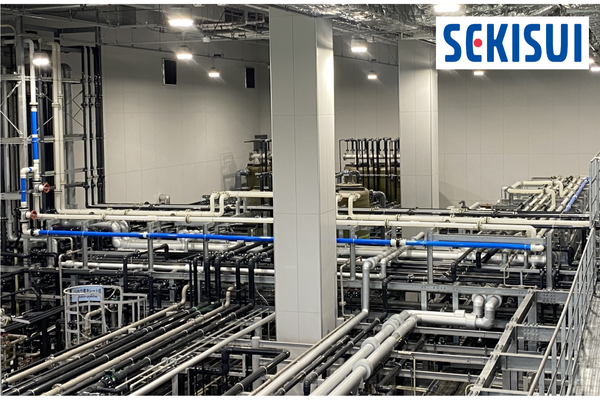
This is in response to the global trend of stricter regulations regarding perfluoroalkyl and polyfluoroalkyl substances (PFAS) and the growing demand to reduce environmental impact.
Once this technology has reached a particular stage of development, SEKISUI CHEMICAL will begin to formally offer it to customers.
The ultrapure water utilized in the semiconductor and flat panel display (FPD) industries must be provided without compromising the water quality.
The types of pipes used for this purpose include those that use metallic materials in the form of metal pipes with specific surface treatment, as well as those that use resin materials, such as hard polyvinyl chloride (PVC), polypropylene (PP), and fluorocarbon resins, such as polyvinylidene fluoride (PVDF), polytetrafluoroethylene (PTFE), and perfluoroalkoxy (PFA).
With the advancement of ultra-miniaturization, the sophisticated semiconductor sector of today demands pipe materials that can minimize the elution of both organic and inorganic particles.
All sectors involved in the production of flat panel displays, such as liquid crystal, organic EL, and LED displays, are together referred to as the flat panel display (FPD) industry.
PFAS and Its Regulation
The term “PFAS” refers to perfluoroalkyl and polyfluoroalkyl compounds, which can have an impact on ecosystems or human health and are difficult for nature to decompose.
Among PFAS, it is already illegal to manufacture, import, or use perfluorooctanoic acid (PFOA) and perfluorooctanesulfonate (PFOS).
Currently, Japan does not regulate PVDF, PTFE, or other compounds used in fluorocarbon resin pipes and fittings for ultrapure process applications.