


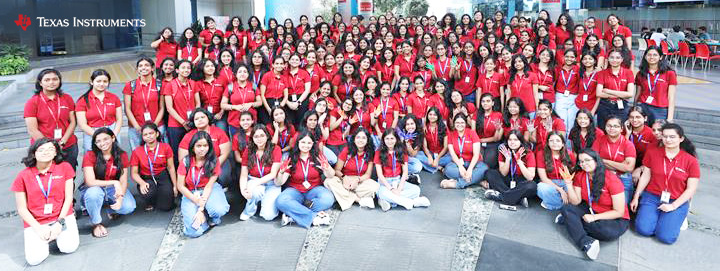
The fourth edition of Texas Instruments’ (TI) month-long Women in Semiconductors and Hardware (WiSH) program concludes. TI’s flagship mentorship WiSH program encourages and equips second-year female engineering students throughout India to pursue meaningful careers in core engineering, with an emphasis on hardware and semiconductors.

Building on the success of the previous three editions, the 2025 WiSH program drew over 1,500 registrations and over 190 participants, indicating the initiative’s increasing popularity each time.
Through lab tours, technical in-depth discussions, networking events with TI executives, and simulation projects, this year’s WiSH program participants obtained practical experience.
The program culminated in an immersive, in-person week at TI’s Bengaluru headquarters after three weeks of virtual coaching. Students had direct interactions with TI women leaders, industry professionals, and mentors throughout this period.
Leadership Comments
“The semiconductor industry is evolving rapidly, and the need for skilled talent is greater than ever,” said Santhosh Kumar, Managing Director, Texas Instruments India. “With women representing less than 20% of the people in technical roles in the industry the WiSH program expands access, builds confidence, and fosters engineering capabilities among aspiring women engineers in India. By investing in this next generation of talent, we are helping shape a stronger semiconductor ecosystem.”
“The WiSH program provided me the right platform to go beyond classroom learning. We had access to labs where we gained hands-on experience in simulation and circuit design,” said Poornima Kulkarni, Analog Engineer at TI India and a previous WiSH participant. “What makes it unique is the mentorship by subject matter experts to guide aspiring engineers through the course of the program.”
Texas Instruments is dedicated to promoting inclusion and diversity in the technology industry. TI empowers the upcoming generation of engineers to lead and develop in the semiconductor business by bridging the gender gap in STEM fields through programs like WiSH.