


In a development that could redefine the future of additive manufacturing, researchers at the Massachusetts Institute of Technology (MIT) have engineered a photonic chip that powers a fully functional 3D printer small enough to fit in your palm.
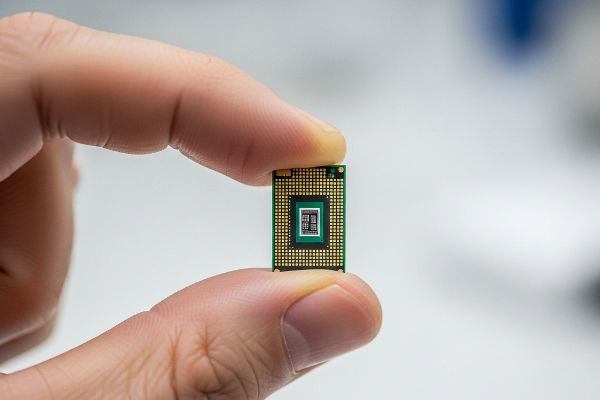
This breakthrough, led by PhD candidate Sabrina Corsetti and Professor Jelena Notaros, could bring 3D printing out of the industrial lab and into everyday life.
From Bulky to Palm-Sized: The 3D Printing Paradigm Shift
Traditional 3D printers, especially those based on stereolithography (SLA), are known for their size and mechanical complexity. They typically use lasers or projectors to harden layers of resin into solid objects, requiring motors and gantries to move either the resin vat or the light source. While effective, these systems are large, expensive, and not easily portable.
MIT’s new approach eliminates all of that.
At the heart of the new system is a millimeter-scale silicon photonic chip that produces reconfigurable beams of light. This light is projected into a static pool of resin — no motors, no mechanical arms.
As the beam hits the resin, it triggers a photochemical reaction that hardens the material into the desired shape.
The innovation merges photonics (light-based computation) with photochemistry (light-induced chemical change), creating a completely new category of 3D printing technology.
Why This Innovation Matters
The potential implications of this technology are profound:
- Portability: The printer is small enough to be handheld or embedded in other devices. Imagine printing replacement parts or medical tools on the go.
- Speed and Resolution: The absence of mechanical delays means objects can be printed faster, and with the precision of light manipulation, at much higher resolutions.
- Cost Efficiency: Fewer mechanical components mean fewer points of failure, reduced manufacturing cost, and simpler maintenance.
- Accessibility: This could bring industrial-grade printing capabilities into consumer-grade products — from smartphones to smart home devices.
“This is the first real step toward making 3D printing as simple and accessible as printing a document,” Corsetti noted. “Our goal is to let people print customized tools, parts, or even healthcare products, anywhere and anytime.”
The Technology Behind the Breakthrough
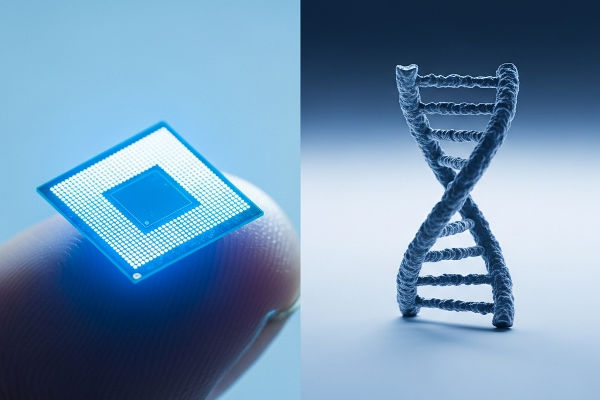
The photonic chip developed by Corsetti and the MIT team is capable of dynamically shaping and directing light without moving components. Using waveguides etched into silicon — a process akin to making integrated circuits — the chip can manipulate the phase and amplitude of light beams.
These light beams are then focused into UV-curable resin, initiating the polymerization process that forms solid objects. This method shares the conceptual foundation of SLA but in a far more compact, integrated format.
Additionally, the team developed a chip-based “tractor beam” capable of manipulating microscopic biological cells with high precision. This capability, known as optical trapping, was traditionally done with large, table-mounted optical systems. Now, thanks to the photonic chip, it can be performed on a silicon wafer smaller than a fingernail.
Applications: Beyond Prototyping
The innovation opens doors across multiple industries:
- Healthcare: Doctors could print medical devices or drug delivery tools directly at the point of care. Combined with the tractor beam technology, scientists could manipulate cells for targeted diagnostics and disease modeling.
- Consumer Electronics: Personalized gadgets, phone accessories, or even circuit board components could be printed on demand.
- Education: Schools and universities could offer hands-on fabrication experiences without investing in expensive lab equipment.
- Space and Defense: Lightweight, portable printers could be deployed in remote or space environments where traditional manufacturing is not feasible.
A Future of On-Demand Fabrication
MIT’s photonic chip-based 3D printer signals a fundamental shift in the evolution of manufacturing — moving from centralized production to distributed, personalized fabrication.
This innovation aligns with broader trends in Industry 4.0, where miniaturization, digital integration, and on-demand production are reshaping how goods are created and consumed.
The palm-sized device could potentially be embedded in mobile phones, medical kits, or even military field equipment, enabling fabrication in real time, based on dynamic requirements.
Professor Notaros emphasized, “This is not just a smaller 3D printer. It’s a new platform for innovation — merging silicon photonics and materials science in ways we’ve never done before.”
The research team is currently working on scaling the system, improving the resolution and speed, and exploring new printable materials compatible with the chip’s wavelength and energy levels. Industry collaborations are also being considered to commercialize the technology for targeted applications, especially in healthcare and micro-manufacturing.
MIT’s innovation is still in the research phase, but the groundwork has been laid for what could become the most accessible 3D printing platform to date.
| Feature | Traditional 3D Printer | MIT Photonic Chip Printer |
|---|---|---|
| Size | Large and bulky | Fits in the palm |
| Mechanism | Mechanical arms and motors | No moving parts |
| Material | UV-curable resin | UV-curable resin |
| Portability | Stationary | Portable and embeddable |
| Applications | Industrial prototyping | Personal, medical, educational |
From manipulating cells with light to printing tools from your pocket, MIT’s palm-sized 3D printer is more than an engineering milestone — it’s a preview of the next era in digital fabrication. If successful, it could make custom manufacturing as common as smartphone photography, unlocking a world where creation is no longer limited by scale, location, or access to infrastructure.