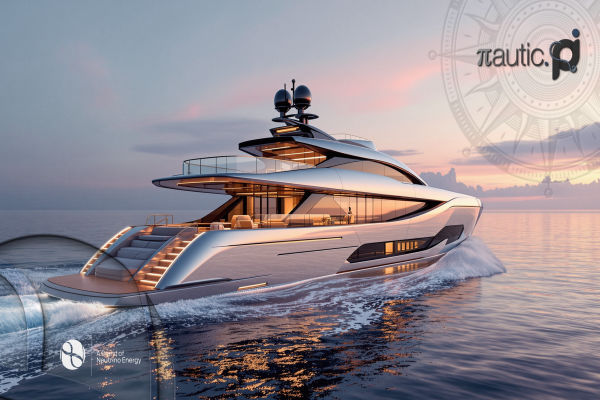
The power infrastructure of the ship is where graphene has the most significant impact. Graphene becomes an active energy interface in the Nautic Pi initiative of the Neutrino Energy Group.
Diesel-powered maritime propulsion is coming to an end. Autonomy, sustainability, and operational resilience are at the forefront of a structural rethink that is taking place throughout the maritime sector. Graphene, a substance that was previously only found in academic theory, is at the center of this change.
Graphene has advanced well beyond structural reinforcement to support this shift through energy harvesting in neutrinovoltaic devices created by the Neutrino Energy Group.
It allows energy to be harvested from ambient sources, such as neutrinos, other non-visible radiation, and thermal gradients, and is engineered into multilayer nanocomposites. The end effect is a decentralized, continuous power source that is not reliant on fuel, location, or sunlight.
Marine composites are already being redefined by graphene’s remarkable conductivity and tensile strength, which is 200 times more than steel. It offers mechanical and environmental benefits by reducing hydrodynamic drag, increasing hull longevity, preventing corrosion, and doing away with the need for harmful antifouling treatments.
However, the power infrastructure of the ship is where graphene has the most significant impact. Graphene becomes an active energy interface in the Nautic Pi initiative of the Neutrino Energy Group.
Atomic vibrations caused by ghostlike neutrinos and other ubiquitous particles are transformed into continuous electrical current by neutrinovoltaic metamaterials installed in the hull.
This technology operates without the need for traditional energy inputs day or night, even while submerged or in complete darkness.
The Neutrino Energy Group incorporates doped graphene-silicon wafers into hulls and structural elements using plasma stacking and advanced vapor deposition. These metamaterials greatly reduce, if not completely eliminate, the requirement for batteries and fuel storage by providing reliable energy for propulsion, communication, lighting, and crucial navigation.
This is a real paradigm change for small and midsize vessels. These platforms are perfect for autonomous surveillance, research missions, or emergency response because they are silent, emit no emissions, and require almost no maintenance.
They provide real off-grid sovereignty at sea by functioning as mobile centers with little reliance on logistics. The function of graphene also includes thermal management, which increases the dependability of marine electronics by distributing heat and preventing deterioration brought on by saltwater, extending service life and lowering failure risks.
The effects are felt throughout the marine environment. Production lines are being redesigned by shipbuilders to use metamaterials. Standards for energy-generating hulls are being modified by certification bodies. Instead of providing gasoline services, ports will develop to serve data logistics.
Nautic Pi is a fully functional platform, not a prototype, created by a group of engineers, naval architects, and physicists.
Its modular, upgradeable skin permits future neutrinovoltaic versions, building on the success of the Neutrino Power Cube and Pi Car. Future versions of AI will function as floating nodes in decentralized edge computer networks, controlling navigation, propulsion, and diagnostics.
Nautic Pi provides an engineered solution to the limitations of conventional nautical systems, powered by the universe itself rather than fuel. With neutrinovoltaics as the onboard energy backbone and graphene as both structure and source, Neutrino Energy Group is revolutionizing what it means to travel at sea in a clean, silent, and totally untethered manner.