


Researchers at the University of Connecticut have unveiled the Multiscale Aperture Synthesis Imager (MASI), a game-changing lens-free system that captures intricate details at distances previously unattainable with traditional optics.
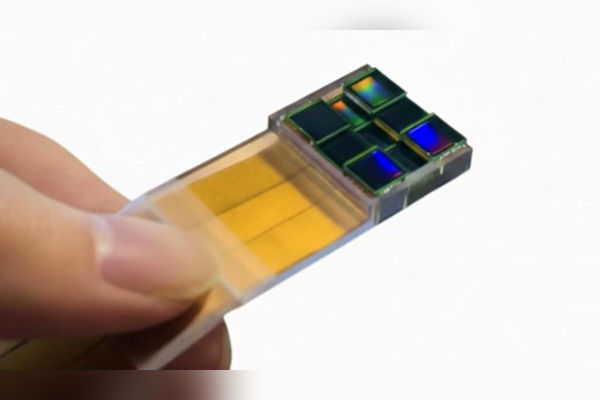
By deploying an array of independent coded sensors to record diffraction patterns, MASI relies on advanced algorithms for post-capture phase synchronization, creating a virtual super-aperture that exceeds single-sensor diffraction limits.
This computational fusion delivers wide-field views with sub-micron resolution, enabling non-invasive imaging of microstructures like hair ridges from across a desk.
How It Overcomes Optical Barriers
Conventional lenses demand proximity for sharp focus, limiting applications in delicate scenarios such as biological samples or remote inspections.
MASI sidesteps this by digitally propagating wavefields from each sensor back to the object plane, then iteratively aligning phases to boost coherence without physical overlaps or interferometry.
The result supports scalable arrays for 3D reconstructions over centimeter-scale fields, transforming rigid hardware dependencies into flexible software processes.
Lead Developer’s Insights
Professor Guoan Zheng, who spearheaded the project at UConn’s College of Engineering, highlights MASI’s transformative potential: “The potential applications for MASI span forensic science, medical diagnostics, industrial inspection, and remote sensing. Most exciting is the scalability – our system grows linearly, unlike traditional optics that become exponentially complex as they increase in size.” Zheng compares the method to photographers recording raw light data, which software merges into superior visuals, emphasizing its practicality for real-world deployment.
Transformative Applications
 This breakthrough promises to reshape fields like biomedical analysis, where non-contact high-res imaging prevents sample damage, and manufacturing quality checks from afar.
In forensics and remote sensing, MASI’s long-range detail capture could enhance evidence analysis and aerial surveys without invasive tools.
Its linear scalability supports expansive sensor networks, potentially revolutionizing astronomy-inspired optical tech for everyday industry use.
DOI: 10.1038/s41467-025-65661-8