


Stellantis’ recall of more than 320,000 Jeep Wrangler 4xe and Grand Cherokee 4xe plug-in hybrids has reignited industry debate around the safety and reliability of current EV battery systems. The recall stems from suspected separator damage within the lithium-ion battery cells—a defect that could trigger thermal runaway and, ultimately, vehicle fires.
While Stellantis is issuing software updates to address the issue, the incident underscores a persistent risk in EV design: degradation at the cell level that escapes detection until it’s too late. For UK-based Metis Engineering, which specializes in advanced battery health monitoring, that gap represents both a challenge and an opportunity.

Joe Holdsworth, founder and CEO of Metis Engineering, argues that the recall highlights a fundamental limitation in existing battery management systems. “These incidents, where software updates have proven insufficient to prevent thermal events, demonstrate why we developed Cell Guard,” he said.
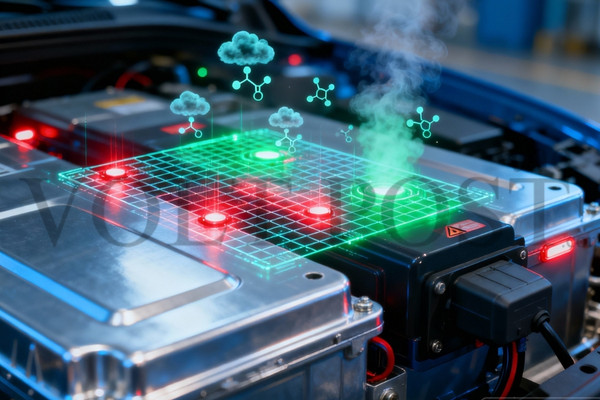
Cell Guard is a compact, intelligent sensor designed to monitor volatile organic compounds (VOCs) emitted by deteriorating cells effectively giving manufacturers an early-warning system for thermal runaway risk. Unlike traditional battery management systems that measure pack-level voltage and temperature, Metis’ sensor detects chemical changes within individual cells, often hours or days before a fire could occur.
“Had these Jeep PHEVs been equipped with Cell Guard, owners would have received early warnings of deteriorating cell conditions long before reaching the critical point where parking outdoors becomes necessary,” Holdsworth explained. That kind of early detection not only enables safer vehicle operation but also allows manufacturers to limit the scale of recalls by pinpointing affected batteries based on quantifiable data rather than broad risk assumptions.
 Separator failure, the suspected root cause of the Stellantis recall, is precisely the type of cell degradation that Cell Guard can identify. By monitoring off-gassing and internal chemical shifts, the sensor translates subtle electrochemical warning signs into actionable information, enabling preventative maintenance before a catastrophic event occurs.
As global automakers accelerate their electrification roadmaps, Holdsworth believes the industry must reframe how it approaches battery safety. “Robust cell-level monitoring must become standard rather than optional,” he said. “The safety of drivers and the viability of electric vehicle adoption depend on technologies that can prevent thermal runaway — not simply react to it.”