


For researchers and engineers alike, mastering fuel cells and electrolyzers modeling is crucial, not only from an academic standpoint but also in real-world applications that influence the global transition toward sustainable energy.
A Comprehensive Guide for Researchers and Engineers
The Hydrogen Imperative
As the world accelerates toward achieving net-zero emissions and combating climate change, hydrogen has become one of the most promising energy carriers. Its versatility and clean combustion properties have positioned it at the center of sustainable energy discussions.
Unlike fossil fuels that release harmful emissions, hydrogen, when used in fuel cells, emits only water, making it an ideal candidate for decarbonizing sectors such as transportation, power generation, and heavy industry.
Fuel cells and electrolyzers are two pivotal technologies within the hydrogen economy. Fuel cells convert hydrogen into electricity, while electrolyzers produce hydrogen by splitting water using electricity. Fuel cells and electrolyzers modeling of these systems—fuel cells and electrolyzers—is fundamental to optimizing performance, enhancing efficiency, and facilitating integration into energy infrastructures.
For researchers and engineers alike, mastering the fuel cells and electrolyzers modeling techniques of these devices are crucial, not only from an academic standpoint but also in real-world applications that influence the global transition toward sustainable energy.
Applications Across Industries
Hydrogen fuel cells and electrolyzers are becoming integral to many sectors seeking sustainable and efficient energy solutions. One of the most prominent applications is in transportation.
Fuel cell electric vehicles (FCEVs) are being adopted by automakers to deliver long driving ranges and quick refueling times without the emissions associated with internal combustion engines.
Buses, trucks, trains, and even marine vessels are now incorporating fuel cell systems into their designs, and their development relies heavily on accurate modeling to optimize system performance and durability.
In stationary power applications, fuel cells offer uninterrupted power supply (UPS) for hospitals, data centers, and remote locations. Modeling helps design systems that can switch between grid-tied and standalone modes efficiently.
For instance, simulations can predict battery load support, hydrogen consumption, and heat recovery effectiveness. Electrolyzers also find critical use in producing green hydrogen for industrial processes such as ammonia production, steel manufacturing, and refining—sectors traditionally dependent on fossil fuels. By modeling electrolyzer behavior, industries can forecast production rates, electricity demand, and hydrogen purity levels.
The aerospace and defense sectors utilize fuel cells in spacecraft and submarines due to their silent operation and low thermal signature. These applications require robust modeling to ensure system reliability in extreme conditions.
Similarly, residential applications are on the rise, with fuel cells used for combined heat and power (CHP) units in homes, particularly in countries like Japan and Germany. These residential units rely on fine-tuned models to regulate heating, electricity generation, and load forecasting for individual households.
Challenges in Fuel Cells and Electrolyzers Modeling
While the potential of hydrogen technologies is vast, modeling them accurately presents several challenges. One major difficulty is achieving the right balance between model complexity and computational efficiency.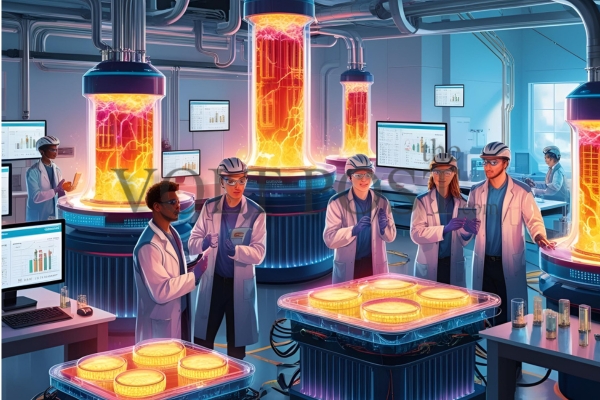
Detailed 3D CFD models, while precise, require significant processing power and time, making them less practical for iterative design and control system development. Conversely, overly simplified models may fail to capture key physical and chemical phenomena, leading to suboptimal system designs.
Another challenge lies in acquiring accurate material properties, reaction kinetics, and degradation rates. These parameters often vary with temperature, humidity, and pressure, complicating the modeling process.
For example, modeling the aging effects in membranes or catalyst layers of PEM fuel cells requires time-dependent functions that account for chemical and mechanical stress. Similarly, modeling electrolyzers necessitates a nuanced understanding of bubble formation, membrane hydration, and electrode-electrolyte interactions.
Interfacing these models with broader energy systems, such as microgrids or smart buildings, also introduces complexity. System-level models must coordinate multiple devices with different dynamic responses and constraints.
In such cases, hybrid modeling approaches—combining empirical data, physics-based models, and control algorithms—are essential.
Finally, standardization across platforms and tools remains a concern, as the lack of uniform modeling frameworks hampers collaboration and knowledge transfer between academia and industry.
Future Trends in Fuel Cells and Electrolyzers Modeling
Looking ahead, the fuel cells and electrolyzers modeling are poised to become more integrated, intelligent, and data-driven. One emerging trend is the use of artificial intelligence (AI) and machine learning (ML) to enhance model accuracy and predictive capabilities. By training models on historical performance data, AI can identify patterns, predict degradation, and suggest design improvements that traditional models might overlook.
Digital twins—a virtual replica of physical systems—are also gaining traction. These allow real-time monitoring and predictive maintenance by mirroring operational data from actual fuel cell and electrolyzer systems.
Coupling digital twins with Internet of Things (IoT) sensors enables adaptive modeling, where simulations update dynamically as conditions change. This is particularly useful in applications like renewable-integrated hydrogen production, where weather variability influences system behavior.
Another significant trend is the integration of hydrogen modeling into broader energy system simulations. This includes co-simulation environments where hydrogen systems interact with solar, wind, battery storage, and demand-side management tools.
These holistic models support planning for hydrogen hubs, decarbonized industrial clusters, and national-scale hydrogen infrastructure.
Open-source modeling tools and collaborative platforms are also expanding. Initiatives like OpenFCST, COMSOL-based fuel cell libraries, and Modelica-based multi-domain simulations offer accessible and customizable modeling frameworks. These platforms encourage innovation, transparency, and community-driven development.
Case Studies and Real-World Implementations
This helped them achieve a high power-to-weight ratio and excellent cold-start capability, which are essential for consumer acceptance.
Another example is the ITM Power electrolyzer facility in the UK, where modeling tools were used to scale up modular PEM electrolyzers for grid services. These simulations predicted hydrogen yield under varying renewable input, aiding grid operators in planning frequency response services.
Similarly, the H2Haul project in Europe modeled hydrogen supply chains and fueling logistics for heavy-duty truck fleets, optimizing refueling station placement and delivery schedules.
In the academic realm, institutions like Stanford and TU Delft have developed comprehensive simulation platforms for integrated hydrogen energy systems. These are used not only for research but also in education, helping students visualize complex interactions between hydrogen production, storage, distribution, and consumption.
Such case studies demonstrate the indispensable role of modeling in reducing project risk, accelerating development, and enabling cost-effective scale-up.
Conclusion
Hydrogen fuel cells and electrolyzers are essential technologies in the pursuit of a clean energy future. Accurate modeling of these systems provides the foundation for innovation, performance optimization, and large-scale deployment.
From basic principles and electrochemical dynamics to complex multi-domain simulations and system-level integration, modeling offers a comprehensive toolkit for engineers, researchers, and students alike.
As the hydrogen economy evolves, mastering these modeling techniques will be critical for solving technical challenges, improving system efficiency, and designing robust energy infrastructures. The time to invest in these skills is now.
To delve extensively into the world of H2 and world of sustainability, COMSOL and The Volt Post are hosting a Free Webinar on Fuel Cells and Electrolyzers Modeling ,Click here to register now
To dive deeper into the world of fuel cells and electrolyzers modeling, don’t miss our upcoming webinar hosted by experts in the field. You’ll get hands-on guidance on modeling tools, live demonstrations, and career tips for working in hydrogen technology.
Whether you’re a student, researcher, or industry professional, this webinar will empower you to build, simulate, and innovate with confidence, Click here to register now.