



In a significant advancement for semiconductor manufacturing, researchers at the Chinese Academy of Sciences (CAS) have developed a solid-state DUV laser emitting at the critical 193nm wavelength. This breakthrough has the potential to revolutionize chipmaking technology by offering an alternative to current lithography solutions.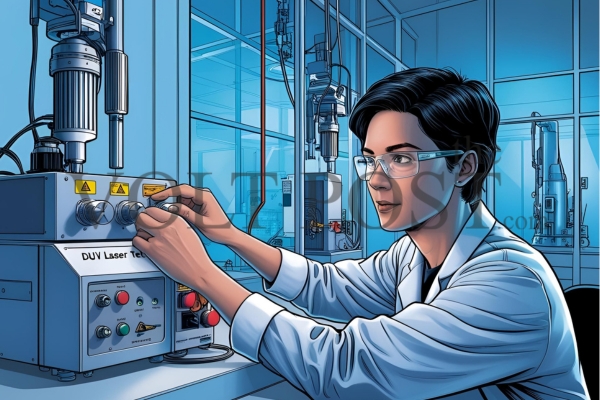
Industry leaders and experts have shared their insights on this technological milestone, discussing its potential impact on global semiconductor supply chains, competition with ASML, and China’s push for semiconductor self-sufficiency.
Significance of 193nm DUV Laser (Deep Ultraviolet) in Semiconductor Lithography
The 193nm DUV laser wavelength is essential for photolithography processes used in producing advanced semiconductor devices.
Traditionally, these lasers have been generated using complex and expensive excimer laser systems. The development of a solid-state alternative could lead to more efficient and cost-effective semiconductor manufacturing.
Expert Insight: ASML’s Response to Emerging Technology
Peter Wennink, CEO of ASML, commented on this development, stating:
“Innovation in semiconductor lithography is critical for industry progress. While new research is promising, transitioning from lab results to mass production requires significant effort. ASML remains committed to delivering the most advanced lithography solutions, ensuring our customers maintain technological leadership.”
Current Landscape of DUV Lithography Technology
ASML, a Dutch company, is a leading provider of DUV lithography systems, including both immersion and dry systems. Their immersion systems, such as the TWINSCAN NXT series, are renowned for high precision and productivity, capable of processing over 6,000 wafers per day.
Dry systems like the TWINSCAN XT series are used for less critical layers, offering cost-effective solutions for chipmakers.
Industry Perspective: China’s Technological Leap
Dr. Wei Zhao, Senior Researcher at China Semiconductor Industry Association, stated:
“The development of a solid-state 193nm DUV laser represents a major milestone for China’s semiconductor industry. If successfully commercialized, it could reduce dependency on foreign equipment and strengthen domestic chip production.”
China’s Efforts to Advance Domestic Lithography Capabilities
China has been actively investing in domestic lithography technologies to reduce reliance on foreign semiconductor equipment.
The successful creation of a solid-state 193nm DUV laser by CAS researchers marks a significant technological breakthrough. However, commercialization remains a major challenge, requiring large-scale production capabilities and long-term reliability testing.
Government Support and Future Goals
Chen Hong, Vice Minister of China’s Ministry of Industry and Information Technology, emphasized:
“China is committed to achieving technological self-reliance in the semiconductor industry. This breakthrough in DUV laser technology is a step in the right direction, and we will continue supporting domestic research and development to bring this innovation to mass production.”
Implications for the Global Semiconductor Industry
The development of solid-state 193nm DUV laser technology could impact the global semiconductor equipment market by introducing new competition and potentially lowering costs.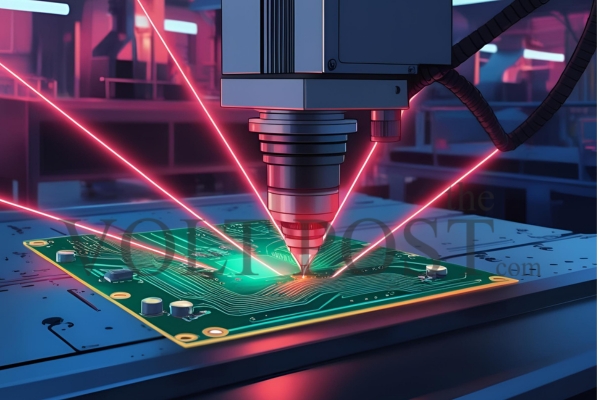
Companies like ASML, which dominate the lithography equipment sector, may need to adapt to these emerging technologies. Additionally, this advancement aligns with China’s broader strategy to achieve self-sufficiency in semiconductor manufacturing.
Global Market Reaction
Dr. Mark Liu, Chairman of TSMC, shared his thoughts:
“The semiconductor industry thrives on innovation. Any new lithography technology that improves efficiency and reduces cost is welcomed. However, the real challenge lies in integrating new laser systems into existing fabrication processes.”
The breakthrough in solid-state 193nm DUV laser technology by Chinese researchers marks a significant step forward in semiconductor lithography. While the path to commercialization is complex, this development highlights the continuous evolution of semiconductor technology and the increasing competition in global chip manufacturing.