



The evolution of smart ships will depend not only on advanced applications and automation technologies but also on the strength of the infrastructure supporting them.

The maritime industry is embracing digital transformation at an unprecedented pace. From integrated bridge systems and predictive maintenance platforms to IP surveillance, crew welfare applications, and passenger connectivity services, today’s vessels depend heavily on reliable data networks.
Yet, amid discussions around smart shipping, automation, and emerging technologies, one critical element often receives less attention than it deserves: the physical network infrastructure.
The effectiveness of any digital application ultimately depends on the reliability of the infrastructure supporting it.
Unlike traditional enterprise environments, ships operate under uniquely demanding conditions. Continuous vibration, humidity, salt-laden air, electromagnetic interference, and restricted installation spaces create challenges that can affect network performance over time.
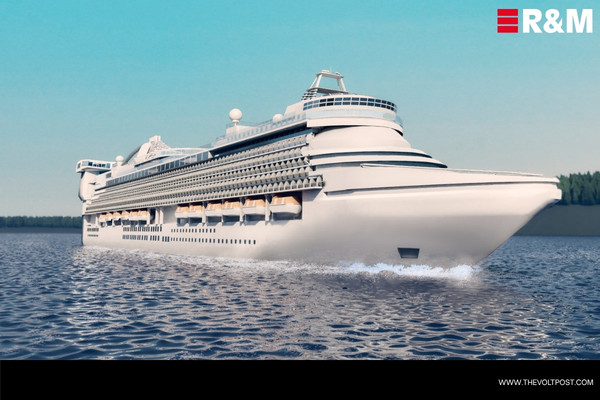 Among these factors, vibration remains a significant and often underestimated challenge. Its cumulative impact can gradually affect connection integrity, leading to intermittent faults that are difficult to trace and costly to rectify. In an environment where networks support essential onboard systems, maintaining stable connectivity is critical.
As vessels become increasingly connected, shipbuilders and operators must balance upfront investment with long-term operational performance. The true value of a structured cabling system should be measured by its ability to deliver consistent performance throughout the vessel’s lifecycle. Reduced maintenance interventions, improved network uptime, scalability for future technologies, and lower operational disruptions all contribute significantly to the total cost of ownership.
Performance must also be independently verified. Maritime connectivity solutions are expected to withstand real-world conditions such as vibration, humidity, salt spray, and electromagnetic interference. Third-party certification from recognized classification societies provides assurance that solutions are suitable for demanding marine environments.
Addressing these challenges requires infrastructure designed specifically for maritime applications rather than adapted enterprise solutions. Maritime cabling systems must combine mechanical robustness, installation efficiency, and long-term performance to support the growing demands of modern vessels.
The use onboard ship constitutes a demanding environment. To make sure products are fit for this application, 3rd party test houses have specialized to assess products for their suitability for use on sea. A selection of the R&M portfolio has been tested and type approved by the Danish test house DNV-GL. These products are certified to be suitable for use in maritime applications.
Above all, vibrations pose a problem to plugged connections. The vibration resistance of a plugged connection is defined by the contact stability of the contacts between plug and socket / jack. The RJ45 contacts in R&M products are designed to cover the allowed contact range with good contact force reserves. Also wire termination in IDC contacts and good strain relief of the cable are important components to have stable performance in a vibration rich environment.
The advantages of Power over Ethernet are especially visible in shipbuilding, where the space available for installations is limited. Providing power and data at the same time reduces the volume of the cabling dramatically. With PoE power levels constantly increasing, using components designed for PoE support become decisive for the risk-free operation of PoE data lines. R&M powerSafe products are the ideal choice for PoE transmissions of all levels.
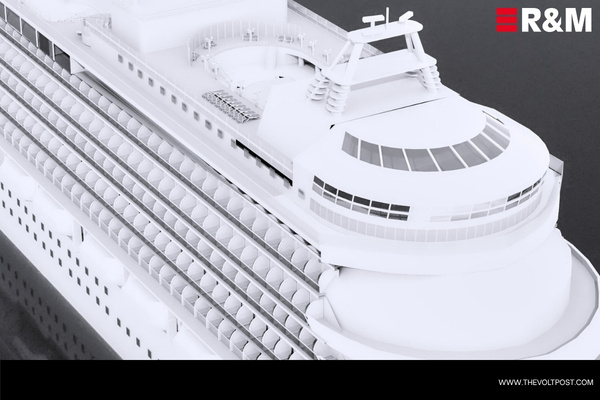 Space optimization remains another important consideration in ship design. Modular connectivity architectures and cable-sharing concepts can help reduce installation complexity while maintaining flexibility for future expansion. At the same time, fiber-based infrastructure offers strong resistance to electromagnetic interference and supports the increasing bandwidth requirements of modern digital applications.
Fiber-optic systems further contribute to network resilience, offering stable performance in harsh environmental conditions while providing a scalable foundation for future technologies.
As onboard systems continue to evolve, effective infrastructure management becomes increasingly important. Visibility, structured maintenance processes, and scalable network architectures help operators maintain operational control while supporting future growth.
Ultimately, the evolution of smart ships will depend not only on advanced applications and automation technologies but also on the strength of the infrastructure supporting them.
Reliable R&M cabling with high availability supports high-speed data networks on board with good protection from outside disturbances like harsh chemical and mechanical stress.
This article was originally written by R&M (Reichle & De-Massari AG) and has been adapted for publication.