



Artificial intelligence (AI) is rapidly reshaping the operating architecture of the asset management industry. What was once a fragmented, broker-led ecosystem dependent on manual processes has evolved into an integrated, technology-enabled model characterised by automation, data-driven decision-making and scalable digital infrastructure.

This transformation is visible across the investment value chain from portfolio construction and trade execution to distribution, investor onboarding and customer engagement. Rather than functioning solely as an operational efficiency tool, AI is increasingly becoming a strategic enabler that enhances execution quality, expands market reach and improves the overall investor experience.
India’s asset management industry illustrates this structural shift. Assets Under Management (AUM) of mutual funds reached almost Rs 82.64 lakh crore as of September 2026, representing a six-fold increase over the last decade.
While favourable market performance and rising household financialisation have supported this growth, digital innovation has been equally instrumental in enabling asset managers to scale operations without proportionate increases in operating costs.
Passive Investing Enters a New Phase of Scale
The rapid expansion of passive investing has emerged as one of the defining outcomes of technology-led transformation within asset management. Exchange Traded Funds (ETFs) recorded 22% Year-on-Year growth, with assets under management increasing from approximately Rs 11.2 lakh crore in March 2025 to Rs 13.7 lakh crore by March 2026.
The growth trajectory has been underpinned by sustained allocations from the Employees’ Provident Fund Organisation (EPFO) into equity ETFs, record inflows into gold ETFs during FY26, favourable equity market mark-to-market gains and an accelerating institutional preference for low-cost, rules-based investment strategies.
Unlike actively managed funds, passive products offer investors lower expense ratios, greater transparency and efficient benchmark replication. Consequently, passive strategies are increasingly being adopted as strategic core portfolio allocations, complemented by actively managed funds that seek to generate alpha.
The segment has transitioned from an emerging investment category to a mature asset class. Nevertheless, its performance remains inherently linked to underlying market movements, reinforcing the importance of disciplined, long-term capital allocation.
Algorithmic Trading Actively Transforms the Market Microstructures
Artificial intelligence has also become integral to capital market execution through the rapid adoption of algorithmic trading. Algorithmic trading utilises predefined quantitative models and computer-driven instructions to automate order execution. Compared with conventional manual trading, algorithmic systems deliver significantly higher execution speed, lower latency and greater consistency by eliminating behavioural biases from trading decisions.
India’s algorithmic trading ecosystem has expanded steadily since the introduction of Direct Market Access (DMA) by SEBI in 2008, followed by the rollout of co-location facilities and smart order routing mechanisms.
Initially dominated by institutional participants including foreign portfolio investors, mutual funds and proprietary trading firms, the market has witnessed increasing retail participation, supported by broker APIs, low-latency infrastructure and fintech-enabled execution platforms.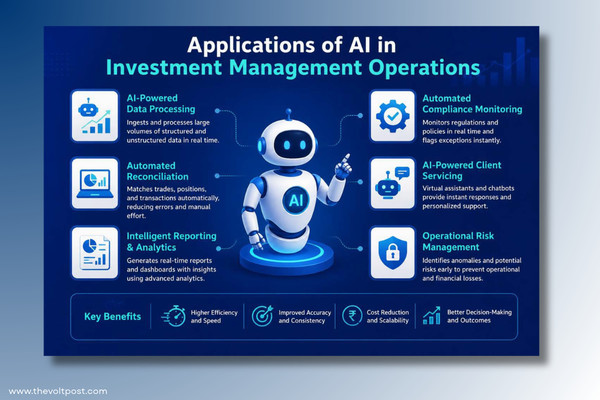
Data from the National Stock Exchange (NSE) indicates a sustained increase in the share of algorithmic trading across both the equity cash and derivatives segments. The trend reflects the growing institutionalisation of automated execution strategies while highlighting the democratisation of sophisticated trading capabilities through technology.
As computational capabilities continue to improve, AI-driven execution is expected to further optimise transaction costs, improve execution efficiency and strengthen market liquidity.
Digital Infrastructure Accelerates Investor Participation, Lowers Barriers Across Investor Segments
The digitalisation of India’s mutual fund ecosystem has significantly lowered barriers to participation across investor segments. Foundational digital public infrastructure, including Aadhaar-based e-KYC, UPI-enabled payment systems, online transaction capabilities and mobile-first investment platforms, has streamlined investor onboarding and substantially reduced operational friction.
Fintech platforms have complemented these developments through paperless account opening, low-ticket systematic investment plans (SIPs) and intuitive user interfaces, making mutual fund investing accessible to first-time investors and smaller households.
The cumulative impact has been broader retail participation and greater financial inclusion, with digital channels serving as the primary gateway for new investors entering capital markets.
Distribution Is Transitioning to a Phygital Model
Digital transformation has not displaced traditional distribution networks; rather, it has redefined their operating model. The industry is increasingly adopting a hybrid “phygital” framework in which digital capabilities augment, rather than replace, human advisory services.
Independent Financial Advisors (IFAs) and distributors now leverage customer relationship management (CRM) platforms, automated compliance solutions, digital dashboards and online transaction systems to enhance operational efficiency and improve client servicing.
This technology-enabled advisory model allows intermediaries to manage larger client portfolios, automate routine administrative processes and strengthen regulatory compliance while preserving personalised financial guidance. The convergence of digital efficiency and human expertise is emerging as a defining characteristic of India’s evolving asset management ecosystem.
Technology Is Driving Geographic Expansion
Artificial intelligence and digital infrastructure have also transformed distribution economics for asset management companies.
Technology-enabled customer acquisition and servicing have significantly reduced distribution costs, enabling asset managers to expand into B30 cities and semi-urban markets with greater efficiency.
Increased smartphone penetration and simplified investment applications have further broadened access to mutual fund products beyond metropolitan regions.
This structural shift has enabled asset managers to diversify their investor base while improving penetration across previously underserved markets, supporting the industry’s long-term growth trajectory.
Conclusion
Artificial intelligence is no longer an incremental enhancement to asset management operations; it is redefining the industry’s operating model. From the rapid adoption of passive investment strategies and algorithmic trading to digitally enabled distribution  and investor engagement, AI is driving greater efficiency, scalability and accessibility across the investment ecosystem.
As India’s asset management industry continues to expand, competitive differentiation is likely to depend less on traditional operating scale and increasingly on technological capability. Firms that successfully integrate AI, automation and digital infrastructure into their operating models will be better positioned to enhance execution efficiency, deepen investor reach and sustain long-term growth in an increasingly technology-driven financial landscape.
(This article is authored by Kalpesh Mantri, Assistant Director, CareEdge Advisory and is edited by Vagisha, Lead Editor, CareEdge Advisory)