


Seoul Semiconductor has entered full-scale mass production of WICOP Pixel, a package-free RGB backlight technology developed by its subsidiary Seoul Viosys, and is now expanding shipments to global TV manufacturers. Built to replace conventional white-light LCD backlights, the technology hits 100% of the DCI-P3 cinema color gamut, reaches a peak brightness of up to 3,000 nits, more than triple that of OLED displays and offers more than double the lifespan.
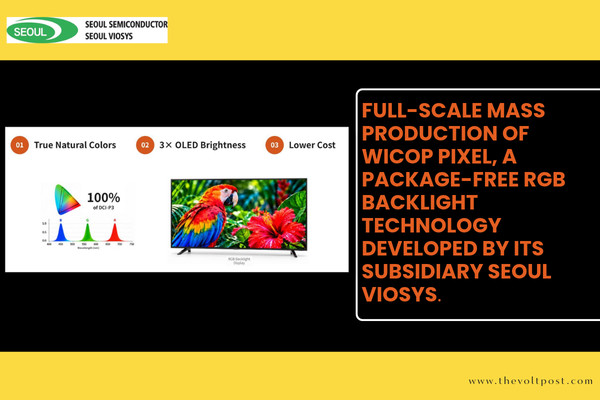
Rather than relying on traditional white LED backlights, WICOP Pixel integrates red, green, and blue opto-semiconductor chips without a separate package into a single pixel unit, arranged at an ultra-fine pitch of just several tens of micrometers (µm).
Because each color channel is controlled independently, standard LCD panels paired with WICOP Pixel can render tens of thousands of vivid, natural colors while holding up clearly in sun-drenched living rooms or bright public spaces.
For TV makers, the shift brings both performance and bill-of-materials advantages. By upgrading the backlight rather than requiring costly OLED panels, manufacturers can boost product margins.
Looking to push costs down even further, Seoul Semiconductor is actively researching ways to eliminate the LCD color filter altogether, a move that would shave off roughly 20% of current LCD panel material expenses.
The timing lines up with a broader industry transition. According to market research firm Omdia, global shipments of RGB-backlit TVs, led by the large-screen premium tier are projected to climb to roughly 7 million units by 2030, capturing over 10% of total global TV market revenue.
As the existing $3 billion white-backlight market transitions toward RGB and advanced packaging, Omdia expects the segment to more than double in value.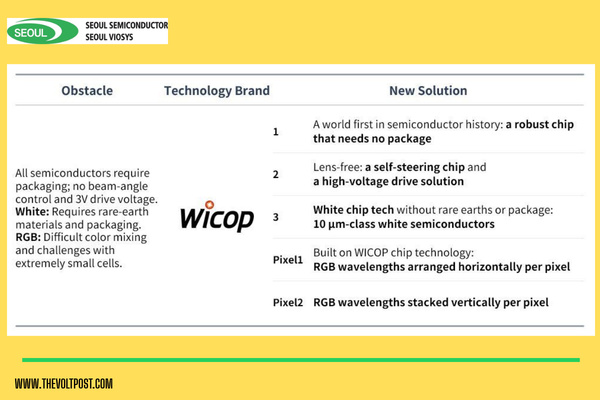
Financially, Seoul Semiconductor is already seeing momentum, with third-quarter display-related revenue jumping nearly 20% year-over-year. To scale supply without pouring massive capital into greenfield factories, the company plans to convert its existing white-backlight production lines over to WICOP Pixel.