


Palomino Laboratories has shipped its first-generation MicroLED light engine prototypes to its first hyperscaler customer, marking an early milestone for the company’s optical interconnect push.
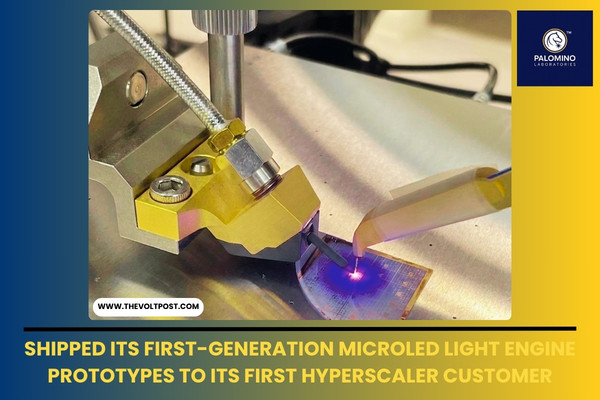 The company said it has shipped its first-generation MicroLED light engine prototypes to its first hyperscaler customer, a move that puts the company’s optical interconnect platform into the hands of an early strategic user.
The customer has already completed its evaluation and returned test data showing that the measured MicroLED bandwidth came in above Palomino’s original design targets.
The company said it is continuing to invest in research and development to improve bandwidth, efficiency and power performance across its GaN MicroLED light engine technology. Palomino expects to begin sampling its second-generation MicroLED platform, which is designed to deliver better bandwidth performance, to multiple customers by the end of Q3 FY26.
With those prototype gains in hand, Palomino said it plans to pursue one or more development contracts to advance its technology and better align performance with its customer’s initial AI interconnect requirements. The company expects its first development contract from a strategic AI customer in Q4 FY26.
Palomino framed the work as part of a broader effort to address one of the biggest constraints in AI infrastructure, bandwidth and efficiency. The company said interconnect bandwidth is becoming a bottleneck as compute performance scales faster than data movement.
The company is positioning its MicroLED, MicroVCSEL and copper engine technologies for short-reach interconnect applications in AI data centers. The company said the total addressable market for its AI interconnect solutions could exceed $60 billion by 2031, based on published market reports and company estimates.
 Leadership Comment
Dr. Steven Denbaars, Co-founder of Palomino Laboratories Inc. and pioneer of Gallium Nitride MicroLEDs, commented, “These first samples, confirmed by a leading hyperscaler customer, exceeded our design targets and validated that our GaN MicroLED technology is progressing.”
Dr. DenBaars continued, “Now we are accelerating our next generation technology on an aggressive schedule to drive a meaningful improvement in system performance as we move toward integration within a full optical interconnect solution. With our recently announced LOI to acquire Vega Links Inc., we expect to migrate from delivering breakthrough MicroLED devices toward delivering differentiated optical links for AI applications.”
To Know More: CLICK HERE