





Precision farming, also known as precision agriculture, is an advanced farming management concept that utilizes modern technology to monitor, measure, and respond to inter- and intra-field variability in crops.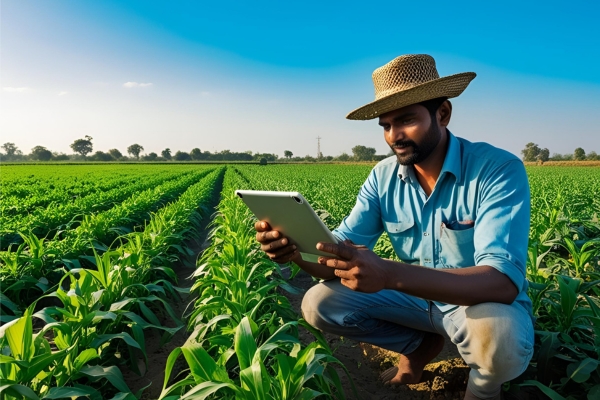
Precision farming can revolutionize staple crops like rice, wheat, and sugarcane, as well as cash crops such as cotton and horticulture and major sensor Companies are indeed shaping the future of precision farming.
Unlike traditional farming, which applies the same techniques uniformly across entire fields, precision farming enables tailored interventions, improving crop yield, reducing waste, and promoting sustainable agriculture.
At its core, precision farming integrates data from GPS, IoT devices, sensors, satellite imagery, and artificial intelligence to guide agricultural practices like irrigation, fertilization, and pest control. This technology-driven approach empowers farmers to make informed decisions that enhance productivity, profitability, and resource efficiency.
Key Trends Shaping Precision Farming
Several global trends are reshaping how precision agriculture is adopted and scaled:
1. Rise of Smart Sensors and IoT Integration
Smart sensors provide real-time data on soil health, moisture levels, temperature, crop condition, and nutrient needs. When connected via the Internet of Things (IoT), they offer automated monitoring and alerts, improving operational efficiency.
2. Satellite and Drone Imagery
High-resolution satellite and UAV (drone) imagery allow farmers to analyze large fields and detect stress, disease, or irrigation issues early, enabling timely action.
3. Artificial Intelligence and Machine Learning
AI-driven data analytics offer predictive insights for crop planning, pest forecasting, and yield estimation. Machine learning algorithms continuously improve decision-making models based on sensor inputs.
4. Blockchain for Transparency
Blockchain helps ensure the traceability of agricultural inputs and outputs. Coupled with sensor data, it adds transparency and accountability to the food supply chain.
5. Climate-Smart Technologies
Precision farming tools are evolving to adapt to climate change, with sensors designed to detect extreme weather patterns and help in crop selection and disaster mitigation.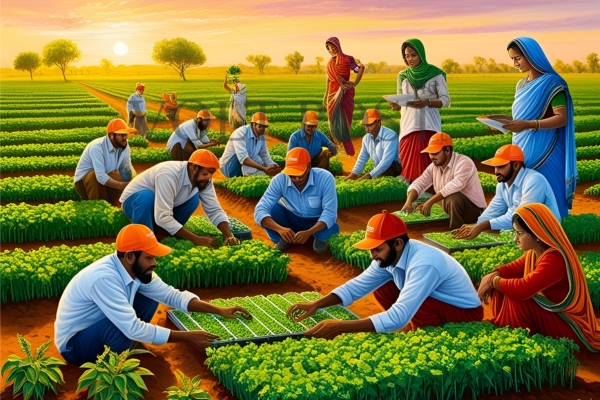
Types of Sensors Used in Modern Precision Farming
Sensors are the backbone of precision farming. Here are the key types deployed in smart agricultural systems:
1. Soil Sensors
-
Soil Moisture Sensors: Measure water content and help optimize irrigation.
-
Soil Nutrient Sensors: Detect levels of nitrogen, phosphorus, potassium.
-
Soil pH Sensors: Monitor acidity and alkalinity, aiding fertilizer planning.
2. Climate Sensors
-
Temperature and Humidity Sensors: Track ambient conditions crucial for crop growth.
-
Rain Gauges: Help predict water availability and adjust irrigation accordingly.
3. Crop Sensors
-
NDVI Sensors (Normalized Difference Vegetation Index): Assess plant health via light reflectance.
-
Multispectral and Hyperspectral Sensors: Detect nutrient deficiencies or disease.
4. Location and Positioning Sensors
-
GPS Sensors: Enable georeferencing for yield mapping and variable rate applications.
-
RTK (Real-Time Kinematic) GPS: Offers centimeter-level accuracy in machinery guidance.
5. Mechanical Sensors
-
Used in machinery to gauge forces, vibrations, or weight distribution for automation.
6. Hydrogen Leak Detection Sensors (Cross-Application)
While not common in farming yet, hydrogen sensors are gaining relevance for their application in managing fuel systems used in smart agricultural machinery running on hydrogen fuel.
Market Overview of Precision Farming
Global Perspective
As of 2025, the global precision farming market is valued at USD 15.3 billion and is projected to grow at a CAGR of 12.9%, reaching over USD 27 billion by 2030. North America leads in adoption, followed by Europe and Asia-Pacific. The growth is fueled by increasing demand for food, sustainable farming practices, and supportive government policies.
Key Market Drivers
- Need for food security amid population growth.
- Climate-resilient agriculture demand.
- Technological advancements in IoT, AI, and satellite imaging.
- Supportive regulations and subsidies.
Why Should India Adopt Precision Farming?
India, with its vast agricultural landscape and growing population, stands to benefit immensely from precision farming:
Resource Efficiency
India faces significant water scarcity and overuse of fertilizers. Precision farming minimizes resource use by applying inputs only where needed.
Yield Improvement
Targeted interventions improve crop productivity, which is crucial for feeding India’s 1.4 billion people.
Income Enhancement
Data-driven decision-making reduces losses and enhances profitability, especially for small and marginal farmers.
Climate Resilience
With frequent droughts, floods, and temperature variations, precision farming helps in adapting to climatic shocks.
Alignment with Digital India and Smart Villages
Precision farming fits well with government initiatives like Digital India, doubling farmers’ income, and rural digitization.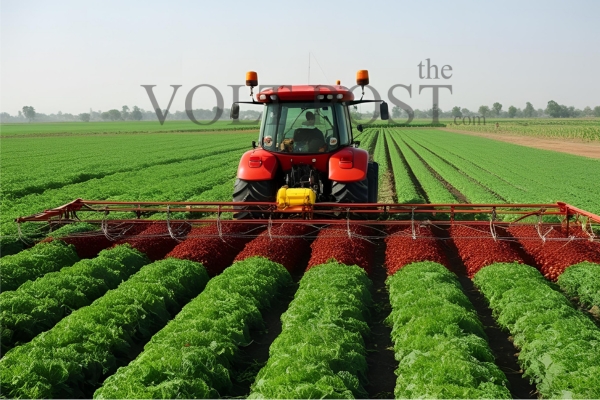
Challenges and the Way Forward
Key Challenges
- High Initial Costs: Sensors, drones, and analytics platforms are expensive for small-scale farmers.
- Lack of Awareness and Training: Many farmers are unaware of the benefits or lack the skills to use the technology.
- Poor Infrastructure: Limited connectivity and power issues in rural areas restrict adoption.
- Data Privacy and Interoperability: Managing vast volumes of data securely and ensuring device compatibility are concerns.
- Fragmented Landholdings: Difficult to implement precision systems on small and scattered plots.
Way Forward
- Government Subsidies and Incentives: Need for stronger policy support.
- Public-Private Partnerships: Collaboration between agri-tech firms, startups, and the government.
- Training and Capacity Building: Localized farmer training programs and agri-incubators.
- Affordable Tech Solutions: Development of low-cost sensor networks and open-source software.
Market Potential of Precision Farming in India
India’s precision agriculture market is currently estimated at USD 1.5 billion, with projections suggesting a growth to USD 7-8 billion by 2030, supported by:
- Increasing smartphone and internet penetration.
- Rise of agri-tech startups.
- Government missions such as PM-Kisan, e-NAM, and Digital Agriculture Mission.
Precision farming can revolutionize staple crops like rice, wheat, and sugarcane, as well as cash crops such as cotton and horticulture.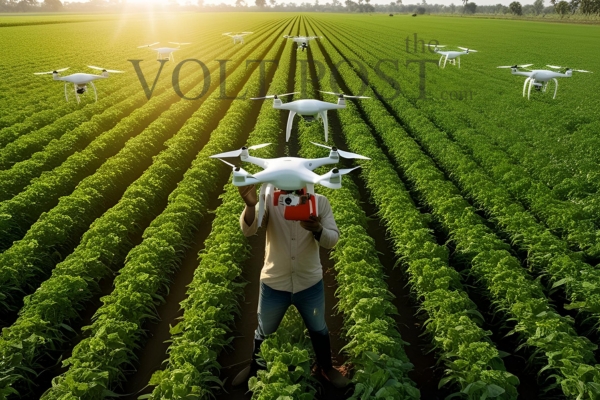
Major Sensor Companies in Precision Farming
Global Leaders
- Trimble Inc. – Offers GPS, irrigation, and yield monitoring solutions.
- John Deere – Develops sensor-integrated farming machinery and telematics.
- AG Leader Technology – Focuses on precision planting, spraying, and mapping tools.
- Topcon Positioning Systems – Specializes in GNSS sensors and field automation.
- Bosch – Supplies smart sensors for weather monitoring and soil diagnostics.
Indian and Asia-Focused Players
- Fasal – Uses AI and sensors to offer actionable farm insights.
- CropIn – Provides digital platforms for sensor integration and traceability.
- Amnex – Focuses on smart city and precision agri-infrastructure.
- EF Polymer – Makes organic soil sensors integrated with water retention materials.

