





Memory Has Become the Core of Compute. In 2025, the memory market is no longer just about capacity and speed—it’s about strategic capability. AI workloads, LLMs, autonomous vehicles, and edge computing demand specialized memory architectures. Among many, we jot down the Top 5 Memory Companies in 2025, setting the pace, not just by volume but by pioneering products that change how memory is integrated into modern compute systems.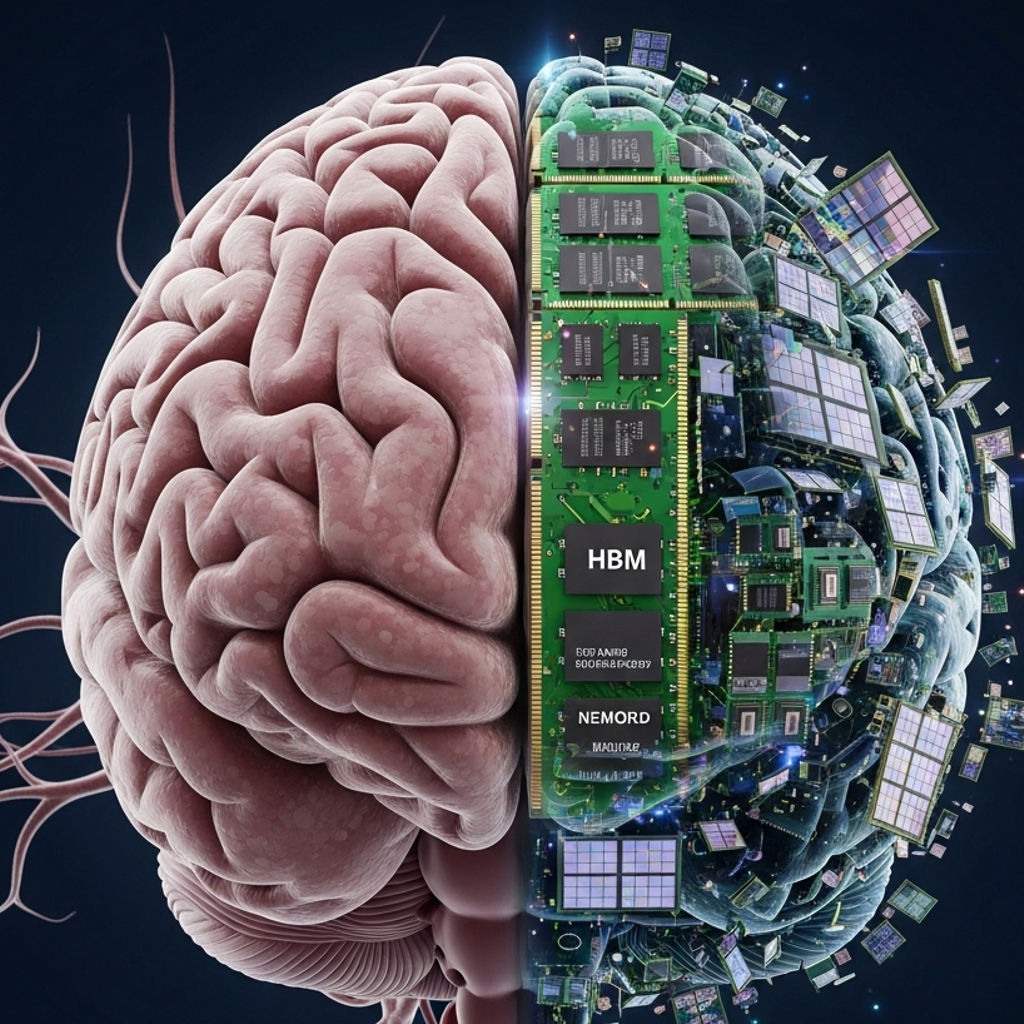
Let’s explore how these Top 5 Memory Companies in 2025 products are reiterating their market dominance—and why they are the undisputed top memory companies of 2025.
Samsung Electronics – Leading Through Vertical Innovation
Flagship Product: HBM3E & V-NAND Gen9
Why It Matters:
Samsung’s HBM3E stack, used in NVIDIA’s Blackwell and AMD’s MI300X chips, has become the defacto AI training memory in 2025. With over 1.2 TB/s bandwidth, it’s the backbone of generative AI systems.
Meanwhile, Samsung’s 9th-generation V-NAND—the world’s first 2,000+ layer NAND—powers hyperscale SSDs that are optimized for AI data lakes. Samsung’s massive Texas fab expansion focuses on AI workloads, giving it unmatched global output making its name in our Top 5 Memory Companies in 2025.
Product Story:
In late 2024, OpenAI and Google DeepMind both validated Samsung’s HBM3E performance under LLM training stress. This endorsement solidified Samsung as the top-tier partner for AI system memory. By Q2 2025, Samsung had shipped over 4 million HBM units, making it the single largest memory enabler for AI infrastructure globally.
SK hynix – Building the World’s Fastest AI Memory
Flagship Product: HBM3E 1.2TB/s Stack & DDR5 32Gb Modules
Why It Matters:
SK hynix beat all rivals to become the primary supplier of HBM3E to NVIDIA for its Grace Hopper and Blackwell AI GPUs. These modules are engineered with extreme thermal reliability and power efficiency, optimized for data centers handling real-time LLM inference.
Product Story:
In 2025, SK hynix shipped the world’s first 32Gb DDR5 chips, allowing hyperscalers to double memory density while reducing cost-per-bit. Their HBM3E portfolio is co-developed with NVIDIA engineers, integrating error management and thermal throttling mechanisms specifically for AI model workloads.
This alignment with AI silicon vendors has made SK hynix the number one memory partner for AI inference, data center scaling, and AI-as-a-service providers.
Micron Technology – America’s Advanced Memory Arsenal
Flagship Product: 232-layer NAND Gen2 & LPDDR5X-Auto
Why It Matters:
Micron took the global lead in automotive memory with its LPDDR5X-Auto platform, which is now shipping in Tesla, Rivian, and Mercedes-Benz EVs. It supports both ADAS and infotainment systems with ultra-low latency and rugged thermal stability.
Product Story:
Micron’s 232-layer NAND Gen2—an evolution over its 2023 breakthrough—enables 3.2 GB/s sequential read speeds and 2x endurance for hyperscale SSDs. These drives are now standard in AWS and Azure’s AI storage clusters.
Furthermore, Micron’s investment in CXL-attached DRAM is creating modular memory pools—allowing servers to dynamically allocate DRAM where needed, reducing overprovisioning by up to 45%.
YMTC – China’s Flash Champion Turns Global Challenger
Flagship Product: Xtacking 4.0 200-layer 3D NAND
Why It Matters:
YMTC’s proprietary Xtacking architecture allows separate manufacturing of logic and NAND layers, reducing latency by 20% and increasing read performance. In 2025, their 200-layer NAND is now used in over 60% of China-made SSDs for PCs and smartphones.
Product Story:
After facing U.S. export restrictions in 2023–24, YMTC refocused its entire R&D budget on NAND innovation. Its 2025 success came when Huawei selected YMTC as its exclusive SSD supplier for new AI servers built on Kunpeng CPUs.
This milestone put YMTC on the global map—especially in emerging markets like India, Southeast Asia, and Eastern Europe, where price-performance balance is critical.
Winbond – Quietly Dominating IoT and Embedded Memory
Flagship Product: LPDRAM for Edge AI + ReRAM Samples
Why It Matters:
Winbond is a specialist, not a generalist. In 2025, it leads the world in NOR Flash and low-power DRAM for edge AI and industrial applications. Their LPDRAM powers microcontrollers in drones, factory robots, and smart meters.
Product Story:
This year, Winbond made headlines by sampling the first ReRAM (Resistive RAM) with AEC-Q100 auto certification. It consumes 90% less standby power and retains data in extreme conditions. It is now being tested for autonomous drones used in disaster response.
Additionally, their NOR Flash is the go-to for MCU-based designs in the Indian smart appliance market—dominating in both price and performance.
Updated Market Share Table: Memory Titans of 2025
| Rank | Company | 2025 Market Share | Breakout Product | Primary Market Focus |
|---|---|---|---|---|
| 1 | Samsung Electronics | 37% | HBM3E, 9th-Gen V-NAND | AI, Cloud, Smartphones |
| 2 | SK hynix | 22% | HBM3E for GPUs, DDR5 32Gb | AI GPUs, Data Centers |
| 3 | Micron Technology | 13% | 232-Layer NAND, LPDDR5X-Auto | Automotive, CXL Memory, Cloud Storage |
| 4 | YMTC | 6% | Xtacking 4.0 200-Layer NAND | Smartphones, PCs, Chinese Servers |
| 5 | Winbond | 2% | ReRAM Samples, LPDRAM for IoT | IoT, Industrial, Embedded, Edge AI |
It’s Not Just About Chips, It’s About Strategy
In 2025, memory companies are no longer just chipmakers—they are strategic enablers of global compute infrastructure. Whether it’s training GPT-level models, managing traffic in autonomous cars, or powering microcontrollers in smart homes, memory innovation has become the new performance bottleneck—and the new frontier.
Each company in this list of Top 5 Memory Companies in 2025 earned its place not by volume alone, but by delivering memory that changes the game.

