





Red Pitaya declared that its STEMlab PRO Gen 2 series is now fully available for purchase. The company’s next step in growing modular instrumentation for industry, research, and education is the Gen 2 platform, which is currently mass-produced and shipping worldwide after receiving a positive response to its original announcement earlier this year.
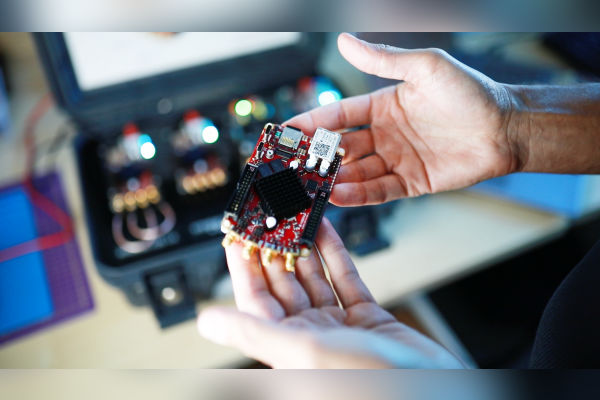
Over 150,000 engineers, students, and researchers from 5,000 industrial customers, more than 1,500 universities, and almost 700 research institutes make up Red Pitaya’s global community. Some of the most cutting-edge innovation hubs in the world, including quantum labs, aerospace R&D facilities, prestigious engineering schools, and up-and-coming IT firms, rely on its platforms.
The architecture of STEMlab Gen 2 is based on ten years of practical experience. It provides improved RF input performance, less noise, less distortion, and an updated hardware stack that guarantees reliable operation in challenging industrial and laboratory environments.
Faster booting, remote updates, and enhanced resilience are made possible by the system’s redesigned power and operating-system management module, which also has eMMC storage and watchdog capabilities.
Red Pitaya boards are utilized in a wide range of industrial and scientific applications, including quantum measurement labs, renewable energy systems, and aerospace testing, and they have already been demonstrated in real-world deployment.
Colorado-based LongPath Technologies has integrated the Red Pitaya STEMlab PRO Gen 2 into its laser-based methane detection network that monitors greenhouse-gas emissions across hundreds of square kilometers.
 LongPath’s system, based on Nobel Prize-winning dual-frequency-comb spectroscopy, demonstrates how compact, FPGA-enabled data-acquisition hardware can take precision laser physics from the lab to large-scale industrial deployment.
The STEMlab 125-14 Gen 2 series, comprising the STEMlab PRO Gen 2 and PRO Z7020 Gen 2, is now available across all configurations for immediate order through Red Pitaya’s online store and distributors such as DigiKey, Mouser, and Farnell. Each model maintains full backward compatibility while delivering measurable gains in analog isolation, synchronization, and signal quality.
Red Pitaya will present the Gen 2 family at embedded world North America 2025 (booth #9042, Anaheim Convention Center), where visitors can see live demonstrations of FPGA-based signal acquisition and control.
Leadership Comments
“Gen 2 moves Red Pitaya from an R&D platform to a proven industrial instrument,” said Mateja Lampe Rupnik, CEO of Red Pitaya. “Our community’s growth, from a few hundred early adopters to tens of thousands of engineers and researchers, shows that developer-friendly hardware can deliver true industrial-grade results. We’re seeing our users deploy it in environments that demand precision, reliability, and long-term operation: from quantum labs to methane monitoring networks.”
“The response from early partners like LongPath Technologies confirms the value of combining open software with deterministic, high-performance hardware,” added ?rt Valentin?i?, Red Pitaya’s CTO. “As Gen 2 ships globally, it’s enabling engineers to scale from prototypes to production faster than ever.”
“With Gen 2, we’ve observed improvement in frequency stability compared to the original boards, along with lower harmonic noise on both ADCs and DACs,” said Colin Wargo, Senior Electrical Engineer at LongPath Technologies. “These improvements directly translate to cleaner signals, better detection of weak signals, and higher stability.”

