





In order to provide additional switching options, Pickering Electronics has added 1 Form A, 1 Form B, 1 Form C, and 1 Form A coaxial options to their ultra-high-density Series 125, which already offers the smallest 2 Form A DPST (double-pole, single-throw) reed relay in the industry.
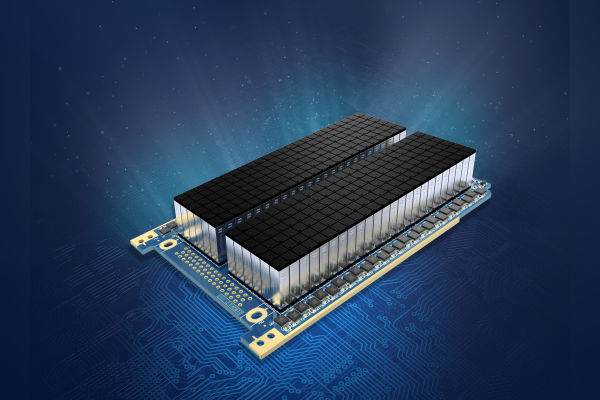
Variants in the expanded range stack on a small 5 x 5 mm pitch, switch up to 1 amp, 20 watts, and include 3, 5, or 12 volt coils.
The relays perform well in mixed-signal environments because of instrumentation-grade switches, which provide low contact resistance as well as high insulation resistance.
Three Switch Types Are Now Available, The First Two Both Featuring:
- Sputtered ruthenium contacts for long life and high reliability.
- Switch type number 1 suits general purpose applications, rated at 15 W, 1 A (3 and 5 V coils) or 20 W, 1 A (12 V coils).
- It features a layer of copper beneath the ruthenium to help dissipate heat from the contact area.
- Help improve current inrush handling ability and making it more suitable where higher power levels are involved.
- Switch type 2 is particularly good for switching low currents and/or voltages.
- Rated at 10 W, 0.5 A, and should be selected for low level or cold switching applications.
- Switch type 3 is a rhodium changeover switch rated at 2 W, 0.1 A.
 The 1 Form A coaxial types are designed for a 50 ? characteristic impedance and are suitable for switching high-frequency RF signals over 1 GHz.
When the relay coil is de-energized, an inbuilt diode reduces electrical noise and shields delicate components from harm by preventing voltage spikes brought on by the inductive kickback.
Unique pin designs, non-standard coil voltages and resistances, operate/de-operate timings, pulse capability, customized life testing under particular client load conditions, and more are among the additional manufacturing choices that can be requested.
Mu-metal provides efficient magnetic shielding due to its high permeability and effective magnetic shielding. This eliminates magnetic interaction, which is often measured as the percentage increase in the voltage needed to operate a relay when two additional relays are installed on either side.
On the other hand, there would typically be 40% interaction between two unshielded devices. Therefore, in the absence of magnetic shielding, even relays of this small size would not be suitable for applications requiring tight packing. Series 125 relays have an average interaction rate of just 1%.
Pickering’s reputation for innovative reed relays stems from decades of superior manufacturing. In addition to formerless coil construction and the company’s patented SoftCenter technology, which enhances mechanical durability, all relays feature instrumentation-grade reed switches for stable, long-life operation—up to billions of cycles.
Leadership Comments
“Series 125’s ultra-high-density form factor is designed so that engineers no longer need to compromise between performance and space—making it ideal for those who need to maximise PCB real estate in applications like ATE (automated test equipment) switching matrices or multiplexers,” said Robert King, Reed Relays Product Manager at Pickering Electronics. “Already offering the world’s smallest dual-pole reed relay footprint, our expanded Series 125 has now added 1 Form A, 1 Form B, 1 Form C, and 1 Form A coaxial options, enabling record channel density and greater routing flexibility on space-constrained cards.”
King added: “Reed relays are the ideal solution for RF signal switching and high-speed digital signal switching, as they offer a smaller footprint and faster response time than electromagnetic relays (EMR), lower insertion loss and better DC load handling than solid-state relays (SSR), and superior hot-switching performance compared with MEMS switches.”
“Full mu-metal magnetic screening enables side-by-side packing without risk of magnetic interaction, allowing a total of 288 Series 125 relays to be placed on a PXI BRIC matrix daughter card to facilitate very high-density switching applications—saving significant cost and space,” said King.
Mu-metal screening enables high packing densities with minimal magnetic interference, and every relay is 100% tested, including dynamic contact wave-shape analysis, to ensure consistent quality.
Learn about 10 key advantages Pickering’s reed relays offer over competitor relays here: pickeringrelay.com/10-key-benefits/
To Know More About Pickering’s Expanded Series 125 Ultra-High-Density Range At: CLICK HERE

