





In the rapidly evolving world of electronics, the dominance of silicon is facing an intriguing challenge—from carbon-based materials known as organic semiconductors. Once relegated to academic curiosity, organic semiconductors have emerged as serious contenders in the design of next-generation devices, offering unique advantages in flexibility, printability, lightweight structure, and environmental sustainability.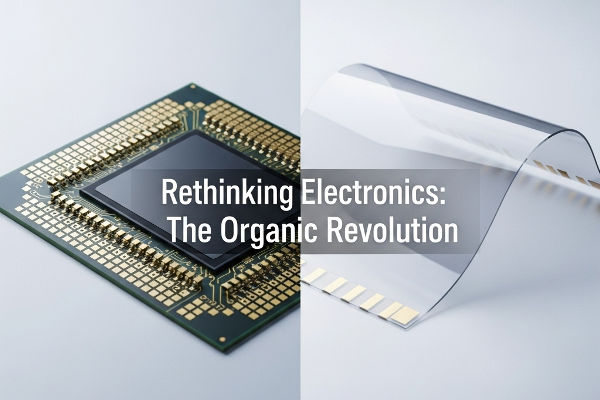
From OLED displays to flexible solar panels, and even bio-integrated wearables, organic semiconductors are reshaping what we expect from electronic components. But what makes them so unique? And how are modern designers leveraging their capabilities?
The Science Behind Organic Semiconductors
Unlike traditional inorganic semiconductors like silicon or gallium arsenide, organic semiconductors are made from carbon-rich molecules or polymers.
These materials can conduct electricity under certain conditions, thanks to their conjugated molecular structure that allows electron delocalization.
While their charge mobility is generally lower than their inorganic counterparts, their ability to be processed in solution, printed on various substrates, and tailored at the molecular level offers unmatched design flexibility.
Key Advantages Driving Design Innovation
Flexible and Stretchable Electronics
Organic semiconductors can be fabricated on plastic, paper, and even fabric, enabling bendable displays, rollable TVs, and skin-mounted sensors. This flexibility opens the door to wearable tech, foldable smartphones, and conformal medical devices that seamlessly integrate with the human body.
Low-Cost, Scalable Manufacturing
Thanks to solution-based processing—like inkjet printing, screen printing, and roll-to-roll manufacturing—organic semiconductors can be produced using inexpensive techniques. This democratizes access to electronics manufacturing and allows rapid prototyping for startups and R&D labs.
Lightweight and Biocompatible
Organic semiconductors offer a significant reduction in weight compared to silicon-based devices. Their biocompatibility makes them suitable for implantable electronics, smart bandages, and biosensors, aligning well with the expanding market of digital healthcare.
Applications Powering the Modern Era
Organic Light-Emitting Diodes (OLEDs)
Perhaps the most commercialized application of organic semiconductors, OLED technology has become ubiquitous in TVs, smartphones, and wearables. With superior contrast ratios, thinner profiles, and better energy efficiency, OLEDs have become the gold standard for premium displays.
Organic Photovoltaics (OPVs)
It enable the development of flexible solar panels that can be integrated into clothing, bags, windows, or tents. Although their efficiency still lags behind silicon, ongoing innovations in material design and layering techniques are quickly closing the gap.
Organic Thin-Film Transistors (OTFTs)
These are the building blocks for flexible logic circuits, e-skins, and smart packaging. Their ability to be deposited on large-area substrates makes them ideal for Internet of Things (IoT) devices embedded into everyday objects.
Wearable and Bio-Integrated Sensors
Organic semiconductors can function under low-power and flexible configurations, making them suitable for real-time health monitoring, electrophysiology, and drug delivery systems.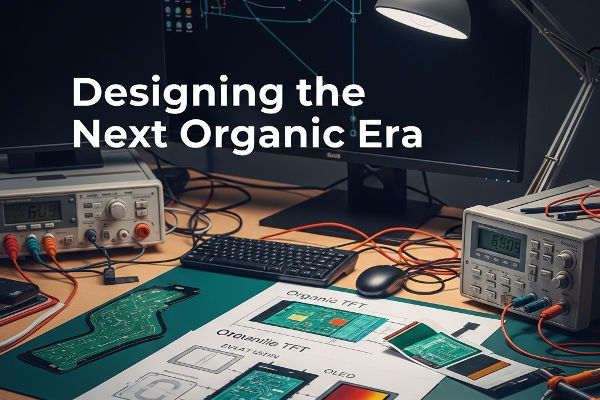
Challenges Ahead
Despite their advantages, organic semiconductors are not without limitations:
- Lower charge carrier mobility compared to inorganic materials.
- Degradation over time due to exposure to oxygen and moisture.
- Variability in material performance, posing challenges for standardization.
However, researchers are developing encapsulation techniques, hybrid materials, and novel doping strategies to address these issues and enhance reliability.
Design Paradigm Shift: From Rigid to Organic
Designers are now reimagining form factors that go beyond the traditional flat, rigid PCB-based electronics. With organic semiconductors, products can bend, fold, twist, and conform to organic shapes—be it a wrist, a windshield, or even a wall.
As industrial designers and engineers collaborate more closely, we see new generations of devices that are not only functional but also wearable, biodegradable, and even invisible.
Organic semiconductors are empowering a design language that is human-centric, sustainable, and future-forward.
The Future is Organic
As the electronics industry transitions toward sustainable practices, organic semiconductors will be key to achieving energy-efficient, low-carbon-footprint, and recyclable devices.
Their integration into smart textiles, interactive packaging, eco-friendly lighting, and healthcare wearables reflects a broader cultural shift—design with purpose and planet in mind.
For the modern designer, organic semiconductors represent more than just a technological tool—they are a canvas for creative expression in the age of green tech.

