





For next-generation smart glasses, OMNIVISION introduced a single-chip liquid crystal on silicon (LCOS) small panel with ultra-low power. The OP03021 LCOS panel offers a 1632 x 1536 resolution at 90 Hz in a compact 0.26-inch optical format, making it possible for next-gen smart glasses to achieve higher resolution with a wider field of view (FoV).

As smart glasses become more widely used, consumers want these features to provide a more immersive, realistic, and comfortable augmented reality (AR) experience.
The OP03021 liquid crystal on silicon (LCOS) Panel Features:
- A 3.0-micron pixel and achieves 1632 x 1536 resolution at 90 Hz field sequential input using a MIPI-C-PHY 1-trio interface.
- It comes in a small FPCA package.
Leadership Comments
“The new OP03021 LCOS microdisplay combines increased resolution and an expanded FoV with the efficiency of a low-power, single-chip design. The ultra-small, yet powerful, LCOS panel is a key feature in smart glasses that helps to make them more fashionable, lightweight and comfortable to wear throughout the day,” said Devang Patel, marketing director for the IoT and emerging segment, OMNIVISION. “Smart glasses are quickly becoming one of the top emerging consumer tech products, and their popularity could 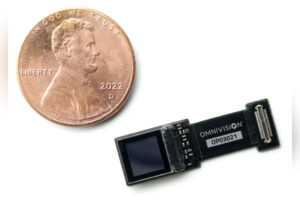 potentially become comparable to that of a smartphone. We are excited to be involved in this transformation, in partnership with many of the leading smart glasses designers and manufacturers, helping to make smart glasses a mainstream consumer product that people use every day.”
“The OP03021 LCOS panel, with its smaller 3.0-micron pixel and integrated control, frame buffer memory, and MIPI receiver onto the silicon backplane, reduces the overall size and power consumption, which are critical factors in smart glasses designs,” said Karl Guttag, President, KGOnTech.
Availability
Samples are available now, and it will be in mass production in the first half of 2026.
To Know More: CLICK HERE

