





NB-IoT testing is a critical component of the Internet of Things ecosystem, ensuring that devices and networks meet the performance, security, and scalability requirements necessary for global deployment. The role of NTN communication tools, automated testing platforms, and advanced test solutions from leading Test & Measurement companies, such as Keysight Technologies, Rohde & Schwarz(R&S), Spirent Communications, VIAVI Solutions, and LitePoint, is vital to ensuring the success of NB-IoT Testing in real-world applications.
Introduction to NB-IoT
Narrowband Internet of Things (NB-IoT) is a Low Power Wide Area Network (LPWAN) technology designed to provide connectivity for a massive number of IoT devices. It is built on cellular networks, using existing 4G LTE infrastructure, to enable low-cost, low-power, and long-range communication. As industries and businesses look to deploy IoT devices on a large scale, NB-IoT offers a reliable solution, particularly for applications where long battery life, deep coverage, and minimal data transmission are required.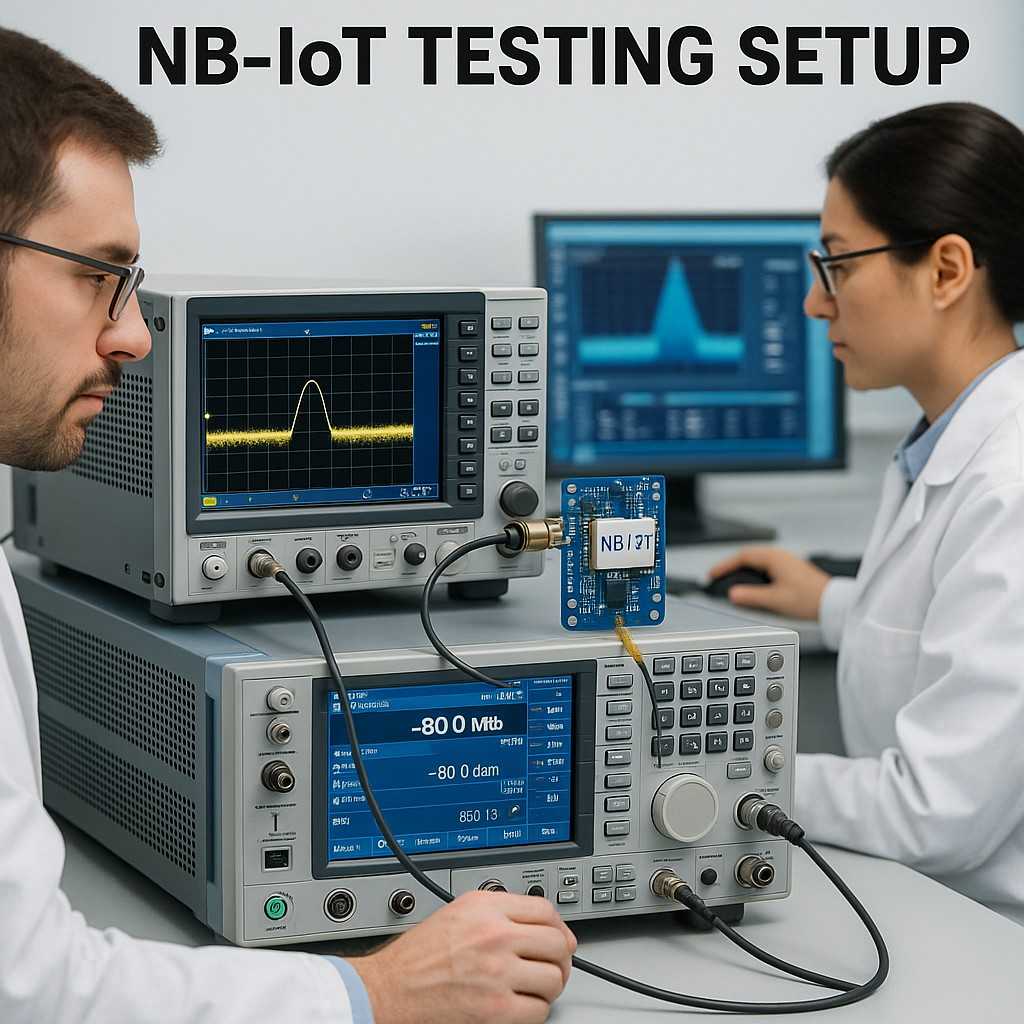
Why NB-IoT Testing is Essential
NB-IoT devices must operate efficiently in a variety of environments, including urban, rural, and remote locations. Testing ensures that these devices meet their power, performance, and connectivity requirements. In addition to ensuring compliance with industry standards, NB-IoT testing helps validate the interoperability of devices with the cellular network, ensuring they function correctly and efficiently across different networks and environmental conditions.
Testing is also crucial for assessing the reliability, scalability, and security of IoT networks, as well as for verifying the end-to-end performance of IoT applications that rely on NB-IoT connectivity.
Key Challenges in NB-IoT Testing
Testing NB-IoT technology presents several unique challenges, primarily due to the complexity of low-power, long-range communication in real-world conditions.
1. Interoperability
NB-IoT devices must function seamlessly across various cellular networks. Ensuring interoperability between devices, base stations, and IoT applications is vital for creating scalable, global IoT ecosystems. Interoperability testing ensures compatibility with different cellular infrastructures and manufacturers’ devices.
2. Scalability
NB-IoT technology is designed to support massive deployments of IoT devices. The scalability of NB-IoT networks needs to be tested rigorously to ensure that the network can handle millions of devices in a single area without causing performance degradation or system failure.
3. Low Power Consumption
NB-IoT devices are often designed to work for years on a single battery charge. As such, power consumption testing is essential to ensure that devices are truly energy-efficient and capable of performing reliably for long periods without needing to be recharged.
4. Security
With the increasing use of NB-IoT devices in critical applications such as healthcare, agriculture, and industrial monitoring, the security of data and device communication becomes paramount. NB-IoT testing must include security testing for potential vulnerabilities in the device’s communication protocols and the overall network architecture.
5. End-to-End Performance
End-to-end performance testing ensures that data can flow smoothly from IoT devices to the cloud or backend systems. This includes testing connectivity, data integrity, latency, and network performance under different operating conditions.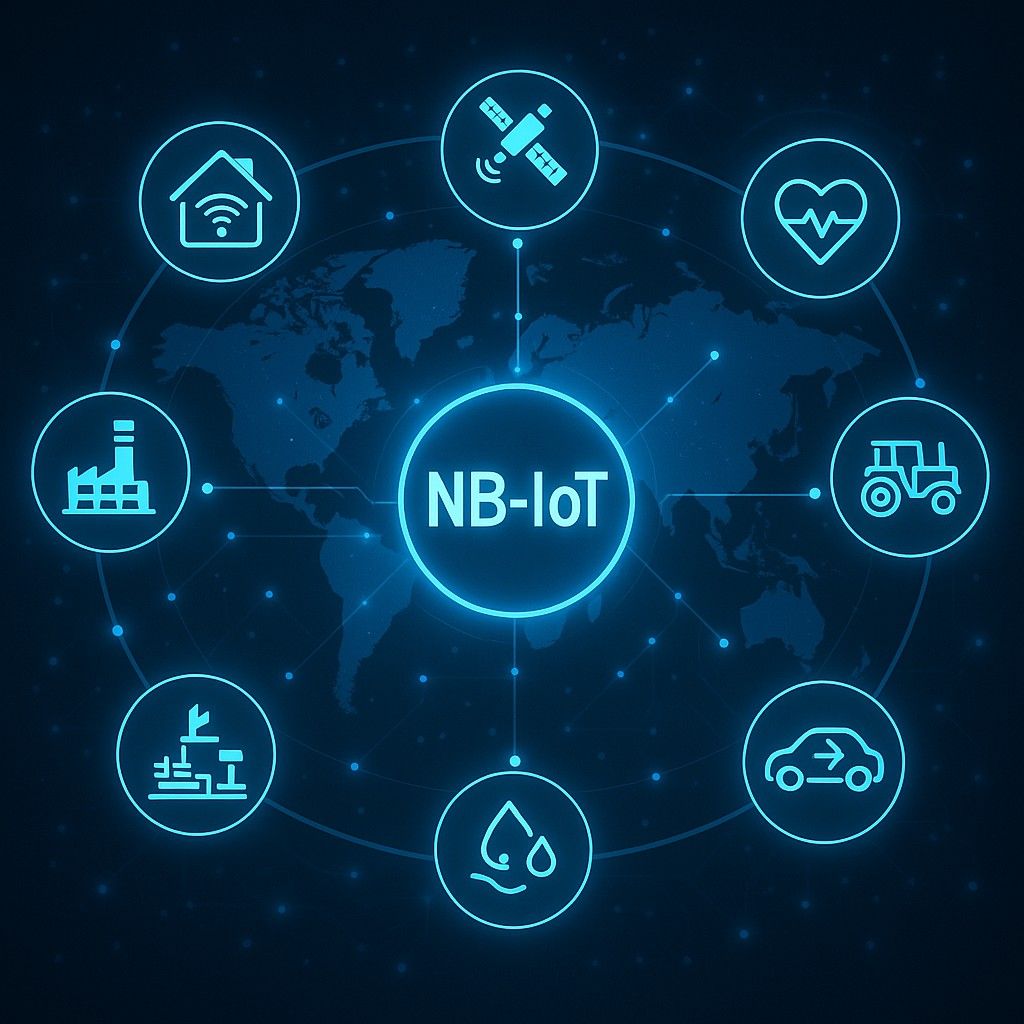
Top NTN (Non-Terrestrial Network) Communication Tools
Non-Terrestrial Networks (NTN) are an emerging technology that leverages satellites, high-altitude platforms, and drones to extend network coverage to remote and underserved areas. NTN is particularly relevant for NB-IoT, as it can offer a viable solution for the vast number of IoT devices in remote locations or challenging environments, where terrestrial cellular networks fail to provide adequate coverage.
1. Satellites in NTN
Satellites, especially Low Earth Orbit (LEO) and Medium Earth Orbit (MEO) satellites, provide broad coverage and can support NB-IoT applications in remote regions. Satellites such as those operated by companies like OneWeb and SpaceX are becoming an integral part of NTN communication, offering a scalable solution for global connectivity.
2. High-Altitude Platforms (HAPS)
High-Altitude Platforms (HAPS) like drones or airships positioned in the stratosphere can act as communication relay stations, offering connectivity where traditional infrastructure cannot reach. These platforms provide lower latency and higher bandwidth compared to satellites, making them ideal for NB-IoT applications that require efficient, real-time communication.
3. NTN Gateways
NTN communication requires specialized gateways or relay stations that connect non-terrestrial communication systems, such as satellites or high-altitude platforms, to terrestrial networks. These gateways ensure seamless integration between NB-IoT devices and the broader cellular network, allowing for smooth data transmission.
4. 5G NTN Integration
The future of NTN will likely involve tighter integration with 5G networks, offering ultra-reliable, low-latency communication (URLLC) and high-speed connections for NB-IoT devices. 5G NTN can significantly improve NB-IoT performance, enabling real-time, high-volume data transmission in remote locations and enhancing the capabilities of NB-IoT networks.
Increasing Test Efficiency in NB-IoT Testing
Efficient testing of NB-IoT devices and networks is crucial to reduce time-to-market, cut costs, and improve product reliability. By leveraging modern tools and techniques, testing processes can be streamlined to accelerate development cycles and ensure that devices meet performance requirements.
1. Automated Testing Tools
Automated testing is one of the most effective ways to increase efficiency in NB-IoT testing. Automated tools allow for testing under numerous scenarios, ensuring that devices and networks perform optimally without manual intervention. These tools simulate network environments, device behaviors, and large-scale deployments, providing consistent results across test cycles.
2. Emulators and Simulators
Emulators and simulators are critical in testing the performance of NB-IoT devices in various network conditions. These tools replicate real-world scenarios, enabling engineers to test devices and protocols without the need for physical hardware. By simulating network conditions such as congestion, interference, and low signal strength, engineers can identify performance issues early in the development process.
Example:
-
VIAVI Solutions: Provides simulators that replicate real-world cellular environments, enabling engineers to test devices under different network conditions and use cases.
3. Cloud-Based Testing
Cloud-based testing platforms offer scalability and flexibility for NB-IoT testing. These platforms allow testing from any location, reducing the need for on-site testing infrastructure. They enable real-time monitoring, reporting, and analytics, providing teams with actionable insights that drive continuous improvement.
Examples of cloud-based platforms:
-
Spirent Communications: Offers cloud-based test solutions that allow remote testing of NB-IoT devices and networks, ensuring faster deployments and reducing operational costs.
-
Keysight Technologies: Their cloud-based testing services provide a platform to test the performance of IoT devices and applications in diverse environments, enhancing test scalability.
4. Artificial Intelligence (AI) and Machine Learning (ML) in Testing
AI and machine learning technologies are increasingly being integrated into testing workflows to enhance automation and improve efficiency. By analyzing test data and identifying trends or potential failure points, AI can optimize testing processes and predict issues before they occur.
How AI and ML improve testing:
-
AI-powered analytics platforms can assess the performance of NB-IoT devices in real time, adjusting test parameters automatically to simulate a wide range of conditions.
-
Machine learning algorithms can predict network traffic patterns, device behaviors, and potential vulnerabilities, enabling proactive optimization of NB-IoT networks.
5. IoT Testbeds and Real-World Scenarios
IoT testbeds provide an environment where developers can simulate real-world conditions to test the performance of NB-IoT devices in the field. By incorporating real-world factors like signal interference, weather conditions, and varying network loads, testbeds help ensure that devices will perform reliably once deployed.
Benefits of IoT testbeds:
-
Realistic environment: Devices can be tested under conditions they will actually encounter in the field.
-
Repeatable results: Testing scenarios can be easily replicated, ensuring consistent results across different stages of development.
Top 5 Test & Measurement (T&M) Companies in NB-IoT Testing
The Test & Measurement industry plays a vital role in ensuring the performance and reliability of NB-IoT networks. Companies in this sector provide the tools necessary to validate device performance, network reliability, and end-to-end communication.
1. Keysight Technologies
-
Overview: Keysight Technologies is a leader in providing electronic design and test solutions for wireless communication technologies, including NB-IoT. Their advanced test systems support everything from device development to network optimization.
-
Key Products:
-
5G NR Test Solutions
-
IoT Device Test Platforms
-
Network Emulators
-
-
Why They Stand Out: Keysight’s automation tools and diverse portfolio make it one of the top players in NB-IoT testing, offering solutions that cover the full spectrum of IoT development.
2. Rohde & Schwarz (R&S)
-
Overview: Rohde & Schwarz (R&S) offers high-precision test and measurement equipment, including solutions for NB-IoT. Their products are used to test everything from signal integrity to device performance in cellular networks.
-
Key Products:
-
CMW500 Communication Tester
-
Signal Generators
-
R&S SMBV100A Vector Signal Generator
-
-
Why They Stand Out: R&S excels in providing high-accuracy testing tools for NB-IoT, especially in the context of complex cellular and 5G environments.
3. Spirent Communications
-
Overview: Spirent provides cloud-based and on-premise test solutions to validate the performance of NB-IoT devices and networks. Their products enable scalable, high-volume testing in real-world conditions.
-
Key Products:
-
Spirent TestCenter
-
Spirent CloudLab
-
IoT Test Automation
-
-
Why They Stand Out: Spirent’s advanced testing platforms are widely recognized for providing comprehensive solutions for large-scale NB-IoT deployments, making testing more efficient and scalable.
4. VIAVI Solutions
-
Overview: VIAVI Solutions offers a broad range of testing and monitoring solutions for cellular networks, including NB-IoT. Their products help businesses ensure that IoT devices meet performance standards in real-world environments.
-
Key Products:
-
Test Systems for Cellular IoT
-
Network Visibility Solutions
-
Coverage and Capacity Testing Solutions
-
-
Why They Stand Out: VIAVI’s specialized focus on IoT and cellular network testing, combined with their field-proven solutions, makes them an ideal partner for NB-IoT testing.
5. LitePoint (A Teradyne Company)
-
Overview: LitePoint, a subsidiary of Teradyne, is known for its test solutions for wireless communication. With a strong focus on IoT and NB-IoT, LitePoint provides scalable and efficient test systems.
-
Key Products:
-
IQxel Test Platforms
-
Wireless Device Testing Solutions
-
IoT Protocol Conformance Testers
-
-
Why They Stand Out: LitePoint’s IQxel platform is widely used for high-volume testing in wireless device production environments, offering efficient testing of NB-IoT devices.
Conclusion
NB-IoT testing is a critical component of the Internet of Things ecosystem, ensuring that devices and networks meet the performance, security, and scalability requirements necessary for global deployment. The role of NTN communication tools, automated testing platforms, and advanced test solutions from leading Test & Measurement companies, such as Keysight Technologies, Rohde & Schwarz(R&S), Spirent Communications, VIAVI Solutions, and LitePoint, is vital to ensuring the success of NB-IoT Testing in real-world applications.
As NB-IoT technology continues to evolve, testing methodologies will also adapt, incorporating emerging tools like AI, machine learning, and cloud-based solutions to increase efficiency, reduce time-to-market, and enhance device performance.

