





Murata Manufacturing has introduced a new class of stretchable printed circuit, SPC sensors aimed at transforming the design of wearable medical devices. These sensors are engineered to bend, twist, and stretch while maintaining stable electrical performance, making them ideal for applications that require continuous contact with the human body.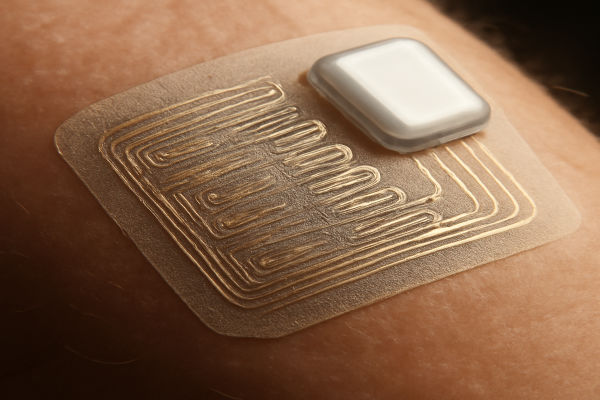
At around 100 micrometers thick, the SPC sensors are almost as thin as a human hair. They combine the flexibility of existing printed circuit boards with stretchable materials, allowing them to conform seamlessly to body contours.
Murata has used advanced conductive materials such as stretchable silver and silver chloride, along with printed electrodes that meet EC12 (ANSI/AAMI) standards for medical devices. This combination not only ensures precise signal transmission but also reduces the risk of ion migration in humid environments, a common challenge for wearable electronics.
The SPC sensors have passed cytotoxicity safety tests, confirming that they are safe for skin contact over extended periods. Murata envisions several potential applications, including:
-
Bioelectrode sheets for capturing ECG, EEG, and EMG signals
-
Active electrode sheets with built-in amplifiers for clearer, noise-free readings
-
Wireless stretchable patches integrating Bluetooth Low Energy, microcontrollers, and batteries
-
Multi-sensor platforms capable of monitoring body temperature, motion, and other vital metrics
-
Soft, shielded signal cables designed to retain performance even when deformed
Murata believes the technology could help create next-generation medical patches, sports monitoring systems, and even rehabilitation tools. However, the company has not yet announced a commercial launch date.
For now, it is focusing on offering design and manufacturing support to developers, rather than delivering complete medical devices or handling clinical trials and approvals.
By bringing stretchable electronics closer to mass adoption, Murata’s innovation could lead to lighter, more comfortable, and more accurate wearable devices.

