





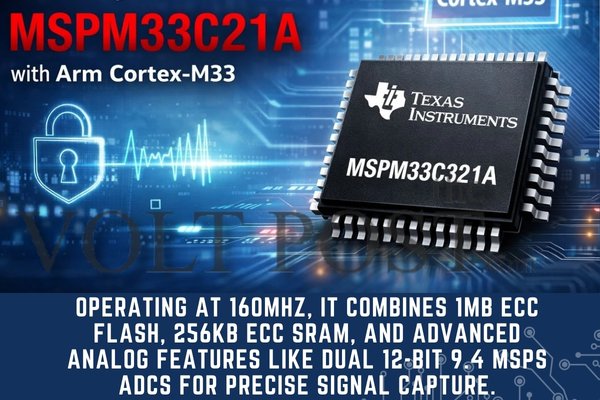
Texas Instruments has rolled out the MSPM33C321A, a powerful Arm Cortex-M33 mixed-signal MCU targeting demanding industrial and automotive uses. Operating at 160MHz, it combines 1MB ECC flash, 256kB ECC SRAM, and advanced analog features like dual 12-bit 9.4 MSPS ADCs for precise signal capture.
Key Features
This mixed-signal MCU stands out with dual CAN-FD interfaces, QSPI support, multiple UART/SPI/I2C ports, and I2S/TDM audio handling up to 16 slots.
Security shines through Arm TrustZone, hardware AES-256/SHA-256 acceleration, a true RNG, and an immutable Root of Trust for secure boot and provisioning. Power efficiency includes 207µA/MHz active draw and under 100nA shutdown, plus a VBAT domain with RTC and tamper detection.
Development Support
Engineers get the LP-MSPM33C321A LaunchPad kit at $19.50, featuring XDS110 debug, BoosterPack headers, MikroBus, LEDs, buttons, and OLED display for quick prototyping.
The MSPM33 SDK and Code Composer Studio provide drivers, including AUTOSAR-compliant MCAL and RTOS options like Zephyr or FreeRTOS.
Texas Instruments MSPM33C321A and MSPM33C3219 are pin-compatible siblings in the MSPM33C32xx series, both featuring a 160MHz Arm Cortex-M33 core with TrustZone, FPU, DSP extensions, 256kB ECC SRAM, and identical analog/digital peripherals.
 Core Comparison
They share the same performance profile but differ mainly in flash capacity, suiting varied code size needs in industrial and automotive designs.
| Feature | MSPM33C321A | MSPM33C3219 |
| CPU | 160MHz Cortex-M33 | 160MHz Cortex-M33 |
| SRAM | 256kB ECC | 256kB ECC |
| Flash | 1MB ECC, dual-bank | 512kB ECC, dual-bank |
| ADCs | Dual 12-bit 9.4 MSPS | Dual 12-bit 9.4 MSPS |
| CAN-FD | 2x | 2x |
| Power (Active) | 207µA/MHz | 207µA/MHz |
| GPIOs | Up to 93 | Up to 93 |
| Temp Range | -40°C to 125°C | -40°C to 125°C |
| Package | Likely 100-pin VQFN | Likely 100-pin VQFN |
Use Case Differences
Opt for the MSPM33C321A in applications needing extensive firmware storage, like complex motor control or secure gateways. The MSPM33C3219 fits cost-sensitive projects with moderate code demands, such as sensor nodes, while leveraging the full peripheral set.

