





Micron Technology is preparing a significant expansion at its Hiroshima site to build a dedicated high-bandwidth memory – HBM Fab facility.
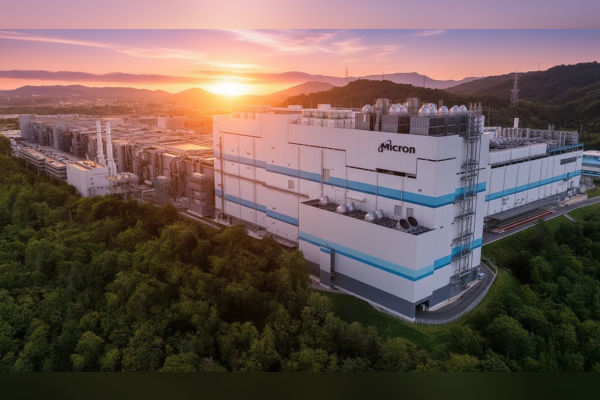
The semiconductor giant plans to invest approximately $9.6 billion (1.5 trillion yen) to construct this new plant, with construction slated to begin in May next year and shipments expected by 2028. The expansion underscores Micron’s commitment to strengthening its presence in the rapidly growing AI memory market.
 Japan’s Ministry of Economy, Trade and Industry (METI) is expected to provide substantial support for the project with potential subsidies reaching up to 500 billion yen. This government backing is part of a broader initiative to boost domestic semiconductor manufacturing capacity and attract foreign investment in strategic technologies.
HBM has become a critical and constrained resource within the AI supply chain. Micron is positioning this new fab to cater to rising demand driven by advancements in AI accelerators, particularly the next generation of GPUs requiring advanced HBM4 and HBM4E memory stacks.
Current market leaders like SK hynix and Samsung are intensifying their focus on HBM production, making Micron’s planned expansion timely and strategic.
Micron has already made noteworthy investments at its Hiroshima facility, including a recent $3.6 billion investment to introduce EUV-based DRAM production, backed by nearly 200 billion yen in subsidies. This prior initiative has resulted in production of cutting-edge LPDDR5X memory devices, underscoring the company’s technological foothold in the region.
The move comes at a pivotal time when supply shortages and high demand for HBM are shaping the future of semiconductor memory.
The new fab will enable Micron to further compete with established players and meet evolving customer requirements in high-performance computing and AI markets, setting the stage for growth through 2028 and beyond.
A company spokesperson commented, “This planned expansion reflects Micron’s long-term vision to support the AI ecosystem’s growing memory needs. The Hiroshima site offers an ideal location due to Japan’s stable political and economic environment, as well as strong government support that de-risks this multi-year investment. We are committed to advancing memory technology that powers next-generation computing platforms.”

