





Tier-2 and Tier-3 cities will contribute close to 39% of GCC jobs by 2030 propelling the GCC sector, shifting focus from traditional metros to specialized regional delivery centers.
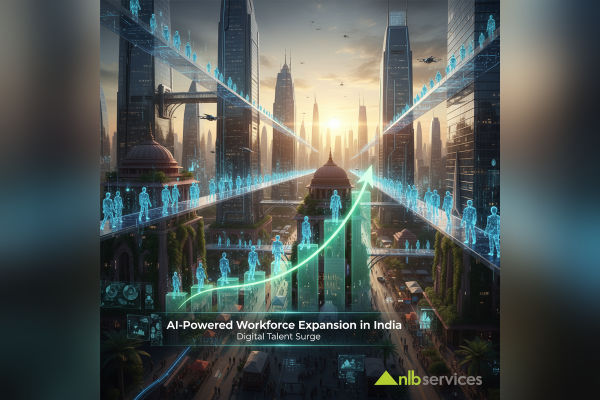
India’s Global Capability Centers (GCCs) are making a major leap, powered by rapid AI integration, with the workforce projected to hit 3.46 million by 2030, which is an addition of 1.3 million new jobs, according to NLB Services’ new report, “Workforce 2.0 Reset: India’s GCCs Go AI-Native”. This explosive growth highlights India’s emergence as the hub for digital transformation and enterprise AI engineering.
?
Key Insights From the Workforce 2.0 Reset Report
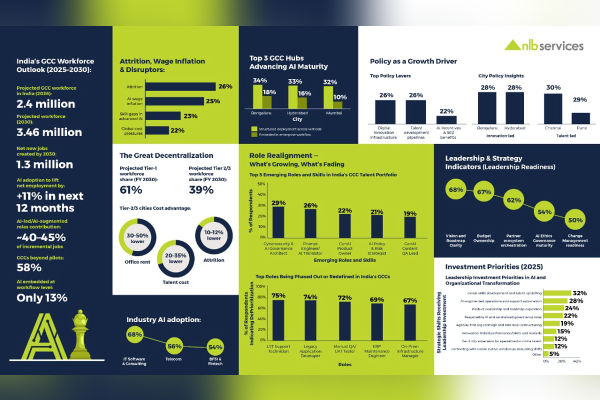
By 2026, India’s GCC sector will see an 11% jump in jobs, expanding the talent pool to 2.4 million professionals.?
Tier-2 and Tier-3 cities like Coimbatore, Ahmedabad, and Bhubaneswar are set to drive the next wave of growth, with 0.715 million net new GCC jobs expected in these regions by 2030, thanks to lower attrition, office costs, and talent expenses.?
At least 58% of GCCs are advancing beyond AI pilots, with 70% already investing in Generative AI tools and 75% planning to embed AI in day-to-day workflows within one year.?
Over 60% of organizations will establish dedicated AI safety and governance teams by 2026, prioritizing ethical AI deployment and risk management.?
Emerging Roles and Redefined Careers
The report predicts a wave of new, cutting-edge roles fueled by AI, including Cybersecurity AI Governance Architects, Prompt Engineers, GenAI Product Owners, and AI Policy Risk Strategists—driving India from traditional IT delivery to innovation-driven leadership.
Simultaneously, legacy tasks such as L1 IT Support and Manual QA are being phased out as automation and product-oriented approaches take center stage.?
Geographic Shift and Talent Development
Tier-2 and Tier-3 cities will contribute close to 39% of GCC jobs by 2030 propelling the GCC sector, shifting focus from traditional metros to specialized regional delivery centers. To empower this workforce reset, 80% of GCCs are investing in continuous learning, reskilling, and agile career progression models, while upskilling initiatives include micro-credentials, AI-focused training, and in-house academies.?
 Leadership and Governance: Defining India’s AI Journey
Leading hubs like Hyderabad and Bengaluru show the highest readiness for AI transformation, with more than 70% of GCCs in these regions demonstrating mature vision and budget ownership. Industry sectors such as Telecom, Fintech, Software, and Media are institutionalizing AI as both a governance and leadership discipline, cementing India’s reputation for responsible, scalable AI innovation.?
Delhi-NCR and Bengaluru are pioneering centralized AI governance, while Mumbai and Hyderabad favor flexible, decentralized oversight. Progressive state policies, robust digital infrastructure, and strong STEM talent pipelines are accelerating the spread of AI excellence across the nation.?
Conclusion
With AI adoption moving mainstream and a major workforce reset underway, India is set to become the global epicenter for enterprise AI, innovation, and digital talent excellence by 2030.
The transition to an agile, AI-powered GCC ecosystem means new opportunities for tech talent, fresh business models, and global leadership in digital transformation are all underpinned by robust governance and continuous learning.?
To access the detailed report: CLICK HERE

