





Researchers at the Indian Institute of Technology Madras have developed a chip-based microfluidic device, ?-µD, that can quickly determine whether bacteria are resistant or susceptible to antibiotics. The device delivers results in just three hours, a significant improvement over the conventional 48 to 72 hours required for standard testing.
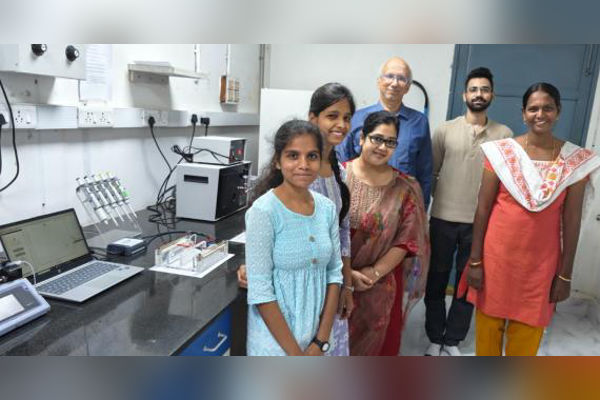
The team behind this innovation includes Prof. S. Pushpavanam from the Department of Chemical Engineering, Dr. Richa Karmakar, Assistant Professor in the Department of Biotechnology, and research scholars Saranya Gopalakrishnan and Diksha Mall.
They collaborated with Kaappon Analytics India Pvt Ltd, based at the IITM Research Park, to design the system.
?-µD uses screen-printed carbon electrodes and electrochemical signals to analyze samples, making it a cost-effective and portable solution. The device has been tested successfully on bacterial strains such as Escherichia coli and Bacillus subtilis, as well as urine samples, demonstrating its applicability for clinical use.
With antimicrobial resistance (AMR) identified by the World Health Organization as a major global health challenge—estimated to be associated with nearly five million deaths worldwide in 2019—such rapid diagnostic tools could play a crucial role in early detection and timely treatment.
The team from IIT Madras is now working toward clinical validation and commercialization of the device, with a focus on its deployment in smaller clinics and rural healthcare centers where access to advanced diagnostics is often limited.
The study, published in Nature Scientific Reports, CLICK HERE

