





Huawei, China’s tech giant, is reportedly conducting advanced testing of its next-generation AI chips, a direct move to challenge Nvidia’s overwhelming leadership in the AI semiconductor sector.
According to industry sources and new reports on April 28, 2025, Huawei AI chips are being tested with top Chinese AI firms like Baidu, Tencent, and Alibaba.
These chips, if successful, could mark a significant shift in the global AI semiconductor landscape, especially as China faces heavy US export restrictions on Nvidia’s most powerful AI GPUs.
What We Know About Huawei’s New AI Chips
According to insiders cited by Business Today and other media outlets, Huawei AI chips in testing is likely an advancement over the Ascend 910B — a chip that has already shown capabilities on par with Nvidia’s A100 GPU. The upcoming version is believed to feature:
-
Improved compute power
-
Lower energy consumption
-
Advanced compatibility with popular machine learning frameworks
Huawei’s HiSilicon unit is leading the development, with extensive collaboration with Chinese cloud computing providers. Some reports suggest the new Huawei AI chip could also rival Nvidia’s H100 series in certain tasks like LLM (Large Language Model) training.
Why This Matters: A Shift in Global Tech Power
U.S. Export Curbs Boost Local Innovation
Over the past two years, the U.S. government, citing national security concerns, tightened export rules, banning Nvidia’s H100 and A100 GPU shipments to China. In response, Chinese companies like Huawei and SMIC have doubled down on domestic semiconductor innovation.
Dan Hutcheson, vice chair of TechInsights, commented recently:
“The restrictions forced Chinese firms to innovate faster. Huawei’s comeback in semiconductors is a critical development for China’s tech independence.”
Indeed, Huawei’s success with the Mate 60 Pro smartphone, which uses a 7nm Kirin chip made in China, showcased the company’s growing capabilities even under sanctions.
Huawei’s Strategy to Compete Nvidia
Collaboration with China’s AI Giants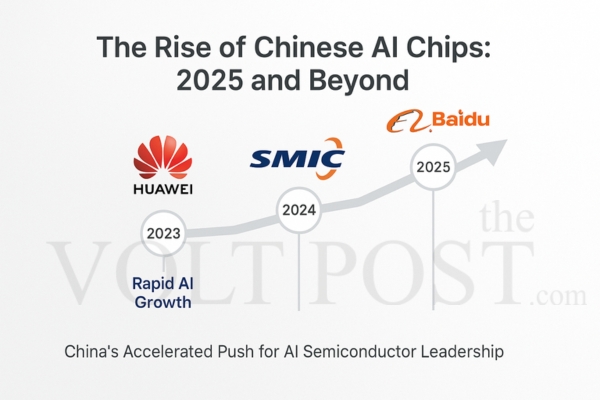
Huawei is reportedly working closely with major cloud providers and AI labs. Companies like Baidu, ByteDance, Tencent, and Alibaba are participating in internal tests to validate Huawei AI chips on real-world AI applications like:
-
Training large AI models
-
Running Generative AI services
-
Building cloud-based AI services
Industry insiders say these companies have already optimized some of their AI algorithms to run efficiently on Huawei’s Ascend hardware.
Advantages Huawei is Banking On
Experts say Huawei could capitalize on several advantages:
-
Cost-effective hardware: Huawei can offer AI chips at competitive prices compared to Nvidia’s premium rates.
-
Optimized AI Software Stack: Huawei’s MindSpore platform is growing stronger as an alternative to TensorFlow and PyTorch.
-
Government Support: China’s “New Infrastructure” policy heavily invests in domestic chip ecosystems.
Dr. Zhou Hongyi, founder of Qihoo 360, noted at a recent tech summit:
“Huawei’s hardware-software synergy could give Chinese AI firms a crucial edge if Nvidia chips remain inaccessible.”
Industry Reactions: A Mixed Sentiment
Some Cautious Optimism
While Huawei’s progress is impressive, some analysts remain cautious. AI training demands not just powerful chips but also years of software ecosystem maturity, developer tools, and global standards compliance — areas where Nvidia has a huge head start.
Patrick Moorhead, CEO of Moor Insights & Strategy, recently said:
“Huawei is making strong moves, but Nvidia’s dominance is not just hardware — it’s the CUDA software stack, global AI partnerships, and developer loyalty.”
Still, if Huawei can continue to iterate rapidly, it could carve out a major share in the Chinese domestic market — and eventually expand into regions less affected by U.S. restrictions like Southeast Asia, the Middle East, and Africa.
Challenges Ahead for Huawei
Supply Chain and Manufacturing Hurdles
Despite optimism, Huawei faces challenges:
- Manufacturing constraints: Huawei relies on SMIC for advanced node manufacturing. SMIC currently struggles to mass-produce chips beyond 7nm without EUV machines.
- Talent shortages: Competing with global leaders like Nvidia demands not just hardware but also deep software expertise, AI research leadership, and industry-wide support.
Moreover, geopolitical risks — including potential secondary sanctions — loom large over any Chinese tech company trying to scale globally.
What’s Next: Launch Timeline and Market Outlook
Expected Launch and Commercialization
Sources expect Huawei AI chips to be officially announced by Q3 or Q4 2025. Mass production, however, may take until early 2026, depending on manufacturing yields and customer demand.
Huawei is reportedly aiming to first deploy these chips internally within China’s top AI companies and cloud computing platforms before considering limited international rollouts.
Future of AI Semiconductor Competition
Nvidia, meanwhile, isn’t slowing down either. The company is set to launch its Blackwell B100 and B200 AI chips later this year, aiming to set new performance benchmarks.
Thus, while Huawei’s entry boosts competition, the global AI semiconductor war is far from settled.
Jensen Huang, Nvidia’s CEO, emphasized in a recent event:
“AI is the most powerful technology force of our time. We welcome competition — it drives the whole industry forward.”
Huawei’s aggressive push into the AI semiconductor space marks a critical inflection point. Though facing daunting challenges, its progress could reshape the future of AI computing, particularly in China and emerging markets.
As the battle for AI dominance heats up, the world will be watching closely whether Huawei’s bets on AI chips will pay off.

