





Scientists in China have developed a groundbreaking analog chip that promises to revolutionize computing by outperforming top-tier GPUs from Nvidia and AMD by up to 1,000 times.
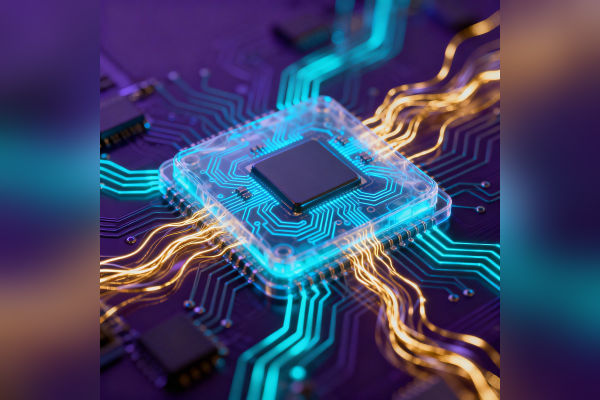
Unlike traditional digital processors that use binary calculations, this new chip processes information through continuous electrical currents via arrays of resistive random-access memory (RRAM) cells, enabling vastly superior speed and energy efficiency.
This innovative design tackles two major challenges faced by digital chips: the energy and data constraints in emerging technologies such as artificial intelligence (AI) and 6G communications, and the long-standing issues of precision and practicality in analog computing.
The chip matches the accuracy of standard digital processors while consuming roughly 100 times less energy, making it an ideal candidate for data-intensive applications requiring both power and precision.
Built on commercially viable manufacturing techniques, the chip combines two circuits—one for rapid, approximate calculations and another for iterative refinement to ensure precision. This fusion of speed and accuracy positions the technology as a potential game-changer in AI model training and wireless communication systems.
 A lead researcher commented, “Our analog chip demonstrates how blending traditional approaches with modern memory technologies can overcome historic limitations, offering unprecedented throughput and energy savings. This could dramatically accelerate the future of computing.”
Industry experts view this advancement as a pivotal step towards sustainable, high-performance computing solutions that address the rising demands of AI and next-generation communication networks. Future improvements aim to develop larger and fully integrated chips capable of handling even more complex tasks at faster speeds, signaling a new era in analog computing innovation.

