





Bosch and PowerCell Deepen Strategic Collaboration for the Chinese Market. Bosch has signed a significant agreement with Sweden-based PowerCell Group to acquire extended intellectual property (IP) and usage rights to its high-performance S3 hydrogen fuel cell stack. The €6 million deal enables Bosch to scale hydrogen-powered mobility and industrial solutions across China—one of the world’s fastest-growing hydrogen markets.
This strategic move expands Bosch’s rights to use, modify, and commercialize PowerCell’s 129?kW S3 stack, marking a new phase in the companies’ long-term collaboration aimed at accelerating hydrogen adoption in the automotive and industrial sectors.
Expanded Rights to Fuel China’s Hydrogen Transformation
Key Deal Highlights
-
Financial Scope: Bosch is paying €6 million for the expanded license.
-
Technology Covered: PowerCell’s 129?kW S3 fuel cell stack.
-
Exclusive Market Rights: Bosch gains exclusive rights for both automotive and non-automotive applications in China.
-
Scope of Use: Applications include cars, buses, trucks, mining equipment, backup power systems, and off-highway vehicles.
-
Manufacturing: Bosch will continue to manufacture the S3 stacks in both Germany and China, with key components still being supplied by PowerCell from Sweden.
This agreement reflects growing momentum in hydrogen mobility, particularly in China, where government incentives, infrastructure, and industrial demand are converging to support large-scale deployment of fuel cell technologies.
Leadership Comments
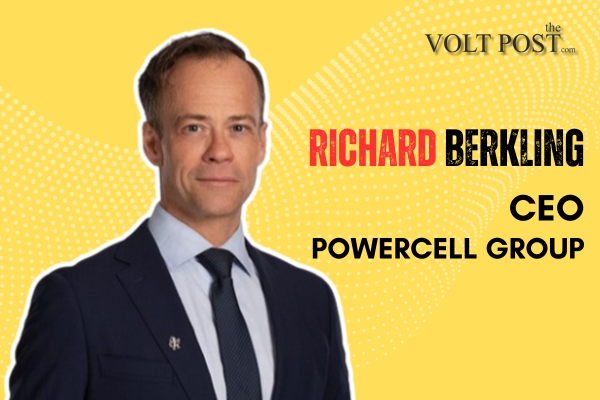
Richard Berkling, CEO of PowerCell Group, stated:
“We are proud to take our strategic collaboration with Bosch to the next level. With this deal, we are building a robust industrial partnership to accelerate the commercialization of fuel cell technology in the largest automotive market in the world.”
Dr. Stefan Hartung, Chairman of the Board of Management at Bosch, emphasized China’s critical role:
“China is leading the world in hydrogen adoption. This partnership allows us to bring proven European fuel cell technology into a high-growth environment and localize it for rapid market deployment. Bosch is fully committed to scaling its hydrogen portfolio, aiming to generate €5 billion in sales from hydrogen technologies by 2030.”
China: The Global Hydrogen Hotspot
Bosch’s decision to deepen its presence in China is backed by strong market fundamentals. The country is aggressively building its hydrogen economy, with clear national targets, public-private partnerships, and support for fuel cell electric vehicles (FCEVs).
China has already deployed more hydrogen-powered commercial vehicles than any other country. According to recent reports, China’s hydrogen vehicle stock is expected to exceed 100,000 by 2028, supported by localized production hubs and dedicated hydrogen corridors.
This deal gives Bosch a significant technological edge to compete in this environment, with the high-efficiency S3 stack serving as a proven platform for both vehicle and industrial applications.
Strategic and Commercial Implications
What This Means for Bosch
- Localization Advantage: The new rights allow Bosch to fully localize and adapt PowerCell’s S3 stack for Chinese customers, reducing costs and speeding up delivery timelines.
- Cross-Sector Reach: Bosch can now offer fuel cell solutions beyond transportation—including for telecom, construction, logistics, and energy sectors.
- Technological Integration: Bosch’s hydrogen portfolio already includes electrolyzers, stacks, and systems. This IP deal strengthens its end-to-end offering.
What This Means for PowerCell
- Revenue Upside: The €6 million payment will be reflected in PowerCell’s Q2 2025 financials, scheduled for release in July.
- Operational Focus: PowerCell will continue supplying components to Bosch while focusing on strategic projects in Europe, North America, and Japan.
- Brand Positioning: By partnering with a global player like Bosch, PowerCell reinforces its standing as a premium technology supplier in the hydrogen domain.
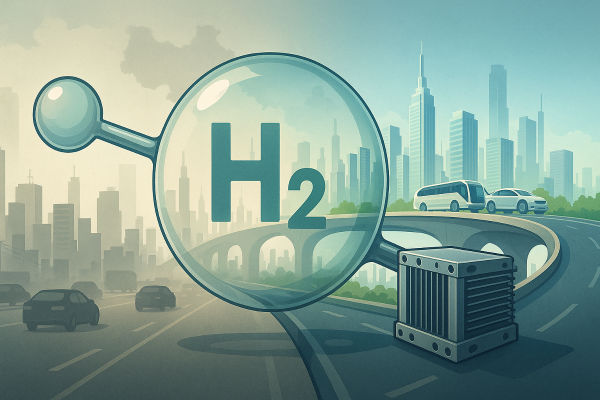
A conceptual illustration showing hydrogen technology bridging the gap between today’s polluted urban mobility and a clean, zero-emission future, inspired by Bosch and PowerCell’s fuel cell collaboration in China.
© 2025 The Volt Post. All rights reserved. This image is original and created for editorial use in association with The Volt Post. Redistribution or commercial use without permission is prohibited.
Hydrogen Strategy Outlook: 2025 and Beyond
Bosch is positioning itself as a key player in global hydrogen markets, not just through strategic deals but by investing heavily in R&D, manufacturing, and talent. The company has already established production lines for fuel cell stacks in Stuttgart, Germany, and Chongqing, China.
With the Chinese government ramping up infrastructure and the private sector pushing forward with innovation, Bosch’s latest move places it at the heart of this transformation.
The company’s 2025 hydrogen strategy includes:
- Accelerated fuel cell vehicle programs in collaboration with OEMs
- Expansion of industrial fuel cell solutions for power generation and mobile applications
- Electrolyzer systems development to support green hydrogen production
Industry observers expect Bosch to unveil additional updates during its annual Hydrogen Technology Forum later this summer.
Bosch’s acquisition of extended rights to PowerCell’s S3 hydrogen fuel cell stack underscores a pivotal moment for both companies and for the global hydrogen economy. As the world shifts toward decarbonized mobility and clean energy solutions, such partnerships will be central to meeting the demands of large, diverse markets like China.
Both companies are now better positioned to lead the transition, offering scalable, localized solutions for a wide range of applications—from long-haul freight to industrial backup power.
The race to lead the hydrogen revolution is on—and Bosch and PowerCell just doubled down.

