





In a significant move to reclaim its leadership in automotive technology, Japan’s top automakers and semiconductor firms have united under the Advanced SoC Research for Automotive (ASRA) consortium.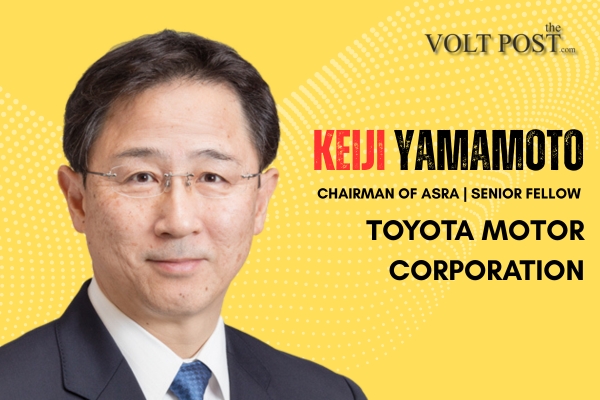
This initiative aims to develop standardized chiplet-based System-on-Chip (SoC) designs for next-generation vehicles, addressing the growing competition from Chinese electric vehicle (EV) manufacturers and the increasing demand for software-defined vehicles (SDVs)
Formation of ASRA: A Unified Front
Established on December 1, 2023, ASRA brings together twelve prominent Japanese companies, including automotive giants like Toyota, Honda, Nissan, Mazda, and Subaru; electrical component manufacturers such as Denso and Panasonic Automotive Systems; and semiconductor leaders like Renesas Electronics, Socionext, MIRISE Technologies, Cadence Design Systems Japan, and Synopsys Japan.
Headquartered in Nagoya, Aichi, ASRA is chaired by Keiji Yamamoto, Senior Fellow at Toyota Motor Corporation, with Nobuaki Kawahara, Senior Advisor at Denso Corporation, serving as Executive Director.
Objectives and Technological Focus
ASRA’s primary goal is to research and develop high-performance digital semiconductors using chiplet technology, aiming for integration into mass-produced vehicles by 2030.
Chiplet technology allows for the combination of different semiconductor types, offering advantages such as higher performance, multifunctionality, improved yield, and timely commercialization of SoCs tailored to automotive requirements.
The consortium plans to establish in-vehicle chiplet technology by 2028, focusing on creating scalable, modular chips suitable for a wide range of vehicle models. This approach is expected to lower costs, accelerate development, and enhance the competitiveness of Japan’s automotive industry in the global market.
Strategic Importance and Government Support
Recognizing the strategic importance of semiconductors in the automotive sector, the Japanese government has pledged ¥41 billion (approximately $286 million) in subsidies to support ASRA’s initiatives.
This investment is part of a broader plan to invest ¥20 trillion ($133.62 billion) over ten years in green transformation, including the development of electric vehicles and semiconductor technologies.
Japan is also seeking to establish joint standards for electric vehicle and chip subsidies with the United States and Europe, aiming to promote a fair competitive environment and secure stable supplies of critical materials.
Leaders’ Perspectives
Keiji Yamamoto, Chairman of ASRA and Senior Fellow at Toyota Motor Corporation, emphasized the consortium’s commitment to safety and reliability, stating, “By having automakers play a central role and collaborating with electrical component and semiconductor companies, we aim to apply cutting-edge technologies practically to achieve the high level of safety and reliability required for automobiles”.
Nobuaki Kawahara, Executive Director of ASRA and Senior Advisor at Denso Corporation, highlighted the benefits of chiplet technology, noting, “Chiplet technology offers higher performance and multifunctionality, higher yield chips, and timely commercialization of SoCs with functions and performance optimized for end-user requirements”.
Global Collaboration and Standardization Efforts
Beyond national initiatives, Japan’s Rapidus and Denso have partnered to share advanced chip design methods for applications such as artificial intelligence and self-driving vehicles.
This collaboration, part of an eight-member group established by SEMI, marks the first time Japanese companies have led the standardization of advanced chip design methods, aiming to enhance the competitiveness of Japan’s semiconductor industry.
The shared design methods are expected to encourage other companies to adopt common practices, facilitating the use of common design software and circuit arrangements, ultimately leading to industry-wide standards .
Challenges and the Road Ahead
Japanese automakers have historically focused on hardware-first approaches, which has led to a lag in the development of software-defined vehicles compared to Chinese competitors like BYD and Geely. These Chinese companies prioritize software integration, allowing them to quickly gain market share with affordable, intelligent EVs.
ASRA’s initiative aims to bridge this gap by developing standardized, scalable chip designs that can be used across various vehicle models, thereby reducing costs and development time. The success of this endeavor will depend on continued collaboration among industry players, government support, and the ability to adapt to rapidly evolving technological landscapes.
The formation of ASRA represents a concerted effort by Japan’s automotive and semiconductor industries to reclaim their position at the forefront of automotive technology.
By focusing on the development of standardized chiplet-based SoCs and fostering global collaboration, Japan aims to enhance its competitiveness in the face of rising challenges from Chinese EV manufacturers and the global shift towards software-defined vehicles.
With significant government backing and a clear roadmap, ASRA is poised to play a pivotal role in shaping the future of automotive semiconductors.

